English
 中文简体

Content
- 1 The Short Answer: Match the Alloy to Load, Wall, and Volume
- 2 What Zinc and Aluminum Die Casting Alloys Actually Are
- 3 Side-by-Side Comparison: Zinc vs Aluminum Die Casting
- 4 Weight and Strength: Where the Numbers Change the Design
- 5 Wall Thickness, Flow, and Castability
- 6 Tolerance, Flatness, and Machining
- 7 Corrosion, Plating, and Surface Finish
- 8 Thermal Performance and High-Temperature Service
- 9 Tool Life, Cycle Time, and Part Cost
- 10 A Practical Decision Framework for Your Part
- 11 Application Scenarios: Where Each Alloy Earns Its Place
- 12 Procurement Risks and Drawing Details That Decide the Alloy
- 13 FAQ: Zinc vs Aluminum Die Casting
The Short Answer: Match the Alloy to Load, Wall, and Volume
For a part that is small, geometrically complex, dimensionally tight, and produced in high volume, zinc die casting usually gives the lowest total cost and the most forgiving process window. For a part that is large, weight-sensitive, structural, or exposed to elevated temperature, aluminum die casting is usually the safer starting point. That is the practical answer before any alloy data sheet is opened.
The reason is not that one metal is universally better. Zinc and aluminum sit on different sides of the same manufacturing trade-off: zinc is dense, fluid, and dimensionally stable at moderate temperatures; aluminum is light, strong per unit mass, and better suited to larger envelopes and higher service temperatures. The right choice depends on which of those differences actually control the function, appearance, and cost of your part.
- Choose zinc first when: the part is under roughly 1 kg, has thin walls, needs fine detail, requires tight as-cast tolerance, will be plated or painted, and runs in high volume.
- Choose aluminum first when: the part is large, weight reduction matters, the service temperature is above roughly 100°C to 120°C, the part carries structural load, or the production volume is moderate to low.
- Run a cost model before committing: zinc material costs more per kilogram, but lower melting temperature, faster cycles, longer tool life, and reduced machining can make the finished zinc part cheaper.
- Do not select by tensile strength alone: section thickness, draft, cored holes, flatness, corrosion exposure, and finishing method often decide the alloy more than the minimum ultimate strength.
A useful way to read this article is to treat it as a selection route, not a metal-versus-metal contest. Start with the failure mode and the drawing tolerance. Then check weight, wall thickness, temperature, corrosion, and annual volume. The alloy choice usually becomes obvious once those five inputs are fixed.
What Zinc and Aluminum Die Casting Alloys Actually Are
Zinc die casting alloys
Most commercial zinc die casting uses Zamak 3, Zamak 5, or ZA-series alloys such as ZA-8 and ZA-12. Zamak 3 is the common general-purpose grade because it casts easily, holds dimensions well, and takes plating and painting cleanly. Zamak 5 adds copper for higher strength and hardness, with a modest trade-off in dimensional stability and corrosion behavior. ZA-8 and ZA-12 move toward higher strength and better bearing and wear performance, but they demand tighter process control and are less common in thin-wall decorative work.
Zinc alloys melt at roughly 380°C to 420°C depending on grade. That lower melting point allows hot-chamber die casting, where the injection system is immersed in the melt. Hot-chamber processing gives fast cycles, low thermal shock to the tool, and excellent reproduction of fine features. The same property that makes zinc easy to cast also makes it heavy: zinc alloy density is about 6.6 g/cm³, compared with about 2.7 g/cm³ for aluminum.
Aluminum die casting alloys
Aluminum die casting is dominated by A380 and A383 in North America, ADC12 in Asia, and grades such as 413 and 518 when higher ductility, pressure tightness, or corrosion resistance is needed. A380 is the workhorse: good castability, moderate strength, useful thermal conductivity, and broad availability. A383 improves fluidity for thin walls and complex geometry. ADC12 is a close relative of A383 and is widely used in export programs. Higher-magnesium or lower-iron grades can improve ductility and finish, but they may reduce die life or require tighter melt control.
Aluminum melts near 660°C, so it is normally cast in a cold-chamber machine. The metal is ladled or delivered into the shot sleeve, then injected into the die. Cold-chamber processing is well suited to larger parts and higher shot weights, but cycle times are longer and the die sees more thermal fatigue than in zinc hot-chamber work. For a deeper grade-by-grade review, this guide to the best aluminum alloy for die casting is a useful companion to the selection steps below.
Side-by-Side Comparison: Zinc vs Aluminum Die Casting
| Selection factor | Zinc die casting | Aluminum die casting |
|---|---|---|
| Density | About 6.6 g/cm³; roughly 2.4 times heavier than aluminum for the same volume | About 2.7 g/cm³; preferred when mass reduction drives the design |
| Typical process | Hot-chamber die casting for most Zamak grades | Cold-chamber die casting |
| Wall thickness | Often 0.5 mm to 1.0 mm, with careful tool design for thinner local features | Often 1.0 mm to 1.5 mm, with thicker sections where flow length is long |
| As-cast tolerance | Excellent for small, detailed parts; low shrinkage and stable dimensions | Good, but larger parts and longer flow paths need more tolerance review |
| Strength and stiffness | High compressive strength and good wear resistance; heavy for its strength | Better strength-to-weight ratio; suitable for structural and large parts |
| High-temperature service | Generally limited; creep and strength loss become important above roughly 100°C to 120°C | Better retention at elevated temperature; alloy and duty cycle still matter |
| Corrosion and finish | Requires plating, painting, or conversion coating in many environments; takes plating very well | Forms a natural oxide layer; anodizing, painting, and conversion coating are common |
| Tool life and cycle | Lower melt temperature, faster cycles, generally longer die life | Higher thermal load, slower cycles, die maintenance is more demanding |
| Best fit | Small, complex, high-volume, dimensionally tight, decorative or plated parts | Large, light, structural, temperature-exposed, or moderate-volume parts |
Weight and Strength: Where the Numbers Change the Design
Weight is the most visible difference, but it is not the only one. A zinc part and an aluminum part can share the same envelope and still behave differently because zinc is much denser. If the drawing is volume-driven, zinc will be heavier. If the drawing is mass-driven, aluminum usually wins before any strength calculation is complete.
Relative mass for the same part volume, indexed to zinc at 100. Actual mass depends on alloy and wall design.
Strength comparisons need more care. Zinc alloys such as Zamak 5 and ZA-8 offer high compressive strength, good wear resistance, and useful bearing properties. They are often selected for gears, housings, brackets, and small structural parts that see contact wear or need to hold a thread. Aluminum alloys such as A380 and ADC12 offer a better strength-to-weight ratio, which matters in automotive brackets, motor housings, instrument enclosures, and equipment frames where mass reduction is a design goal.
The practical question is not “which metal is stronger?” It is “which metal gives the required stiffness and safety factor at the allowed mass and wall thickness?” A thin zinc wall can be very stiff because zinc has a high modulus, but the same wall may be too heavy for a handheld or vehicle-mounted part. A thin aluminum wall can be light, but it may deflect more or require ribs that complicate the tool. That is why alloy selection should sit beside the structural calculation, not after it.
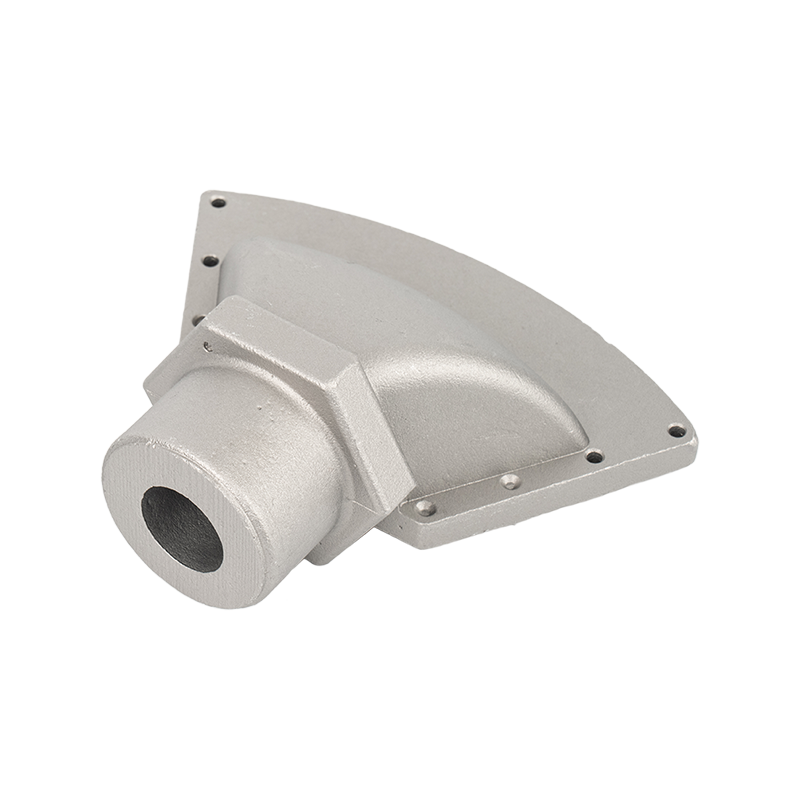 High-Strength Aluminum Alloy Die-Cast Industrial ComponentsCustom die-cast and CNC-machined aluminum components for load-bearing structures, offering strength-to-weight balance and optional surface treatments for durable industrial use.View Product →
Wall Thickness, Flow, and Castability
Zinc is the more forgiving metal for thin walls and fine detail. Its low melting point and high fluidity allow metal to fill long, narrow sections before it freezes. In production, zinc parts often run with walls around 0.5 mm to 1.0 mm, and local features can go thinner with a well-built tool and a stable process. That is why zinc is common in small precision components, decorative hardware, electrical housings, and parts with fine lettering or tight cosmetic requirements.
Aluminum is not difficult to cast, but it asks more from the tool and the process. A practical starting range is 1.0 mm to 1.5 mm for general walls, with thicker sections at gates and over long flow lengths. Thin aluminum walls can be produced, but the window narrows: metal temperature, die temperature, injection speed, and venting all need to be controlled. If the part has deep ribs, isolated bosses, or long flow paths, the tool designer may need to add overflow, runners, or local thickening.
This difference affects the drawing review. A zinc part can often keep a compact, integrated shape with minimal machining. An aluminum part may need a slightly thicker wall, more generous fillets, or a change in gate location to avoid cold shuts and porosity. Neither outcome is a defect in the alloy; it is a difference in process physics. The earlier the alloy is fixed, the easier it is to design the tool around the correct flow behavior.
Tolerance, Flatness, and Machining
Zinc die casting is often chosen when the as-cast part must hold tight dimensions without extensive machining. The lower casting temperature reduces thermal contraction, and the hot-chamber process repeats well from shot to shot. For small parts with cored holes, fine pitches, and cosmetic surfaces, zinc can reduce secondary operations and inspection time. That does not mean zinc is automatically more accurate; it means the process is easier to hold within a tight band when the part geometry is small and detailed.
Aluminum die casting can also hold tight tolerance, but the part size and wall thickness have more influence. Large aluminum castings may need a straightening operation, a machining allowance on critical faces, or a fixture-based inspection plan. Flatness is a common example. A thin aluminum cover can distort after ejection or during trimming, while a zinc cover of the same shape may stay flatter because the material is stiffer and the process runs cooler.
Dimensional stability
Zinc usually has the edge for small, complex parts with tight as-cast tolerances. Aluminum needs more review as part size and wall length increase.
Machining allowance
Zinc often machines cleanly and can hold threads well. Aluminum is also machinable, but gummy alloys can build up on tools if feeds and speeds are not controlled.
Flatness risk
Thin aluminum covers and long brackets need fixture planning. Zinc parts are less prone to thermal distortion, but they are still sensitive to ejection and trimming.
Inspection cost
A stable process can reduce sampling and rework. The alloy choice should be reviewed with the control plan, not only with the 3D model.
For procurement, the key is to separate “as-cast” from “finished.” If the drawing shows a tight tolerance on a surface that will be machined anyway, the alloy decision should not be driven by that tolerance. If the tolerance is on an as-cast surface that will never be cut, zinc may save a operation. That single distinction can change the cost ranking of the two alloys.
Corrosion, Plating, and Surface Finish
Zinc is not naturally corrosion-resistant in the same way as aluminum. It needs a protective finish in most outdoor or humid environments: electroplating, powder coating, painting, or a conversion coating. The good news is that zinc die castings take plating very well. The surface can be prepared to a high cosmetic standard, and the plating bath is compatible with the zinc substrate when the process is controlled. That is why zinc is common in decorative hardware, automotive interior trim, and small housings that need a bright or painted finish.
Aluminum forms a thin natural oxide layer that improves atmospheric corrosion resistance. For harsher environments, anodizing, conversion coating, or a suitable paint system is still needed. Aluminum castings can show porosity at the surface if the tool and process are not controlled, and that porosity can telegraph through a cosmetic finish. The alloy, gate location, and die temperature all affect the final appearance.
If the part will be exposed to salt spray, cleaning chemicals, or repeated condensation, the finish specification should be written before the alloy is frozen. A zinc part with a poor plating process can fail faster than a properly finished aluminum part. An aluminum part with an open surface pore can also fail a cosmetic inspection. Alloy selection and finish selection are linked; treating them as separate decisions often creates rework.
For industrial components that need a balance of corrosion resistance and castability, aluminum-zinc alloy corrosion-resistant castings are a useful reference point. They show how the alloy family can be tuned for harsh service without abandoning the economic benefits of die casting. This overview of the advantages of zinc die casting for industrial components is helpful when plating and wear resistance are part of the business case.
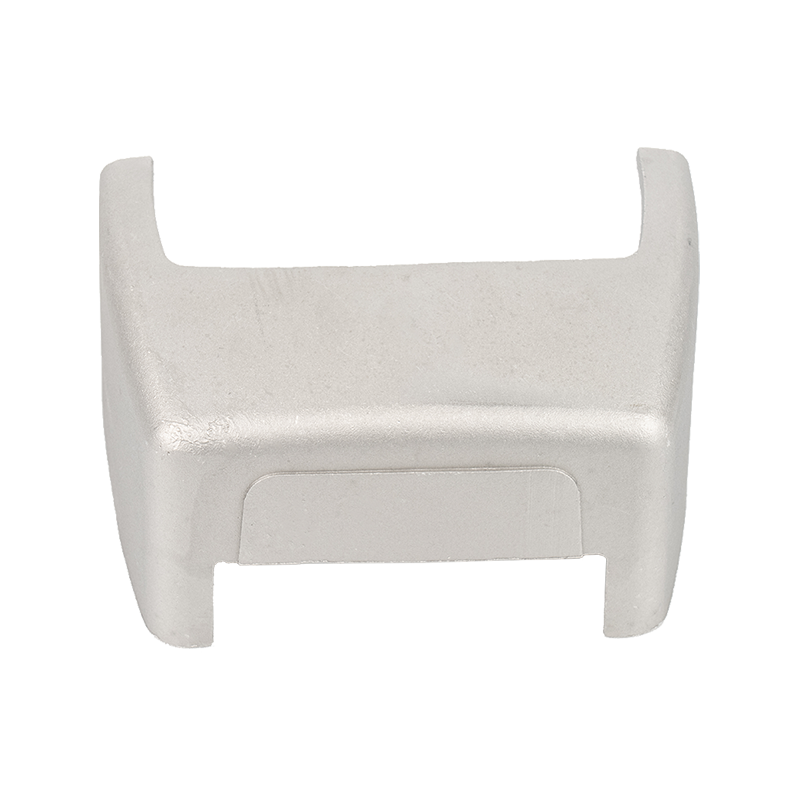 Aluminum-Zinc Alloy Corrosion-Resistant Custom CastingsCustom die-cast aluminum-zinc components with CNC-machined interfaces, combining lightweight forming with corrosion resistance for industrial equipment in humid or mildly corrosive service.View Product →
Thermal Performance and High-Temperature Service
Temperature is a common reason to move from zinc to aluminum. Zinc alloys lose strength and creep resistance as service temperature rises. In continuous duty, many zinc parts are comfortable at room temperature and mildly warm conditions, but above roughly 100°C to 120°C the design should be reviewed carefully. A zinc bracket that holds a load at 20°C may relax or deflect at 120°C over time. That is not a cosmetic issue; it can change preload, sealing force, or alignment.
Aluminum die casting performs better in elevated-temperature service, but it is not unlimited. A380 and ADC12 retain useful strength at temperatures that would concern zinc, and they are common in engine-adjacent, motor, and power-electronics housings. The alloy, duty cycle, and clamping load still need validation. A high-temperature aluminum alloy may be specified when the part sees sustained heat, thermal cycling, or a combination of heat and vibration.
Thermal conductivity also matters. Aluminum is often selected for heat sinks, motor housings, and electronic enclosures because it spreads heat. Zinc has good thermal conductivity as well, but its density and temperature limits usually make aluminum the better choice when heat management is the primary function. If the part is a cover with no heat path, the thermal argument may be irrelevant. If the part is a housing that carries heat away from a PCB, the alloy choice should be checked with a thermal model, not a brochure value.
Tool Life, Cycle Time, and Part Cost
Zinc is often cheaper per finished part even though zinc alloy costs more per kilogram. The reason is the process economics. Hot-chamber zinc casting runs at a lower melt temperature, which reduces thermal shock to the die. Cycle times are shorter, and the die often lasts longer. For a small part in high volume, those differences can outweigh the material price. The part may also need less machining because the as-cast detail is closer to final form.
Aluminum has a different cost profile. The raw material is usually cheaper per kilogram, and the lower density means less mass per part. But the cold-chamber process is slower, the die sees higher thermal load, and machining allowances may be larger. For a large part in moderate volume, aluminum can still be the lower-cost route because the zinc version would be too heavy and would require a very large shot weight. Cost is therefore a function of part size and volume, not a fixed rule.
Material price
Zinc alloy usually costs more per kilogram. Aluminum alloy usually costs less per kilogram, but the finished part mass is lower, so the comparison must be per part.
Cycle time
Zinc hot-chamber cycles are typically faster. Aluminum cold-chamber cycles are longer and more sensitive to part size and wall thickness.
Tool life
Lower zinc melt temperature generally reduces thermal fatigue. Aluminum dies may need more frequent maintenance, especially on thick sections and high shot weights.
Secondary operations
Zinc can reduce machining and deburring on small detailed parts. Aluminum may need more straightening, machining, or fixture work on large thin parts.
A reliable cost comparison should include the die, the machine hour rate, the shot weight, the yield, the finishing cost, the scrap rate, and the inspection plan. A quote that compares only metal price per kilogram is not a comparison of part cost. It is a comparison of raw material, which is often the smaller number.
A Practical Decision Framework for Your Part
Use the following sequence when the drawing is still open. It prevents the common mistake of choosing an alloy first and then forcing the design to fit the process.
- Define the primary function. Is the part carrying load, sealing a fluid, dissipating heat, protecting electronics, or providing a cosmetic surface? The answer sets the critical failure mode.
- Check the mass and envelope. If the part is large or weight-sensitive, start with aluminum. If it is small and detail-driven, start with zinc.
- Review wall thickness and flow length. Thin, long, intricate sections favor zinc. Thick, large, structural sections favor aluminum.
- Set the service temperature. Above roughly 100°C to 120°C, zinc needs a detailed creep review. Aluminum is usually the safer starting point.
- Define the finish and corrosion exposure. If plating is required, zinc is attractive. If anodizing or a natural oxide finish is required, aluminum is attractive.
- Estimate annual volume and tool life. High volume with small parts often favors zinc. Moderate volume with large parts often favors aluminum.
- Build the cost model. Include machining, scrap, finishing, inspection, and logistics. Then compare the finished part, not the ingot.
| Project condition | Lean zinc | Lean aluminum |
|---|---|---|
| Part mass under 1 kg | Strong fit | Possible, but check cost |
| Part mass over 3 kg | Usually poor fit | Strong fit |
| Wall under 1.0 mm | Strong fit | Needs careful review |
| Continuous service above 120°C | Needs creep review | Strong fit |
| Decorative plating | Strong fit | Possible with proper prep |
| Large structural bracket | Usually poor fit | Strong fit |
| High-volume small housing | Strong fit | Possible, but cycle cost rises |
Application Scenarios: Where Each Alloy Earns Its Place
Automotive and vehicle electronics
Aluminum is common in automotive die casting because mass reduction and thermal performance matter. Motor housings, wireless charging housings, brackets, and structural covers often use A380, ADC12, or a higher-performance grade. Zinc still appears in small interior mechanisms, gears, and plated trim where wear resistance and fine detail are more important than weight. The decision should be made with the vehicle environment in mind: vibration, stone impact, salt spray, and under-hood temperature can each push the choice in a different direction.
Instrument and control enclosures
Instrument housings often need a stable shape, a clean finish, and good shielding or sealing. Zinc can be a strong choice for small, complex enclosures with fine ribs and tight cover fits. Aluminum is often better for larger outdoor enclosures, heat-generating electronics, and parts that need anodizing or a lightweight mounting interface. The enclosure style should follow the alloy: a zinc enclosure can integrate thin walls and small bosses; an aluminum enclosure may use thicker walls and a different gasket land.
Motor and pump housings
Motor housings usually favor aluminum because heat dissipation and weight are both important. A waterproof motor housing may need a pressure-tight cast wall, a machined sealing face, and a corrosion-resistant finish. Zinc can be used in smaller motor components, gear covers, and end caps, but the thermal load and continuous duty cycle should be checked. If the housing is a heat path, aluminum is usually the more natural choice.
Pressure-reducing and relief valve bodies
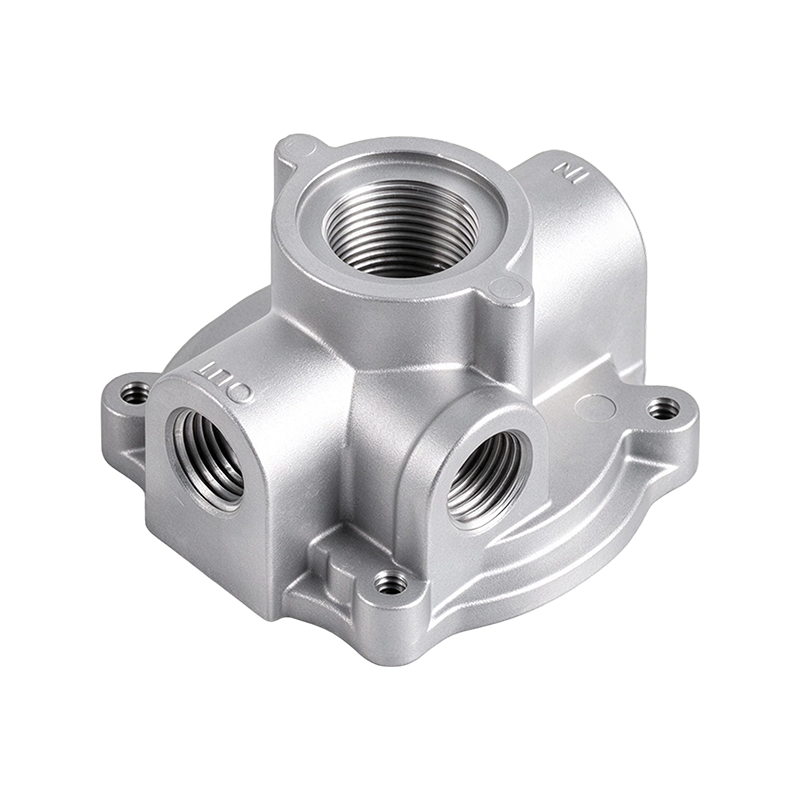
Valve bodies need pressure tightness, stable threads, corrosion resistance, and a clean internal passage. Aluminum die castings are common in pressure-reducing valve housings, relief valve housings, and integrated valve bodies because they offer a good balance of strength, machinability, and weight. Zinc can be used in smaller valve components and wear parts, but the fluid, pressure, and temperature should be reviewed. A die-cast aluminum pressure-reducing valve housing is a useful example of how the alloy choice follows the pressure and service requirements, not the other way around.
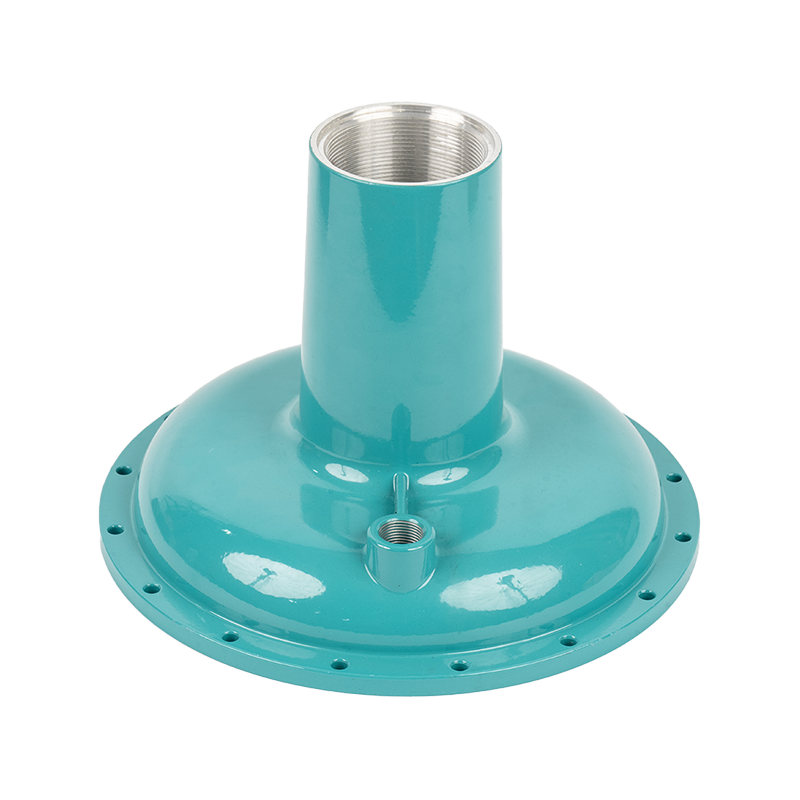 Die-Cast Aluminum Pressure Reducing Valve HousingsCustom die-cast valve housings with CNC-machined sealing surfaces and threaded holes, designed for stable pressure control and reliable assembly in industrial systems.View Product →
Industrial equipment parts
Equipment covers, brackets, connectors, mounting plates, and non-standard structural parts often sit in the middle of the decision. Zinc is attractive for small, detailed parts that need wear resistance and minimal machining. Aluminum is attractive for larger covers, frames, and parts that must be moved or mounted at height. In both cases, the drawing should show the datum scheme, the critical interfaces, and the finish class. Without that information, the alloy debate becomes a guess.
Procurement Risks and Drawing Details That Decide the Alloy
Many alloy disputes are actually drawing disputes. The buyer assumes one process, the supplier quotes another, and the mismatch appears only after the tool is cut. The following details should be fixed before a purchase order is released.
- Critical vs non-critical surfaces. Mark which surfaces will remain as-cast and which will be machined. This single step often changes the cost ranking of zinc and aluminum.
- Draft and fillets. Zinc can often release from a tool with less draft, but aluminum still needs adequate draft on deep walls. Do not force a zero-draft feature into either process.
- Porosity acceptance. Define whether porosity is allowed on a sealing face, a cosmetic surface, or a structural section. The alloy choice may change the risk, but the acceptance rule must be explicit.
- Flatness and straightness. Large aluminum parts may need a straightening step. Zinc parts can also distort if ejection is uneven. Put the measurement method on the drawing.
- Finish specification. Plating, powder coating, anodizing, and conversion coating each have different substrate requirements. A finish callout without a process standard is not a specification.
- Volume and tool life. A tool built for 20,000 shots is not the same as a tool built for 500,000 shots. The alloy and die material should be matched to the production plan.
- Validation plan. Temperature cycling, salt spray, leak test, and dimensional capability should be agreed before the first article. The alloy decision is only as good as the evidence behind it.
A supplier with both zinc and aluminum die casting experience can often flag these risks at the quotation stage. That is more valuable than a lower piece price that hides a tool change, a finish rework, or a machining allowance. The best alloy is the one that survives the drawing review, the tool trial, and the production ramp without a redesign.
FAQ: Zinc vs Aluminum Die Casting
Is zinc die casting stronger than aluminum die casting?
It depends on the comparison. Zinc alloys such as Zamak 5 and ZA-8 have high compressive strength and good wear resistance, and they can be very strong in small, stiff parts. Aluminum alloys have a better strength-to-weight ratio and are usually the better choice for large structural parts. A direct strength comparison without the part geometry, load path, and mass limit is not useful.
Why is zinc die casting often cheaper for small parts?
Zinc runs in hot-chamber machines at lower melt temperature, so cycles are faster and die life is often longer. The as-cast detail can be fine enough to reduce machining. Zinc alloy costs more per kilogram, but the finished part may still cost less because the process is more efficient for small, complex, high-volume work.
Can zinc die castings be used outdoors?
Yes, but they normally need a protective finish. Electroplating, powder coating, painting, or a conversion coating can provide the required corrosion resistance. The exposure conditions, cleaning chemicals, and expected service life should be stated before the finish is selected. An uncoated zinc part is not the right choice for a wet or salt-exposed application.
When should I choose aluminum over zinc?
Choose aluminum when the part is large, weight-sensitive, structural, or exposed to sustained heat above roughly 100°C to 120°C. Aluminum is also the more natural choice when the part needs anodizing, heat dissipation, or a better strength-to-weight ratio. If the part is small, intricate, and high volume, zinc should be evaluated first.
Does wall thickness decide the alloy?
It is one of the strongest indicators. Zinc can fill thinner walls and finer detail more easily. Aluminum can cast thin walls, but the process window is narrower and the tool design must support the flow length. If the drawing has 0.6 mm walls over a long distance, zinc is usually the lower-risk starting point.
Can the same part be cast in either alloy?
Sometimes, but not without changes. The wall thickness, draft, gate location, shrinkage allowance, machining stock, and finish may all need to change. A direct alloy swap on the same tool is rarely a clean solution. The better approach is to design the part for the chosen process and then compare the finished cost and performance.