English
 中文简体

Content
- 1 Choose the Finish by Failure Mode, Not by Habit
- 2 Powder Coating on Die Castings: A Thick Barrier With Process Rules
- 3 Anodizing Die-Cast Aluminum: Hard Surface, Tighter Process Control
- 4 Plating on Zinc and Aluminum Die Castings: Bright, Conductive and Demanding
- 5 Powder Coating, Anodizing and Plating Compared
- 6 Cost and Lead Time: Compare the Whole Process, Not the Bath Price
- 7 Tolerance, Masking and the Drawing Details That Prevent Rework
- 8 Corrosion Testing: Salt Spray Is a Screening Tool, Not a Field Guarantee
- 9 Match the Finish to the Part, Not the Other Way Around
- 10 Supplier Evaluation: Ask for Evidence, Not Just a Finish Name
- 11 Common Defects and What They Usually Mean
- 12 FAQ: Die-Casting Surface Treatments
- 12.1 Can powder coating be used on both aluminum and zinc die castings?
- 12.2 Is anodizing stronger than powder coating?
- 12.3 Can die-cast aluminum be anodized to a uniform black?
- 12.4 Why does plating sometimes blister on zinc castings?
- 12.5 Does powder coating hide casting porosity?
- 12.6 Which finish should be used for an electrical grounding surface?
- 12.7 How much thickness should be allowed for powder coating?
- 12.8 Is salt-spray performance enough to approve a finish?
- 12.9 Can a powder-coated part be repaired after assembly damage?
- 12.10 What is the first drawing detail to add for a finished die casting?
Choose the Finish by Failure Mode, Not by Habit
The right surface treatment for a die-cast part is usually decided by the first thing that will destroy it: UV exposure, road salt, abrasion, electrical contact, cleaning chemicals, high temperature, or repeated handling. Powder coating gives the widest color and texture range and the strongest barrier on many aluminum and zinc castings. Anodizing gives aluminum a hard, integral oxide layer that resists wear and keeps a metallic look. Plating gives zinc and aluminum decorative brightness, solderability, electrical conductivity, or a specific tribological surface. None of these finishes is universally better. A coating that survives 1,000 hours of neutral salt spray can still fail in a humid enclosure if the casting was not cleaned correctly before coating.
A practical selection rule is simple: if the part needs color, outdoor weatherability and a thick barrier, start with powder coating. If it is aluminum and needs wear resistance, a metallic finish or controlled electrical insulation, start with anodizing. If it is zinc alloy and needs a bright decorative surface, conductivity or a low-friction bearing surface, start with plating. Then check three constraints before quoting: cure temperature, dimensional growth, and masking of threads, bores and electrical contact areas.
Powder Coating on Die Castings: A Thick Barrier With Process Rules
Powder coating is a dry finishing process. The part is cleaned, pretreated, dried, earthed, sprayed with charged powder, and cured in an oven. On die-cast aluminum and zinc, the most common systems are polyester, polyester-urethane, epoxy-polyester and epoxy powders. Polyester and polyester-urethane are common for outdoor parts because they resist UV chalking better than epoxy. Epoxy gives good chemical resistance and mechanical strength but is not the first choice for long outdoor exposure because it can chalk and lose gloss.
Typical dry film thickness is 60 to 120 microns. That thickness is an advantage for covering minor casting surface variation and for building a barrier over sharp edges. It is also the source of two common problems. First, a thick coating can bridge small holes, thread roots and tight tolerances. Second, powder cure schedules usually expose the casting to 180 to 200 degrees Celsius for 10 to 20 minutes, depending on powder chemistry and part mass. That thermal cycle is usually acceptable for aluminum and zinc die castings, but it can affect pre-machined features, seals, inserts, adhesives and heat-treated conditions if they are present before coating.
Surface preparation matters more than the powder brand. Die castings often carry release agent, machining coolant, tumbling residue, oxidation and porosity at the skin. A simple degrease may remove visible oil but leave a film that causes pinholes, craters or poor adhesion. A controlled pretreatment line usually includes alkaline cleaning, rinsing, a conversion coating or passivation suitable for aluminum or zinc, and a dry-off stage. For zinc castings, phosphate conversion coatings can support adhesion and corrosion resistance. For aluminum, chrome-free conversion coatings are common where environmental rules restrict hexavalent chromium.
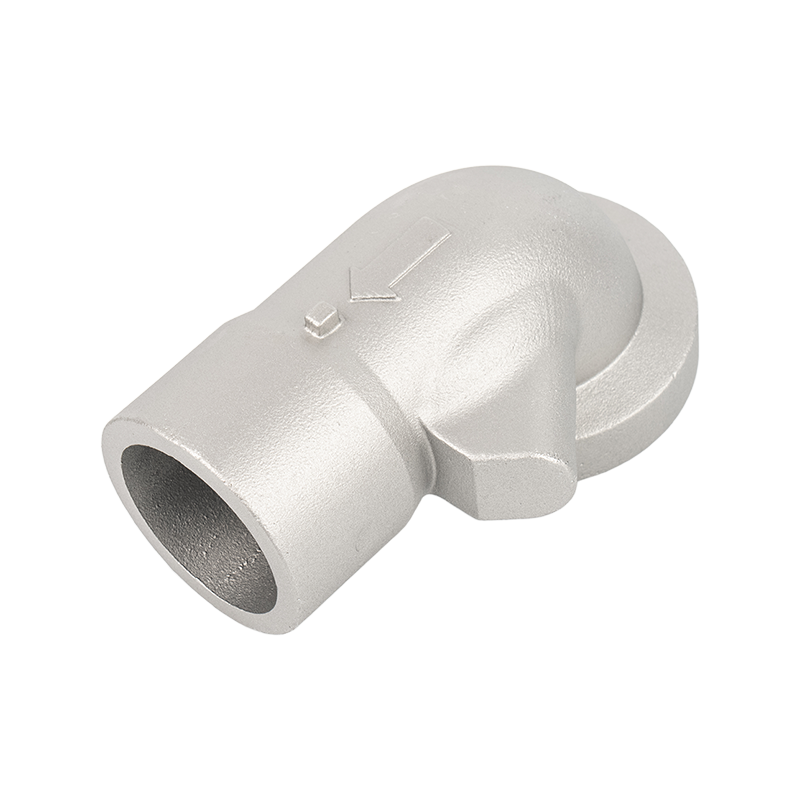 High-Temperature Resistant Aluminum Alloy CastingsCustom aluminum alloy castings for high-temperature or thermal-cycling environments, with controlled alloy and cooling plus powder coating and other surface treatment options.View Product →
Powder coating is a strong choice for outdoor instrument housings, motor covers, equipment brackets and protective castings because it combines color, hiding power and impact resistance. It is a weak choice when the coating must be electrically conductive, when the part has very fine pitch threads that cannot be masked, or when the assembly cannot tolerate the cure temperature. A 70-micron coating on a 6H thread is enough to change the fit. Masking plugs and high-temperature tape add labor, but they are cheaper than reworking a batch of castings after assembly.
Where powder coating earns its cost
- Outdoor exposure where color and gloss retention matter.
- Thick barrier protection against gravel impact, handling marks and mild chemicals.
- Parts with cast-in logos or textured surfaces where a uniform colored finish is wanted.
- Aluminum and zinc castings that can be coated before final assembly or after careful masking.
- Products where a primer plus topcoat liquid system would add solvent handling and drying time.
Where powder coating creates purchasing risk
- Critical bores, bearing seats and mating faces are coated unless masked, which can shift interference fits.
- Threads can be partially filled, causing torque and galling issues during assembly.
- Dark colors absorb heat; an outdoor enclosure in direct sun may run hotter than the internal component rating allows.
- Poor grounding or deep recesses can cause Faraday cage effects, leaving thin coating in corners.
- Repair of a cured powder film is not as simple as touching up wet paint; damaged areas often need stripping and recoating.
Anodizing Die-Cast Aluminum: Hard Surface, Tighter Process Control
Anodizing converts the aluminum surface into an oxide layer that is part of the metal, not a applied film. Sulfuric acid anodizing, often called Type II, typically produces 5 to 25 microns of oxide. Hard anodizing, often called Type III, produces a thicker and harder layer, commonly 25 to 50 microns, with specialized electrolytes and tighter bath control. The oxide layer can be clear, dyed, or black, and it is usually sealed to reduce staining and improve corrosion resistance.
Die-cast aluminum is not the same as wrought aluminum. It contains silicon, copper, iron and other alloying elements that affect anodizing uniformity. High-silicon die-cast alloys can produce a dark, uneven or slightly smutty appearance after anodizing because silicon particles do not anodize in the same way as the aluminum matrix. That does not make anodizing impossible. It means the alloy, the casting skin and the polishing step must be specified. A part that is machined from the as-cast surface may anodize differently from a part that retains the casting skin. If a decorative class A surface is required, a polishing or bright-dip step is often needed before anodizing.
Dimensional change is smaller than powder coating but still real. Anodizing grows the surface both outward and inward. A common planning figure is that the oxide grows about half outward and half into the substrate, so a 20-micron oxide may add roughly 10 microns to a dimension. That is enough to matter on press-fit bores, fine threads and precision shafts. Hard anodizing on aluminum can also reduce fatigue strength, so highly stressed parts need engineering review rather than a shop-floor decision.
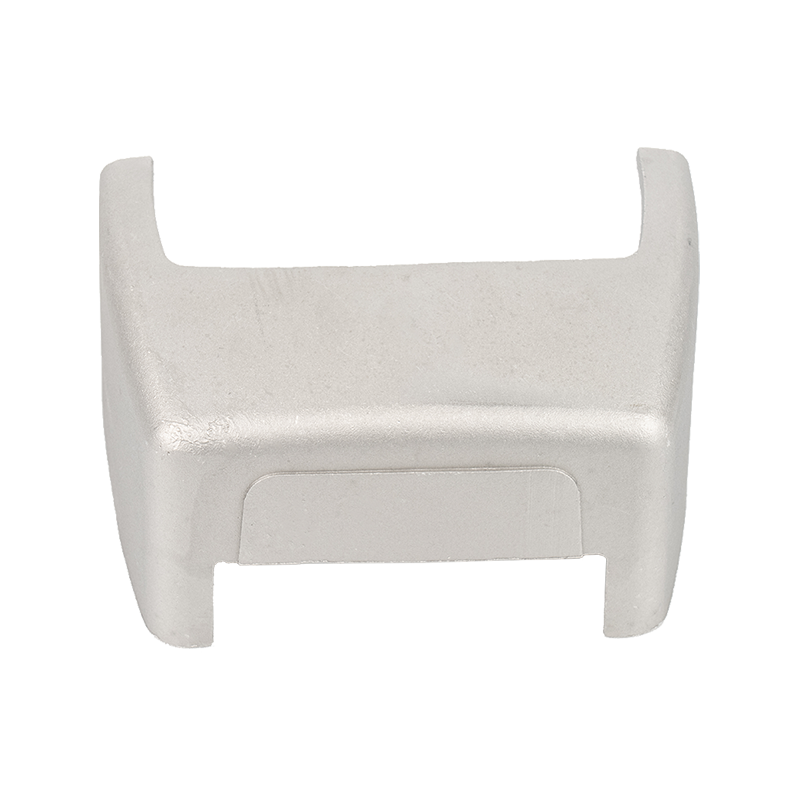 Aluminum-Zinc Alloy Corrosion-Resistant CastingsCustom aluminum-zinc castings for corrosive or humid environments, with precision die casting, CNC-machined interfaces, and optional powder coating, painting, electrophoresis, or electroplating for added protection.View Product →
Anodized aluminum is electrically insulating in the oxide layer. That is useful for parts that must resist galvanic corrosion or provide a dielectric barrier, but it is a problem when the housing is also the electrical ground path. Masking contact areas, using conductive masking, or specifying a post-treatment that restores conductivity can solve the issue. The same applies to threaded grounding studs and connector interfaces.
Anodizing strengths
- Hard, wear-resistant surface for sliding contact, handling and mild abrasion.
- Metallic appearance with clear, black, bronze or dyed colors.
- Good corrosion resistance when the oxide is properly sealed and the alloy is suitable.
- Lower dimensional buildup than most powder coatings.
- No organic film to chip or peel in the same way as paint, although the oxide can crack under severe deformation.
Anodizing limitations
- Color matching across batches is more sensitive to alloy, bath chemistry and oxide thickness than powder color matching.
- High-silicon die-cast aluminum may show a dark or mottled appearance unless the process is developed for that alloy.
- Sharp edges and deep recesses can receive uneven oxide thickness.
- Electrical conductivity is lost unless contact areas are masked or post-machined.
- Hard anodizing can reduce fatigue performance and is not a default choice for highly stressed structural castings.
Plating on Zinc and Aluminum Die Castings: Bright, Conductive and Demanding
Plating covers several processes. Zinc die castings are commonly electroplated with copper, nickel and chromium for decorative hardware, automotive trim and appliance parts. They may also receive zinc-nickel, electroless nickel, tin or silver finishes for corrosion, wear or electrical contact. Aluminum die castings can be plated after a zincate activation sequence, but the process is more sensitive than plating on zinc because aluminum forms a natural oxide immediately after cleaning. A weak activation step leads to poor adhesion, blisters or peeling after humidity exposure.
Decorative copper-nickel-chrome on zinc die castings is a multilayer system. Copper helps level the surface and build a ductile base. Nickel provides corrosion resistance and a bright base. Chromium provides tarnish resistance and the final appearance. The total coating thickness may range from roughly 10 to 30 microns depending on the specification, but the distribution is not uniform. High-current-density areas such as edges and corners receive more deposit; recesses and internal corners receive less. That is why rack design, part orientation and shielding are part of the plating specification, not just the bath chemistry.
Plating is the best of the three when the part needs a bright metallic appearance, electrical conductivity, solderability or a specific wear surface. It is also the least forgiving when the casting has porosity, cold shuts, inclusions or poorly prepared surfaces. A subsurface pore can trap plating solution and cause a blister after several days or weeks. A polishing step can smear metal over a pore and hide it until the part reaches the customer. For that reason, plating on die castings should be quoted with a clear acceptance standard for porosity, surface finish and adhesion testing.
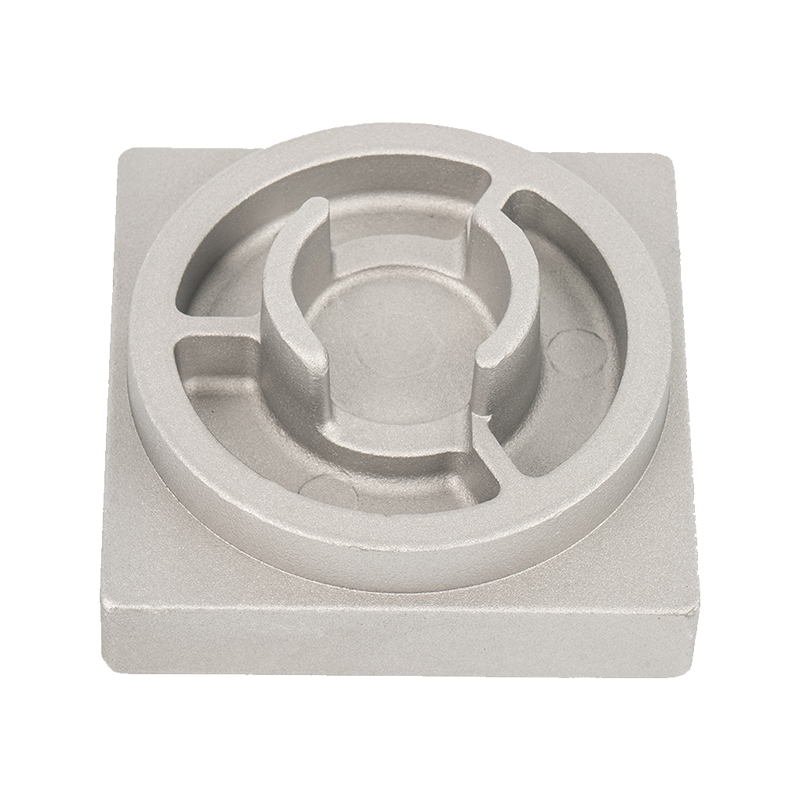 Precision Aluminum Alloy Cast PartsCustom aluminum cast components for industrial, electronic, and automation equipment, with precision die casting, CNC-machined interfaces, and surface treatments including electroplating, anodizing, and polishing.View Product →
Electroless nickel is different from electroplating. It deposits a nickel-phosphorus alloy without an external current, so it covers recesses and internal surfaces more evenly. It can provide good corrosion resistance and wear resistance, and it can be soldered. However, electroless nickel on aluminum still requires proper pretreatment, and the deposit can be brittle if the phosphorus content and heat treatment are not controlled. For a die-cast aluminum valve body or instrument housing, electroless nickel can be a practical choice when the bore geometry matters more than a mirror-bright cosmetic finish.
Plating strengths
- Bright decorative appearance for visible hardware and trim.
- Electrical conductivity for grounding, shielding and contact surfaces.
- Good wear resistance with nickel, chromium or electroless nickel systems.
- Established specifications and test methods for adhesion and salt-spray performance.
- Can be applied selectively with masking and racking.
Plating limitations
- Porosity in the die casting can cause blisters, pits or staining after plating.
- Complex geometries create thickness variation at edges, recesses and internal corners.
- Plating chemicals and rinsing must be controlled to avoid trapped solution in blind holes.
- Hydrogen embrittlement is a concern for high-strength steels, not typically for zinc and aluminum die castings, but baking requirements should still be confirmed for any mixed assembly.
- Color and gloss can vary with substrate polishing and deposit thickness.
Powder Coating, Anodizing and Plating Compared
The table below is a practical comparison for die-cast aluminum and zinc components. It assumes a production environment with controlled pretreatment and a specified acceptance standard. “Typical thickness” is a starting point, not a purchase specification. The final drawing should state the standard, color, gloss range, masking zones, coating thickness on critical surfaces and test methods.
| Selection factor | Powder coating | Anodizing | Plating |
|---|---|---|---|
| Typical thickness | 60–120 microns | 5–25 microns Type II; 25–50 microns Type III | 10–30 microns for decorative multilayer; varies by system |
| Best substrate fit | Aluminum and zinc die castings | Aluminum die castings, with alloy and silicon control | Zinc die castings; aluminum with zincate pretreatment |
| Appearance | Wide color range, matte to gloss, textured options | Metallic, clear, black, dyed; alloy-dependent uniformity | Bright metallic, chrome-like, satin or matte nickel |
| Corrosion resistance | Good barrier when pretreatment and edge coverage are controlled | Good when sealed; alloy and oxide quality matter | Good to excellent with multilayer systems; porosity is the main risk |
| Abrasion resistance | Moderate; soft powders mar more easily than hard anodizing | High, especially hard anodizing | Moderate to high depending on nickel or chromium deposit |
| Electrical conductivity | Insulating unless special conductive coating is used | Insulating oxide; contact areas must be masked | Conductive; suitable for grounding and contact surfaces |
| Dimensional impact | High; threads and bores usually need masking | Low to moderate; oxide grows into and out of surface | Moderate; buildup is uneven on complex shapes |
| Thermal exposure | Cure often 180–200 degrees Celsius | Process baths are typically below 30 degrees Celsius, with sealing and dye steps | Bath temperatures vary; baking may follow plating |
| Typical use | Outdoor housings, covers, brackets, motor parts | Instrument bodies, wear surfaces, decorative aluminum | Decorative zinc hardware, conductive parts, wear surfaces |
| Main purchasing risk | Masking, cure temperature, edge coverage and color batch variation | Alloy suitability, dye consistency and electrical contact zones | Porosity, adhesion, blistering and thickness distribution |
Cost and Lead Time: Compare the Whole Process, Not the Bath Price
A low finishing price per square meter can hide a high total cost. Powder coating usually has a lower material cost than decorative plating, but it may require masking, racking, oven curing and more space between parts. Anodizing has moderate chemical and energy costs, but dyeing, sealing and polishing can add steps. Plating can be the most expensive when multiple layers, polishing, racking and adhesion testing are required. The chart below shows a relative process cost index for a medium-complexity die-cast part in a controlled production setting. It is not a quotation; it is a way to compare cost drivers.
Relative cost index for planning only. Part geometry, masking, rack density, inspection level and batch size can change the ranking.
Lead time follows a similar pattern. Powder coating is often a same-day or next-day process once parts are clean and racked, but color changes and oven capacity can create queues. Anodizing depends on bath scheduling, dye lots and sealing; black and dark colors may have longer changeover times. Plating lines are often scheduled by rack or barrel load, and decorative multilayer plating may require polishing before plating and inspection after plating. If a project has a fixed installation date, the finish should be qualified before the casting is released for production, not after the first shipment is packed.
Tolerance, Masking and the Drawing Details That Prevent Rework
Surface treatment changes the part. The change may be small, but it is rarely zero. A 100-micron powder coating on a 10 mm bore can reduce the diameter by 200 microns if both sides are coated. An anodized thread can become tight after only 15 microns of oxide because the thread flank grows on both sides. A plated bore can lose clearance in recesses where the deposit is uneven. These are not finishing defects; they are specification gaps. The drawing should identify which surfaces are functional, which are cosmetic, and which may be coated without restriction.
Useful drawing notes include a finish code, a standard reference, a color or gloss target, a thickness range, masking zones, and acceptance tests. For threads, state whether the thread is cut after coating, masked before coating, or allowed to be coated with a specified gauge check. For mating faces, state flatness and surface roughness after finishing. For electrical grounding points, state the maximum resistance or the requirement to mask the contact area. For bearings and seals, state the final bore tolerance after finishing, not only the pre-finish tolerance.
Powder coating notes
Specify powder chemistry, color standard, gloss range, thickness on visible and hidden surfaces, cure schedule, masking plugs, thread protection and touch-up policy. Confirm that pre-assembled inserts or seals are removed before curing.
Anodizing notes
Specify alloy, Type II or Type III, oxide thickness, dye color, sealing method, polishing before anodizing and contact areas that must remain conductive. Confirm the allowable dimensional growth on bores and threads.
Plating notes
Specify the layer system and minimum thickness by layer, substrate finish, rack marks, allowed contact points, adhesion test, salt-spray duration and porosity acceptance. State whether polishing is allowed before plating.
Corrosion Testing: Salt Spray Is a Screening Tool, Not a Field Guarantee
Neutral salt spray testing, such as ASTM B117 or ISO 9227, is widely used to compare coated and plated die castings. A result of 500 hours or 1,000 hours can sound definitive, but the test is not a prediction of every service environment. Salt spray uses a continuous fog at a controlled temperature. Real service may involve wet and dry cycles, UV, road grit, cleaning chemicals, galvanic contact with other metals and mechanical damage. A powder-coated part with a scribe line may fail earlier than an unscribed sample because the test accelerates edge corrosion. A plated part may pass salt spray but still blister in a humid warehouse if plating solution was trapped in a pore.
For a more meaningful qualification, combine salt spray with adhesion testing, humidity testing, thermal cycling and a visual inspection of edges, threads and masked boundaries. ASTM D3359 cross-cut adhesion is common for coatings. A simple bake test can reveal poor plating adhesion on zinc castings. For outdoor products, UV exposure or accelerated weathering gives information that salt spray cannot provide. For parts that are cleaned with alkaline detergents, a chemical resistance spot test is more relevant than another 500 hours of salt fog.
What to put in the test plan
- State the standard, test duration and acceptance criteria before sampling.
- Test production-representative parts, including edges, threads and masked zones.
- Record the coating thickness on flat, edge and recessed areas, not only the top surface.
- Photograph the initial condition and the condition after testing under consistent lighting.
- Retain a control sample from the same batch to compare color, gloss and adhesion.
Match the Finish to the Part, Not the Other Way Around
A die-cast motor housing that is installed indoors may need only a thin protective coating and a clean casting skin. The same housing used on a pump skid outdoors may need a conversion coating plus a polyester powder coat with masked threads and a gasket groove. An instrument enclosure carried between a temperature-controlled room and a humid plant needs corrosion resistance, but it may also need EMI shielding, which changes the finish strategy. A decorative zinc cover on a consumer product needs a bright, uniform plated surface, while a zinc bracket hidden inside the product may be better served by a simple zinc-rich coating or a cost-effective passivation.
Outdoor equipment housings
Start with powder coating. Use a UV-stable polyester system, a conversion coating, masked threads and a specified edge coverage. Check heat buildup if the enclosure contains electronics.
Instrument and valve bodies
Consider anodizing or electroless nickel when wear, cleaning and bore geometry matter. Define whether the bore is finished before or after coating, and mask any grounding contact.
Decorative zinc castings
Use multilayer plating when a bright metallic finish is required. Control casting porosity, polishing marks and rack contact points. Approve a production sample under the final lighting condition.
Precision aluminum components
Compare anodizing growth and plating buildup against the final tolerance stack. Specify masking on fits, threads and sealing surfaces before the first production run.
For castings that will see salt, condensation or repeated washdown, the substrate and the finish should be reviewed together. A corrosion-resistant casting design with good drainage, radiused edges and minimal blind holes will outperform a poor geometry with a premium coating. The same principle applies to heat: a high-temperature-resistant aluminum casting may tolerate the powder cure, but the coating itself must still be rated for the service temperature.
Supplier Evaluation: Ask for Evidence, Not Just a Finish Name
A finish name on a quotation is not a process specification. “Black anodized” can mean a decorative dye with a thin seal or a hard anodized layer with a tight thickness range. “Powder coated” can mean a 60-micron polyester film over a poorly cleaned casting or a 100-micron architectural-grade system with a conversion coating. “Nickel plated” can mean a bright decorative deposit or an electroless nickel layer with a specified phosphorus content. The purchasing team should ask for the process route, the thickness range, the pretreatment steps, the masking method and the acceptance tests.
Useful evidence includes first-article inspection reports, coating thickness maps, adhesion test results, salt-spray reports with photographs, color approval records and a list of approved subcontractors if finishing is outsourced. If the finishing line is internal, ask how the baths are monitored and how often they are analyzed. If the finishing is external, ask how the casting supplier controls the transfer, cleaning and handling between machining and finishing. A casting that sits in a humid warehouse for a week before plating may need a different cleaning cycle than one that moves directly from the wash line to the plating rack.
A factory review can be as simple as a live video walk-through of the casting, machining, polishing and finishing flow. Seeing how parts are racked, masked and inspected explains more than a certificate alone. You can review the production environment through a virtual factory tour before scheduling samples. The goal is not to collect documents; it is to confirm that the process can repeat the approved finish on the next order.
Common Defects and What They Usually Mean
Most finish defects are caused by the substrate, the pretreatment or the racking strategy. Changing the powder color or the plating bath chemistry rarely fixes a problem that starts with porosity, oil or an unmasked thread. The table below lists common symptoms and the first process area to investigate.
| Symptom | Likely cause | First check |
|---|---|---|
| Powder pinholes or craters | Oil, release agent or moisture on the casting; contaminated compressed air | Pretreatment cleanliness, dry-off, air filters and oven humidity |
| Powder adhesion loss at edges | Insufficient edge coverage, sharp corners, poor conversion coating | Radius the edges, adjust spray path and verify conversion coating coverage |
| Anodized color mottling | High-silicon alloy, casting skin variation, uneven polishing | Alloy certification, surface preparation and dye bath control |
| Anodized thread too tight | Oxide growth on thread flanks | Mask threads or specify post-anodizing thread chasing |
| Plating blister after humidity | Trapped solution in porosity or poor adhesion | Casting porosity, cleaning cycle, rinse quality and bake-out |
| Uneven plating in recesses | Low current density or poor rack orientation | Rack design, shielding, anode placement and part rotation |
| Color mismatch between batches | Powder lot variation, anodizing dye concentration, substrate alloy | Retained color standard, lot traceability and alloy control |
| Rack marks on visible surfaces | Contact points placed on cosmetic areas | Rack layout, masking and a drawing note for allowed contact zones |
FAQ: Die-Casting Surface Treatments
Can powder coating be used on both aluminum and zinc die castings?
Yes. Both substrates can be powder coated, but the pretreatment differs. Aluminum usually needs a suitable conversion coating or passivation, while zinc may use a phosphate conversion coating. The cure temperature and part geometry must also be checked because powder coating cures at elevated temperature.
Is anodizing stronger than powder coating?
Anodizing is usually harder and more wear-resistant at the surface, especially hard anodizing. Powder coating is usually thicker and gives a wider color range and a strong barrier, but it is an organic film that can chip or mar. The better choice depends on whether the failure mode is abrasion, UV, impact or electrical contact.
Can die-cast aluminum be anodized to a uniform black?
It can, but the alloy and surface preparation are critical. High-silicon die-cast alloys may anodize with a dark or mottled appearance. A polishing step, suitable alloy selection and tight dye bath control are often needed for a uniform decorative black.
Why does plating sometimes blister on zinc castings?
Blistering is often linked to subsurface porosity, trapped plating solution, inadequate cleaning or poor adhesion during the copper strike. A casting with interconnected porosity can pass visual inspection before plating and still blister after humidity exposure.
Does powder coating hide casting porosity?
It can hide small surface irregularities, but it does not repair porosity. A pore near the surface may outgas during curing and create a pinhole or crater. For cosmetic parts, the casting surface and the degassing step should be reviewed before coating.
Which finish should be used for an electrical grounding surface?
Plating is usually the most straightforward choice because it remains conductive. Anodizing and powder coating are insulating and require masking or post-machining at the contact area. If a coated surface must conduct, the drawing should specify the maximum resistance and the approved masking method.
How much thickness should be allowed for powder coating?
A common range is 60 to 120 microns, but the drawing should state the required thickness on flat surfaces, edges and recesses. Threads, bores and mating faces should be masked or machined after coating if the fit is critical.
Is salt-spray performance enough to approve a finish?
No. Salt spray is a useful screening test, but it does not reproduce UV, abrasion, cleaning chemicals or mechanical damage. A practical approval plan combines salt spray with adhesion, humidity, thermal cycling and a visual check of edges and masked zones.
Can a powder-coated part be repaired after assembly damage?
Small cosmetic damage may be touched up with an approved repair system, but structural or corrosion-critical damage often requires stripping and recoating. The repair policy should be agreed before production because a field repair that looks acceptable may not restore the original corrosion protection.
What is the first drawing detail to add for a finished die casting?
Define the functional surfaces. Mark which areas may be coated, which must be masked, which threads are gauged after finishing, and which surfaces must remain conductive. That one change prevents most tolerance and rework disputes later.