English
 中文简体

Content
- 1 The Short Answer: Die Casting, Gravity Casting, and Sand Casting Solve Different Production Problems
- 2 How Die Casting, Gravity Casting, and Sand Casting Actually Fill a Mold
- 3 What the Differences Mean for Component Design
- 4 Tooling, Volume, and Unit Cost: The Break-Even Logic
- 5 Alloy and Defect Trade-offs: Porosity, Strength, and Leak Tightness
- 6 Finishing, Machining, and Environmental Durability
- 7 A Practical Selection Matrix for Buyers and Engineers
- 8 Common Mistakes When Comparing Die Casting with Gravity or Sand Casting
- 9 FAQ: Die Casting vs Gravity and Sand Casting
- 9.1 Is die casting always stronger than gravity casting?
- 9.2 Can sand casting hold the same tolerance as die casting?
- 9.3 When is gravity casting better than die casting?
- 9.4 Which process is best for a pressure-tight valve body?
- 9.5 Does die casting require machining?
- 9.6 What is the main cost driver in sand casting?
- 9.7 Can the same CAD model be quoted for all three processes?
- 10 How to Build a Quote Package That Gets a Useful Answer
The Short Answer: Die Casting, Gravity Casting, and Sand Casting Solve Different Production Problems
Die casting is the correct production route when a zinc or aluminum component needs thin walls, tight repeatability, and high annual volume in a hardened steel mold. Gravity casting is usually the better fit for thicker permanent-mold parts in medium volumes, especially when internal pressure is lower and tooling budget is tighter. Sand casting remains the practical choice for large, complex, low-volume shapes where a disposable sand mold can absorb geometry that would be expensive or impossible to cut into steel.
The difference is not simply “old process versus new process.” It is a difference in how the mold is made, how the metal fills the cavity, how fast the part cools, how much machining allowance is required, and how much tooling money must be committed before the first saleable casting is produced. A buyer who compares only the quoted piece price will often choose the wrong process, then recover the mistake through extra machining, leak testing, scrap, or a second mold.
High-Pressure Die Casting
Molten aluminum or zinc is injected into a steel die at high speed and pressure. The die is reusable, cycle times are short, and thin walls are practical. Tooling cost is the main barrier.
Gravity Casting
Metal is poured into a permanent metal mold and fills the cavity under gravity. It suits thicker sections and medium volumes, with lower injection-related turbulence than die casting.
Sand Casting
A disposable sand mold is made around a pattern. Tooling is relatively low cost, large parts are feasible, and design changes are easier, but dimensional consistency and surface finish are less precise.
For a pressure-reducing valve body, a waterproof motor housing, or an outdoor instrument enclosure, the process decision should start with wall thickness, leak-tightness target, annual quantity, alloy, machining strategy, and the acceptable tooling amortization period. The rest of this guide explains those trade-offs in the order that affects real quotes.
How Die Casting, Gravity Casting, and Sand Casting Actually Fill a Mold
High-pressure die casting
In high-pressure die casting, two hardened steel die halves close and molten metal is forced into the cavity through a runner and gate. Fill speed is high, pressure is maintained during solidification, and the die opens to eject the casting. Aluminum die casting typically uses alloys such as ADC12 or A380 when fluidity and castability matter, while zinc die casting can hold very thin sections and fine detail. The process is fast, repeatable, and well suited to integrated features such as bosses, ribs, mounting holes, and cored passages.
The trade-off is tooling and process control. A die must be designed with proper gating, overflow, cooling, and ejection. Porosity control depends on fill simulation, vacuum assistance where needed, die temperature balance, and clean metal handling. A part that is easy to draw in CAD may be difficult to fill without turbulence or shrinkage defects.
Gravity casting
Gravity casting, often called gravity die casting or permanent mold casting when a metal mold is used, pours molten metal into a reusable mold without high injection pressure. The mold may be cast iron or steel, and the cavity fills by gravity through a designed runner and riser system. Because fill is slower and less turbulent, gravity casting can be suitable for thicker sections and parts where internal soundness is more important than minimum wall thickness.
Gravity casting is not the same as sand casting. The mold is permanent, so cycle times and surface finish are generally better than sand casting, but the mold geometry must allow the part to be removed. Undercuts, large cores, and very complex internal passages can become expensive or impractical. Tooling cost usually sits between sand casting and high-pressure die casting, depending on mold complexity and core count.
Sand casting
Sand casting uses a pattern to form a cavity in sand, usually in two or more mold sections. Molten metal is poured into the sand mold, and the mold is broken away after solidification. The pattern can be wood, plastic, or metal; for low-volume work, pattern cost is often much lower than a steel die. Sand casting can produce large housings, thick flanges, and shapes that would be difficult to eject from a permanent mold.
The limits are dimensional repeatability, surface finish, and labor content. Each mold is new, so draft, sand compaction, core placement, and shakeout all affect consistency. Machining allowance is usually larger than in die casting. That does not make sand casting low quality; it means the process belongs where size, volume, and geometry make a disposable mold economically rational.
| Process | Mold | How the mold fills | Typical production fit |
|---|---|---|---|
| High-pressure die casting | Reusable hardened steel die | Molten metal injected at high speed and pressure | Thin-wall, high-volume aluminum or zinc parts with tight repeatability |
| Gravity casting | Reusable metal mold | Molten metal poured and filled by gravity | Medium-volume parts with thicker walls and moderate complexity |
| Sand casting | Disposable sand mold around a pattern | Molten metal poured into a sand cavity | Large, low-volume, complex shapes with higher machining allowance |
If you want a broader view of how these routes sit beside other foundry methods, the guide to different aluminum casting methods gives a useful process map before a quote review.
What the Differences Mean for Component Design
Design rules change because the mold and fill mechanism change. Die casting can hold thin walls, but it demands uniform wall transitions, adequate draft, and careful gate placement. Gravity casting tolerates thicker sections more naturally, but it needs feeders and risers that may leave witness marks. Sand casting offers geometry freedom, but the pattern, sand strength, and core supports set the practical minimum section and surface condition.
A die-cast drawing should not copy a sand-cast drawing without a design review. Sharp internal corners, sudden section changes, deep narrow pockets, and undrafted side walls can shorten die life or create soldering and porosity. Gravity casting drawings need attention to feeding direction and hot spots. Sand casting drawings need machining allowance and a clear datum strategy so that the first cut does not expose sand inclusion or shrinkage.
Tolerances follow the same logic. Die casting can usually hold closer as-cast dimensions, but machining is still needed for sealing faces, bearing bores, and critical mounting interfaces. Gravity casting can hold moderate tolerances with stable tooling, while sand casting generally requires more generous as-cast tolerance and more machining stock. The mistake is to specify a die-casting tolerance on a sand-cast print and then treat every out-of-tolerance casting as a supplier failure.
For a precision-machined pressure-reducing valve body, the design often includes cored internal passages, a flat sealing face, threaded ports, and a spring chamber. Die casting can produce the near-net shape at high volume, but the valve seat and sealing surfaces still require machining and leak testing. If the annual volume is modest or the body is large and thick-walled, gravity casting may reduce tooling risk. If the body is small, thin-walled, and produced in tens of thousands, die casting usually wins on cycle time and repeatability.
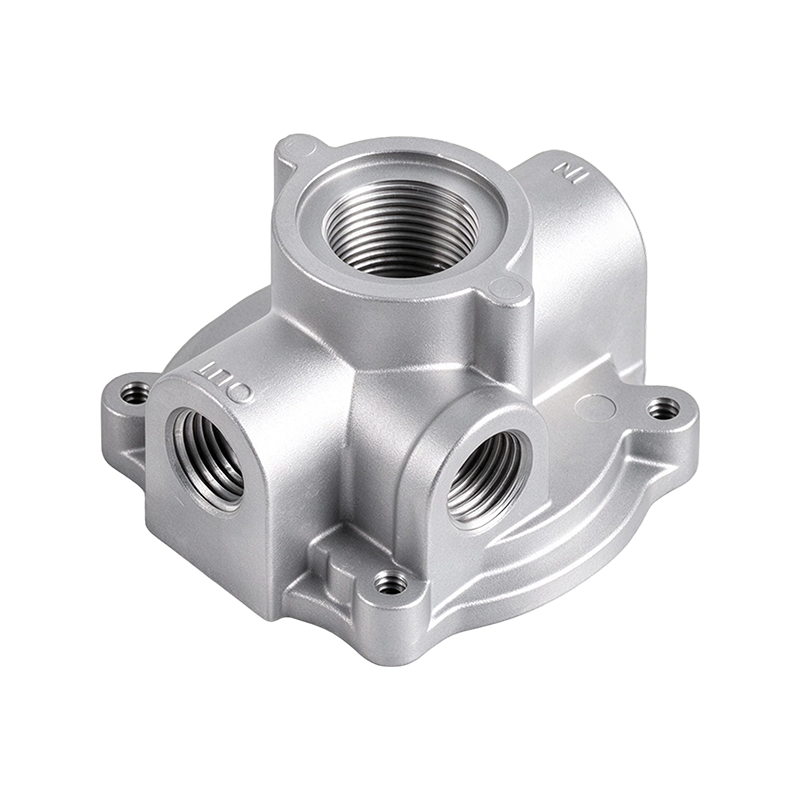
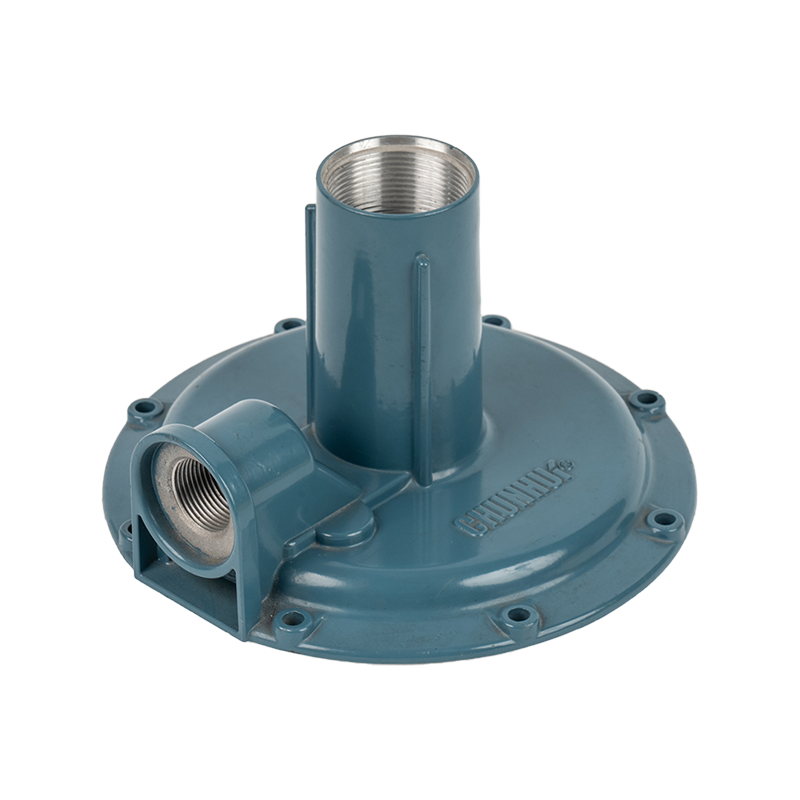 Custom Precision-Machined Pressure-Reducing Valve BodyCustom aluminum or aluminum-zinc valve body for pressure-reducing systems, with machining and surface treatment options to support sealing faces and assembly accuracy.View Product →
The same review applies to motor housings and instrument enclosures. A die-cast housing can integrate mounting bosses, cooling ribs, and connector openings, but the die must be designed so that the part ejects cleanly. A gravity-cast housing may be more forgiving on wall thickness, yet it can require more machining on the bearing seats and sealing grooves. A sand-cast enclosure may be the practical route for a large outdoor cabinet, but the machining plan must account for a rougher skin and more stock removal.
Tooling, Volume, and Unit Cost: The Break-Even Logic
Tooling is where the process comparison becomes financial. A high-pressure die casting tool is a precision steel assembly with cavities, cores, slides, ejector systems, cooling lines, and often a vacuum system. Its cost can be many times a sand pattern or a gravity mold, but the die can run very high volumes with short cycle times. Gravity casting tooling is usually less expensive than a comparable die-casting tool, but it is not cheap when cores and slides are needed. Sand casting has the lowest entry cost for many large parts because the pattern and core boxes are simpler, but each mold consumes labor and sand.
Low-volume launch
Sand casting often lowers the financial risk because the pattern can be revised or replaced without scrapping a steel die. It is also practical for bridge tooling, pilot builds, and large replacement parts.
Medium-volume production
Gravity casting can sit in a useful middle zone: better repeatability than sand, lower tooling exposure than die casting, and enough durability for steady production.
High-volume production
Die casting usually wins once the annual quantity is high enough to absorb tooling and process validation. The cycle time advantage compounds across every shift.
The break-even point is not a single number. It depends on part size, number of cavities, die complexity, alloy, machining content, scrap rate, and the customer’s cost of quality. A small zinc die-cast component with a simple two-cavity die may break even at a much lower volume than a large aluminum housing with multiple slides and vacuum assistance. A sand-cast part with heavy machining may look cheap at the quotation stage but become expensive once fixture time, tool wear, and scrap are included.
Buyers should ask for a cost breakdown that separates tooling, casting, machining, surface treatment, gauging, and packaging. It is also fair to ask how the supplier calculated the proposed cavity count. One cavity reduces tooling cost but raises piece price; multiple cavities lower cycle cost per part but increase tooling and require a larger machine. The right answer depends on the order forecast, not on a generic rule.
A waterproof motor housing is a good example. If the housing has a thin wall, integrated cooling ribs, a precision bearing bore, and a sealing groove, die casting can reduce machining and hold a stable wall section. The die cost is justified by annual volume, and the process can be validated with leak testing and dimensional layout. If the same housing is large, thick-walled, and required in hundreds rather than tens of thousands, gravity casting or sand casting may be more sensible while the design matures.
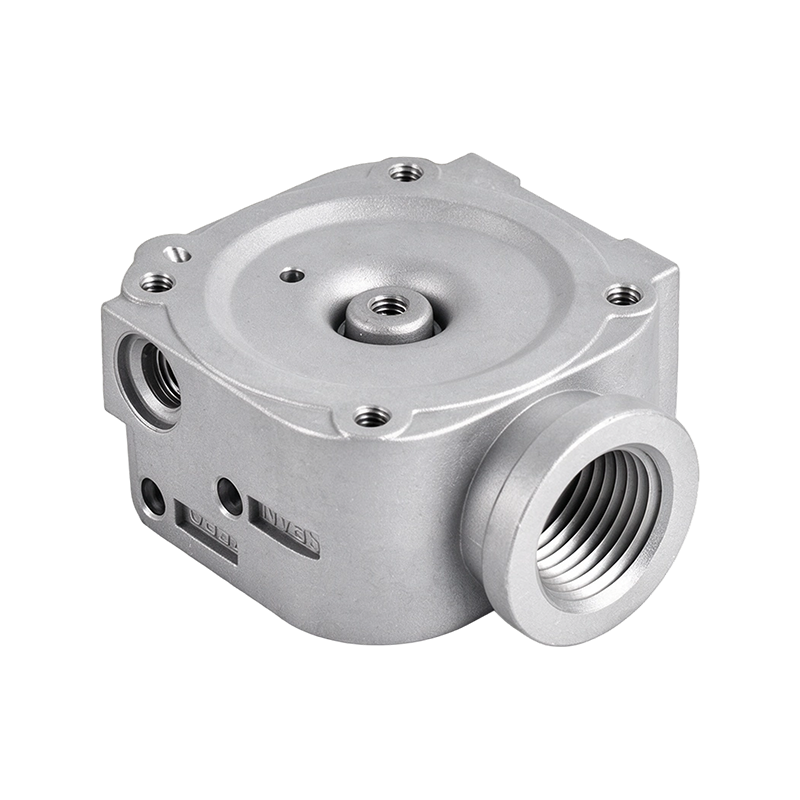
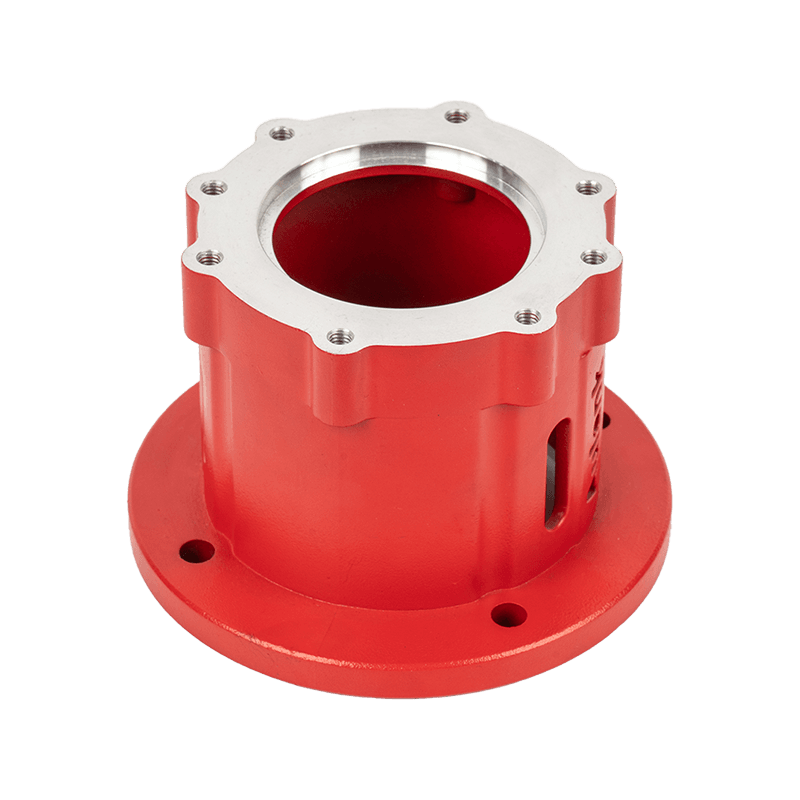 Custom Waterproof Aluminum Motor HousingCustom aluminum motor casing for industrial environments, offering waterproofing, corrosion resistance, heat dissipation, and sealing with small-batch or large-scale production support.View Product →
Do not compare a die-cast quote against a sand-cast quote without normalizing the scope. One quote may include machining, leak testing, impregnation, and coating; another may be casting only. One may quote a hardened die with a defined shot life; another may quote a lighter tool with no maintenance plan. Normalize the deliverable before comparing the total cost of ownership.
Alloy and Defect Trade-offs: Porosity, Strength, and Leak Tightness
Die casting, gravity casting, and sand casting do not produce the same defect profile. High-pressure die casting fills fast, which is excellent for thin walls but can entrain gas if the gating and venting are poor. That is why vacuum-assisted die casting, overflow design, and die thermal control matter on leak-critical parts. Gravity casting fills more slowly, which can reduce turbulence, but it relies on risers and directional solidification to feed shrinkage. Sand casting introduces sand-related risks such as sand inclusion, mold erosion, and core shift, while also requiring adequate feeding of thick sections.
| Process | Main quality focus | Common countermeasure | Effect on machining |
|---|---|---|---|
| Die casting | Gas porosity, cold shut, flash, die soldering | Fill simulation, vacuum assistance, die temperature control, proper draft and ejection | Near-net shape reduces stock, but leak paths may require impregnation or local machining |
| Gravity casting | Shrinkage porosity, misrun, core shift | Riser design, chill placement, controlled pouring temperature, mold coating control | More consistent than sand in some areas, but feeding and gate removal must be planned |
| Sand casting | Sand inclusion, gas porosity, dimensional variation, rough surface | Sand control, core venting, pattern maintenance, generous machining allowance | Higher stock removal and more fixture sensitivity; datums must be chosen carefully |
Strength is not decided by process name alone. Alloy, section size, cooling rate, porosity, heat treatment, and machining all affect the final part. A die-cast alloy with fine grain and low porosity can outperform a poorly fed gravity casting in a critical section. A well-designed gravity casting can be a better choice for a thick, pressure-tight body than a die casting with an unfavorable fill pattern. Sand casting can deliver sound thick sections when risering is correct, but the as-cast surface and tolerance will usually require more machining.
Leak tightness deserves its own review. A valve housing, pump cover, or motor enclosure may pass a dimensional inspection and still fail a pressure test because of interconnected porosity. The purchasing specification should state the test medium, pressure, duration, allowable leak rate, and whether impregnation is permitted. It should also state whether the test happens before or after machining, because machining can open a subsurface pore. A supplier who understands the difference will design the process around the test, not simply inspect at the end.
Finishing, Machining, and Environmental Durability
Die casting usually delivers a smoother surface and closer as-cast detail, which can reduce finishing labor. Gravity castings sit between die castings and sand castings in surface condition, while sand castings typically need more stock removal and may show a rougher skin after shakeout. That difference affects coating preparation, masking, fixture design, and the number of operations before the part reaches final assembly.
Machining strategy should be decided with the casting process, not after it. Die-cast parts can be located on as-cast features and machined in fixtures designed for high volume. Gravity castings may need more robust locating because the as-cast surface varies more. Sand castings often need a first operation that establishes a stable datum before critical bores and sealing faces are cut. If the print calls for a thin flange and the sand casting has heavy draft, the machined result may be weaker than expected.
Surface treatment also interacts with process choice. Aluminum die castings can be painted, powder coated, or selectively machined; anodizing is possible on some alloys but requires careful alloy selection because silicon content and porosity can affect appearance. Zinc die castings can be plated, painted, or chromated. Gravity and sand castings can be coated as well, but surface preparation may need more attention due to roughness and minor surface defects. For outdoor instrument enclosures, the combination of alloy, coating system, gasket design, and machining flatness determines whether the enclosure survives rain, dust, and temperature cycling.
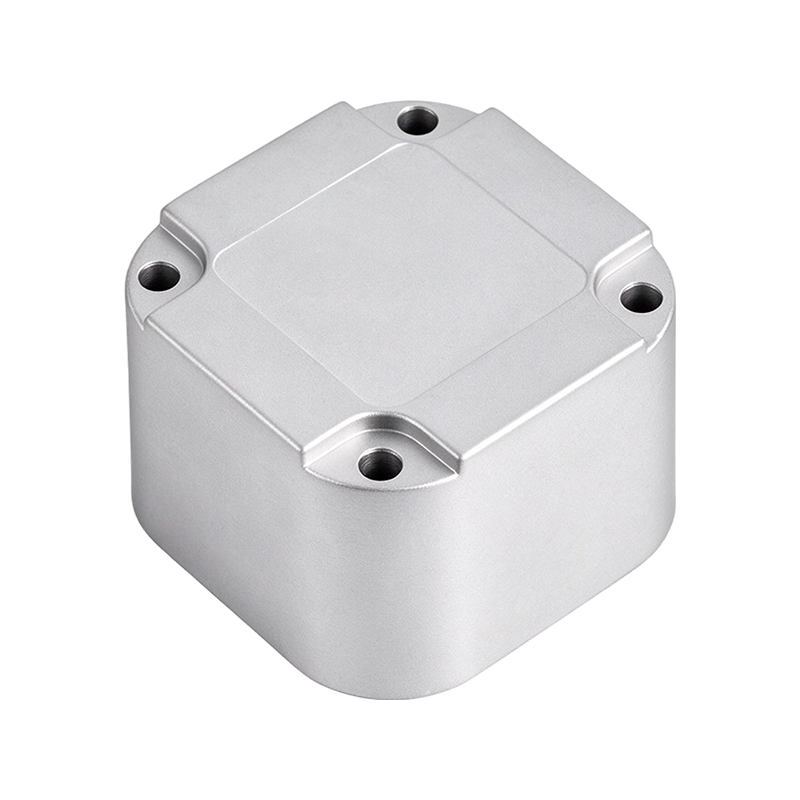
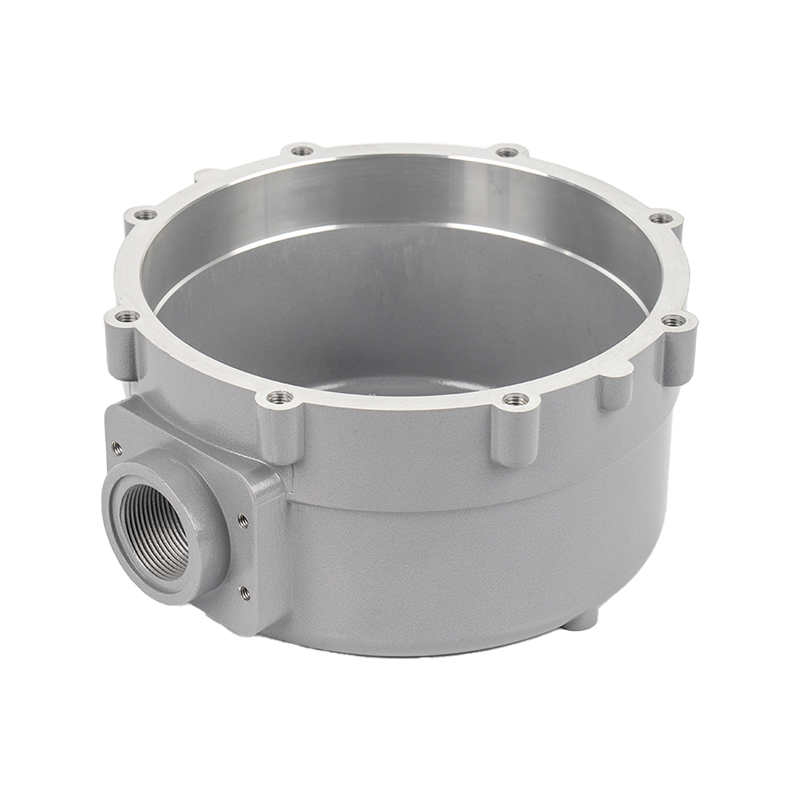 Custom Outdoor Instrument Protective EnclosuresCustom zinc or aluminum enclosures for outdoor instruments, combining die casting, CNC machining, and surface treatment for waterproof, dustproof, and corrosion-resistant protection.View Product →
At Ningbo Chip Machinery, the production chain covers mold making, die casting, machining, polishing, cleaning, and surface treatment. That matters because process choice is not only about the casting machine. A part that is designed for die casting but requires a complicated second-operation fixture can lose its cost advantage. A sand-cast part that needs three setups before the sealing face is cut can consume the savings from a low-cost pattern. Review the whole route from raw material to packed part.
For customers who want to see the production environment before releasing a tool, a virtual factory tour can be more useful than a brochure. It shows how the mold shop, die casting floor, machining area, and cleaning line connect. Quality system coverage such as ISO 9001:2015 and IATF 16949:2016 should be checked against the specific product and process, not treated as a substitute for a capable process review.
A Practical Selection Matrix for Buyers and Engineers
The fastest way to choose a process is to score the project against the criteria that drive cost and risk. Use the matrix below as a starting point, then confirm with a foundry review. A high score in one column does not automatically decide the process, but it exposes where the quote is likely to be sensitive.
| Decision criterion | Best fit when the requirement is high | Why it matters |
|---|---|---|
| Annual volume | Die casting | High volume amortizes steel tooling and rewards short cycle times |
| Part size and weight | Sand casting for large parts; die casting for compact parts | Machine size, mold handling, and sand mold practicality set limits |
| Wall thickness | Die casting for thin walls; gravity or sand for thicker sections | Fill and solidification behavior change with section thickness |
| Dimensional repeatability | Die casting | Steel tooling and controlled cycles reduce part-to-part variation |
| Tooling budget | Sand casting, then gravity casting | Patterns and permanent molds usually cost less than hardened dies |
| Leak tightness | Depends on design; die casting with vacuum or gravity with robust feeding | Porosity control must be designed into gating, feeding, and validation |
| Surface finish | Die casting | Steel mold surfaces transfer finer detail than sand molds |
| Geometry freedom | Sand casting | Disposable molds can accommodate large cores and complex shapes |
| Machining content | Die casting for lower stock; sand casting expects more stock | Near-net shape reduces cycle time but requires stable tooling |
Use the matrix with a real forecast. A three-year volume plan, a tolerance stack-up, and a leak-test specification will produce a better decision than a one-page RFQ. If the forecast is uncertain, ask for a bridge strategy: sand casting for pilot quantities, gravity casting for market validation, or a die-cast design that can later move into a hardened tool once volume is confirmed.
Common Mistakes When Comparing Die Casting with Gravity or Sand Casting
- Comparing piece price without normalizing machining, coating, leak testing, and packaging. A low casting price can hide a high total cost.
- Using a sand-casting tolerance on a die-casting drawing, or the reverse. The process capability must match the drawing, not the buyer’s hope.
- Ignoring draft and ejection. A die-cast part with vertical walls and deep pockets may need slides that add tooling cost and maintenance.
- Selecting an alloy for machinability without checking castability. Fluidity, hot cracking, and porosity response differ by alloy and process.
- Forgetting tooling lead time. A die-casting tool may require design, steel procurement, machining, heat treatment, trial shots, and correction before production.
- Specifying leak tightness without stating the test method and acceptance limit. “No leaks” is not a measurable requirement.
- Assuming sand casting is only for prototypes. It is also a production process for large, low-volume, and replacement parts.
- Over-specifying surface finish on a non-critical surface. Extra polishing or machining can erase the economic benefit of the chosen process.
- Starting the quote before the design review. A foundry that reviews gating, wall thickness, and machining datums early can prevent a costly tool revision.
Each mistake has a commercial consequence. A missing draft can turn a simple die into a slide-heavy tool. An unrealistic tolerance can create a permanent inspection dispute. An unspecified leak test can lead to a shipment hold. The process comparison should therefore be a joint review between design, quality, purchasing, and the manufacturing engineer who will own the part.
FAQ: Die Casting vs Gravity and Sand Casting
Is die casting always stronger than gravity casting?
No. Strength depends on alloy, section size, porosity, heat treatment, and design. A sound gravity casting can be stronger in a thick section than a die casting with poor fill or shrinkage. The correct comparison is the validated mechanical property at the critical location, not the process label.
Can sand casting hold the same tolerance as die casting?
Usually no. Sand molds are disposable and subject to sand compaction, core placement, and pattern wear. Die casting uses a steel mold with controlled closure and ejection, so it generally holds tighter as-cast repeatability. Sand casting can still meet critical tolerances after machining, but it needs more stock and a robust datum plan.
When is gravity casting better than die casting?
Gravity casting is often better when the part is thick-walled, the volume is moderate, the tooling budget is limited, or the design is still maturing. It can also be attractive when a permanent mold can be made without complex slides and when lower turbulence during fill is important.
Which process is best for a pressure-tight valve body?
Both die casting and gravity casting can work, but the decision depends on volume, wall thickness, alloy, and leak-test specification. High-volume aluminum or zinc valve bodies often use die casting with vacuum assistance and machining. Thick, lower-volume bodies may use gravity casting with controlled feeding. Sand casting is usually reserved for larger or lower-volume versions where machining allowance is acceptable.
Does die casting require machining?
Not every surface, but critical surfaces usually do. Sealing faces, bearing bores, threads, and precision mounting interfaces normally require machining after casting. Die casting reduces stock and can hold useful as-cast features, but it does not eliminate the need to establish datums and control critical dimensions.
What is the main cost driver in sand casting?
Labor and machining content are often larger than the pattern cost. Each mold is consumed, sand must be prepared and reclaimed, cores must be placed, and the casting usually carries more machining stock. For a simple large part, sand casting can be economical; for a complex high-volume part, the labor and variation can outweigh the low tooling entry cost.
Can the same CAD model be quoted for all three processes?
It can be quoted, but it should not be produced without process-specific review. Draft, wall thickness, fillets, cored holes, machining allowance, and datum strategy differ. A model optimized for die casting may need design changes for sand casting, and a sand-cast design may be unnecessarily heavy for die casting.
How to Build a Quote Package That Gets a Useful Answer
A useful quote starts with a drawing that states the manufacturing intent. Include the alloy or allow the foundry to recommend one, the annual and peak monthly quantity, the critical dimensions, the leak-test requirement, the surface treatment, and the machining scope. Identify which surfaces are cosmetic and which are functional. State whether tooling ownership, tool maintenance, and tool life are included.
Add a short process note: expected wall thickness, maximum part size, estimated weight, and any known pressure or temperature requirement. If the part is a pressure-reducing valve body, motor housing, equipment bracket, or instrument enclosure, say where it mounts and what it seals against. That context helps the foundry choose gating, feeding, and machining datums rather than quoting a generic casting.
Drawing pack
3D model, 2D drawing, tolerance stack, critical-to-quality list, alloy, and surface treatment specification.
Commercial pack
Annual volume, launch quantity, forecast horizon, target piece price, tooling budget, and delivery destination.
Quality pack
Leak-test method, inspection plan, PPAP or first-article requirement, packaging standard, and traceability expectation.
Finally, ask the supplier to explain why the selected process fits the part. A die-casting recommendation should come with a cavity count, machine size, gating concept, and expected machining plan. A gravity or sand casting recommendation should explain feeding, pattern design, machining allowance, and expected cycle time. The explanation is often more valuable than the number itself because it shows whether the process was chosen or merely quoted.