English
 中文简体

Content
- 1 Does an aluminum motor housing need machining or sealing?
- 2 Machining is not optional for a functional motor housing
- 3 Porosity: the reason leak testing exists
- 4 When does a motor housing actually need sealing?
- 5 Leak testing: methods, pressure, and acceptance criteria
- 6 Vacuum impregnation: how porosity sealing works
- 7 Alloy and design choices that reduce sealing risk
- 8 Cost, lead time, and supplier capability factors
- 9 Frequently asked questions
- 9.1 Can a motor housing pass the leak test before machining and fail after machining?
- 9.2 Is vacuum impregnation considered a repair?
- 9.3 Does anodizing or powder coating make a motor housing leak-tight?
- 9.4 What is the typical air test pressure for an aluminum motor housing?
- 9.5 Can CNC machining remove porosity?
- 9.6 Does every aluminum motor housing need 100% leak testing?
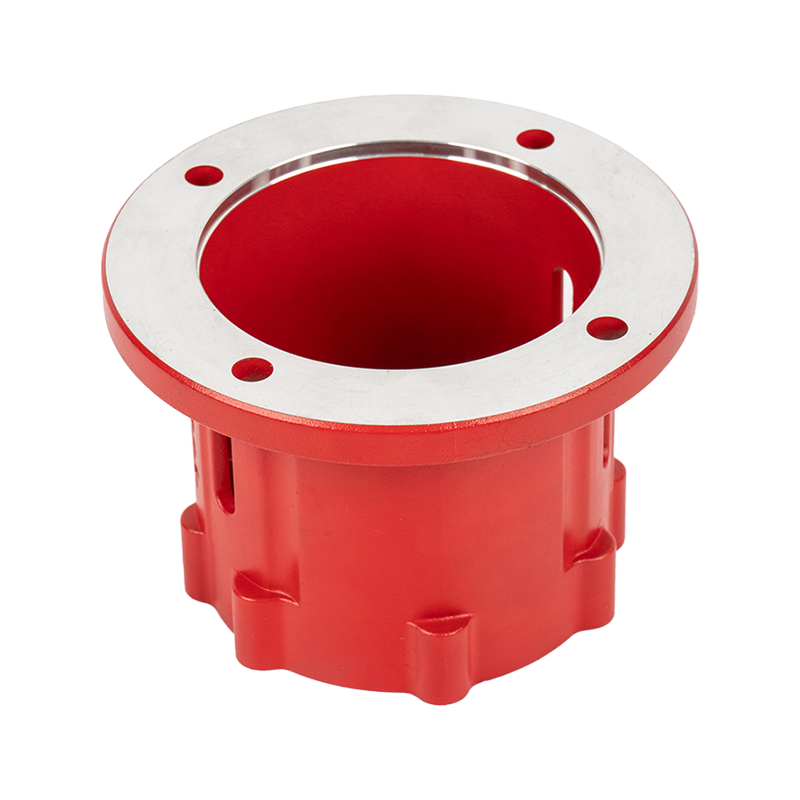
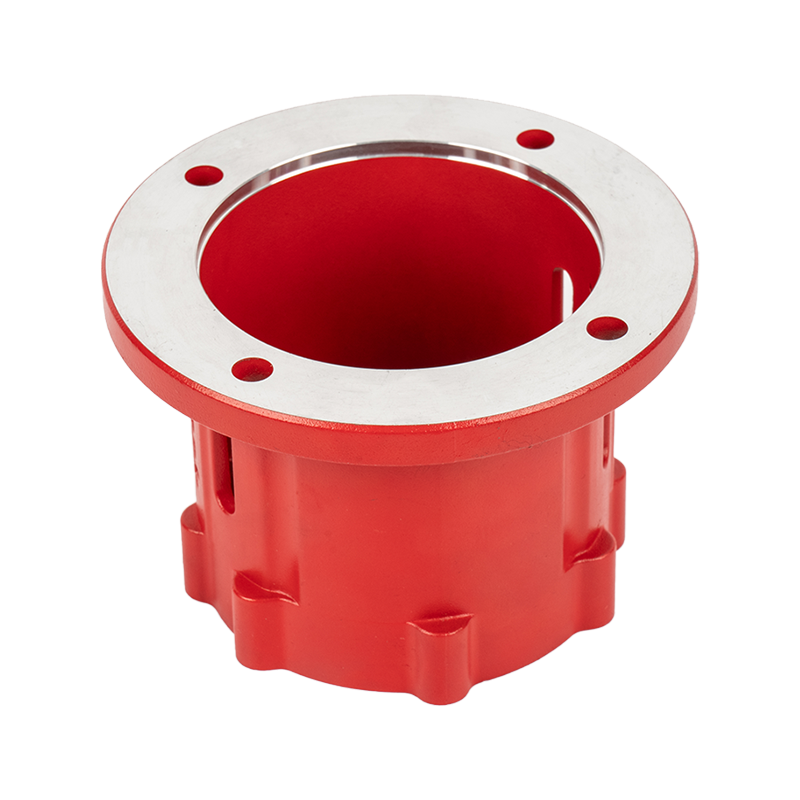 Custom Aluminum Motor Housing with Precision MachiningThis custom-machined aluminum housing offers structural support and heat dissipation for motors. Consider it for robust, application-specific motor protection.View Product →
Does an aluminum motor housing need machining or sealing?
Short answer: yes, an aluminum motor housing almost always needs machining before it can be assembled into a working motor. Sealing is a separate decision. It is required only when the machined housing must hold pressure, keep fluid out, or meet a leak rate specification that the customer and supplier agree on.
An aluminum die casting comes out of the mold with the general envelope of the housing, but not with the dimensional accuracy that a bearing seat, stator pocket, or mounting face needs. CNC machining turns the as-cast blank into a part that can hold a bearing, position a stator, and seal against an end cover. Porosity sealing, by contrast, addresses a hidden internal defect rather than a dimension. It is applied when pores in the casting wall create a continuous path for air, oil, coolant, or moisture to travel through.
This distinction matters in commercial quoting and in production inspection. Machining determines whether the housing fits its mating components. The leak test determines whether it is pressure-tight. If the housing fails that test, vacuum impregnation is the usual remedy. Understanding which step applies to your motor design saves cost, shortens validation time, and prevents field failures that are expensive to retrofit.
Machining is not optional for a functional motor housing
Motor housings are die-cast to near-net shape, but near-net shape is not a functional shape. A bearing bore that is 0.05 mm oversized, a stator pocket that is out of round, or a flange face that is not flat can generate noise, vibration, overheating, or premature bearing wear. The machining step creates the functional geometry that the motor needs.
Most aluminum motor housings pass through the following machining operations: facing of the mounting flange, boring of the bearing registers, machining of the stator bore, drilling and tapping of mounting holes, cutting of O-ring grooves, and milling of cable entry faces. Fixturing is designed around the as-cast datum features so that all critical dimensions are produced in one setup where possible. The table below summarizes typical machined features and the tolerances that motor builders expect.
| Machined feature | Typical tolerance | Reason for the requirement |
|---|---|---|
| Bearing bore | H7 or better | Accurate bearing seating; prevents rotor eccentricity and vibration |
| Stator pocket or bore | 0.05–0.10 mm total | Controls the air gap between rotor and stator for efficiency and noise |
| End cover register | 0.10 mm | Maintains concentric alignment of the rotor shaft with the end covers |
| Mounting flange face | Flatness 0.10 mm | Eliminates rocking, ensures gasket or seal compression |
| O-ring groove | ±0.05 mm | Guarantees consistent compression of the sealing ring |
| Cable gland hole | ±0.20 mm | Allows a leak-tight entry for power and sensor cables |
| Cooling jacket ports | Thread depth within ±1 turn | Secures fittings for liquid-cooled motors without leaks |
Machining also plays a major role in leak integrity. The cutting tool removes the dense outer skin of the casting, which is the layer that contains the smallest pores. Once that skin is gone, subsurface porosity becomes exposed on the machined face. This is why a housing can be leak-tight in the as-cast condition and fail a leak test after machining. The same phenomenon explains why leak testing should always be performed on the finished machined part, not on the raw casting alone.
Porosity: the reason leak testing exists
Porosity in aluminum die castings is not a defect that appears randomly. It has two main sources, and each behaves differently in a machined motor housing.
Gas porosity is created by hydrogen in the melt and by air trapped inside the die cavity during the injection stroke. The gas is present as small, mostly spherical pores. Shrinkage porosity appears during solidification, when the liquid metal cannot feed the areas that solidify last. Shrinkage pores are usually irregular and can form networks that are much more dangerous for leak-tightness than spherical gas pores.
Both types are common in aluminum high-pressure die casting. They only become a problem when they lie in a wall that must be pressure-tight, or when a machining operation opens them into a sealing face. The chart below shows an illustrative distribution of leak test failure causes across motor housing production runs, based on typical foundry experience.
The practical conclusion is that porosity is the dominant cause of motor housing leaks. The fix is not to eliminate all porosity, which is nearly impossible in high-pressure die casting, but to control its location, keep it away from leak paths, and seal it when it does intersect a pressure boundary. If you are new to the process, our guide to aluminum die casting explains how the casting method affects porosity and why high-pressure die casting is the most common route for motor housings. For a broader view, we also compare different aluminum casting processes so you can see where die casting fits relative to permanent mold and sand casting.
When does a motor housing actually need sealing?
Not every motor housing must be sealed. An open drip-proof motor frame, a fan-cooled housing with no internal pressure, or a motor that relies on a separately gasketed terminal box does not need the casting wall to be pressure-tight. In these cases, machining alone is sufficient and specifying a leak test only adds cost.
Sealing becomes necessary when the housing wall itself is the pressure barrier. The following application groups are typical examples from motor housing production programs.
Liquid-cooled EV traction motors
Coolant jackets circulate water-glycol through internal passages at 200–500 kPa. Any pore network in the jacket wall causes coolant loss.
Hermetic compressor motors
Refrigerant pressure acts directly on the housing; leaks cause refrigerant loss and system breakdown.
Submersible and IP68 motors
Continuous water immersion demands a wall that can never let moisture reach the wound stator.
Oil-lubricated gear motors
Internal oil splash and pressure can push oil through micro-porosity into the connection chamber.
There is also a second group where machining-only is normally enough, as summarized below.
TEFC frames
Totally enclosed fan-cooled frames have no internal pressure; the casting does not act as a pressure container.
Servo motors with sealed internals
If the stator is already encapsulated, the outer housing only needs dimensional accuracy.
Gasketed designs
Where the mating cover carries an O-ring or flat gasket, the gasket provides the seal, not the casting.
Cosmetic or protective covers
Separate covers that are not part of the fluid boundary can be machined and painted without leak testing.
The decision to seal is therefore driven by the motor duty cycle and the environmental specification, not by the casting process alone. A waterproof motor housing for outdoor pumps is a different part from an indoor fan motor housing, even when both start as the same aluminum alloy. The intended service environment determines whether the leak test appears on the inspection plan.
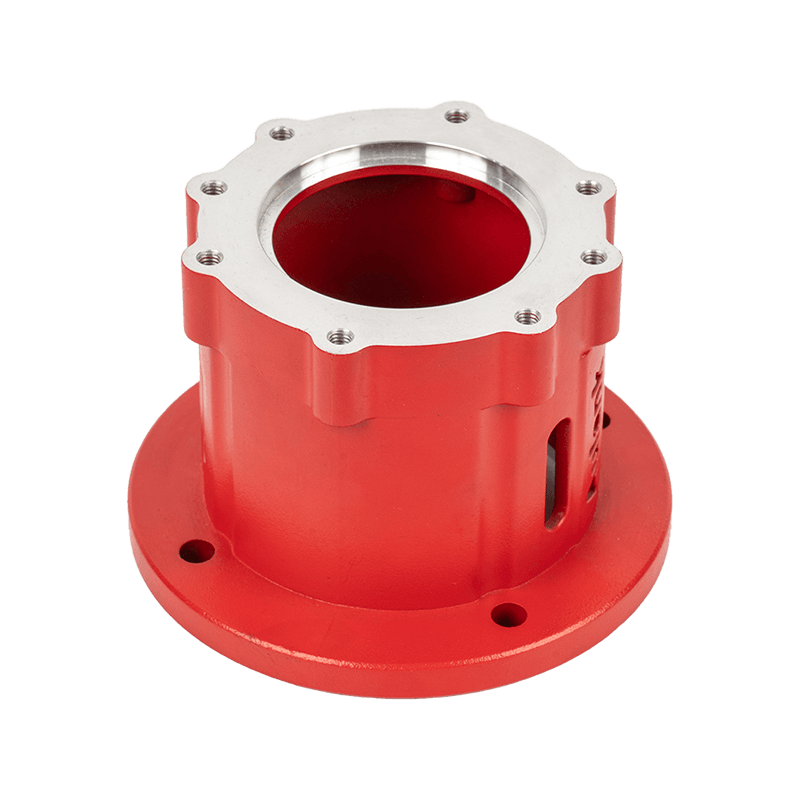
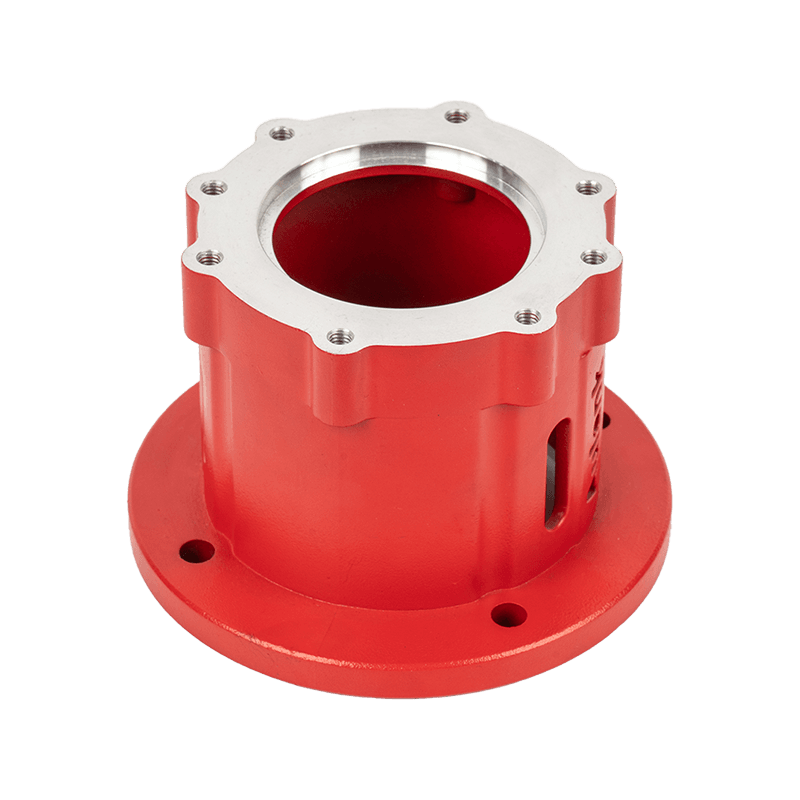 High-Performance Waterproof Motor Housing for Industrial UseThis precision-cast aluminum housing is designed for demanding sealing and corrosion resistance, ideal for motors in harsh environments where leak testing is critical.View Product →
Leak testing: methods, pressure, and acceptance criteria
Leak testing should be planned as a production operation, not as an occasional check. The method you choose changes the sensitivity of the test, the cycle time, and the cost per part. It also determines whether a small pore network is detected before the housing is shipped or later, when it is already mounted in a motor.
| Method | Detection principle | Typical sensitivity | Best suited for |
|---|---|---|---|
| Air pressure decay | Pressure drop measured over a fixed time | 1–10 sccm depending on volume | 100% production testing of housings |
| Underwater bubble test | Visual detection of bubbles under water | ~10⁻³ mbar·L/s equivalent | Small batches or failure verification |
| Mass flow / pressure flow | Measured airflow through the part at set pressure | 0.1–5 sccm | High-volume automated lines with fast cycle times |
| Helium mass spectrometry | Helium tracer gas detected by a mass spectrometer | <10⁻⁶ mbar·L/s | Critical safety parts and very tight specifications |
| Hydrostatic water pressure | Internal water pressure held for a set period | 0.1–1 MPa hold | Cooling jackets and high-pressure fluid paths |
What pressure and leak rate should you specify?
Air test pressure for motor housings is normally between 30 and 100 kPa for general leak-tightness. Liquid-cooled jackets are usually tested at 200–500 kPa, and the acceptance leak rate is expressed in sccm at a defined test pressure and stabilization time. A typical production limit is below 1–3 sccm of air at 50 kPa held for 10–30 seconds, but the correct value depends on the operating pressure of the motor, the volume of the internal cavity, and the acceptable fluid loss over the motor lifetime.
One important detail is stabilization time. A newly machined aluminum housing is clean and dry, so air testing is stable. If the housing has been impregnated, the test must run after the sealant has fully cured, because residual moisture inside pores affects the pressure decay reading. The quality department should record the test pressure, stabilization time, and measured leak rate for every tested part.
Before machining or after machining?
The sequence of testing determines whether the result is meaningful. An as-cast leak test is useful for catching gross holes, cold shuts, or thin walls early, but it does not guarantee that the final machined part is tight. The reason is simple: machining opens the dense outer skin and can expose a pore that was completely isolated in the as-cast condition.
Best practice is to machine first, then leak-test 100% of housings that must be pressure-tight. The flow below shows the production sequence used for motor housings with a sealing requirement.
If the housing is impregnated before machining, it must be leak-tested again after machining. Pre-machining impregnation is sometimes used to reduce the amount of open porosity in deep bores, but it is not a substitute for the final machined-part test.
Vacuum impregnation: how porosity sealing works
Vacuum impregnation is the accepted production method for sealing micro-porosity in aluminum die castings. The part is placed in a vacuum chamber, the air is evacuated from the open pores, and a liquid sealant is introduced while the vacuum is held, so the sealant is drawn into the pore network. Pressure is then released, and the sealant is cured to block the leak path.
The process steps are consistent across suppliers:
- Clean and dry the machined housings to remove cutting fluids and chips.
- Load the housings into a vacuum vessel and draw a vacuum of approximately 1–5 mbar.
- Flood the vessel with the sealant while the vacuum is maintained.
- Vent to atmospheric pressure, or apply additional pressure to force the sealant deeper into the pores.
- Drain the sealant, rinse the parts, and cure them according to the sealant type.
- Return the housings to the leak test station and retest 100%.
Which sealant type is used for motor housings?
| Sealant type | Cure method | Typical pore size | Production notes |
|---|---|---|---|
| Methacrylate | Hot water cure, usually 90–95 °C for 10–15 minutes | 0.1–0.5 mm | Fast cure, stable in production, most common for motor housings |
| Acrylic / anaerobic | Heat cure or catalyst | <0.1 mm | Good for very fine porosity but requires strict process control |
| Polyester | Heat cure | 0.1–0.3 mm | Mature technology, lower sealant cost, longer cure time |
Before machining or after machining?
After machining is the only reliable point for final sealing, because machining can open pores that were not connected to the surface on the as-cast part. If a motor housing is impregnated before machining and the cutter breaks into a new pore on the seal face, the final part will still leak. Suppliers that guarantee leak-tight machined housings therefore perform the final impregnation after machining and then retest. Some parts receive a preliminary pre-machining impregnation as an extra step to make the casting easier to machine, where deep internal porosity could cause tool breakage, but the final sealing decision is made on the machined housing.
Impregnation is effective for porosity, but it is not a cure for cracks, cold laps, or major voids. If the leak tester shows a large leak rate, the housing should be evaluated visually and by x-ray before impregnation is attempted. The sealant can only fill open pores; a crack that opens and closes under thermal cycling will still cause a service leak.
Alloy and design choices that reduce sealing risk
The alloy selected for a motor housing changes its porosity behavior, machinability, and sealing performance. The most common alloy families are the aluminum-silicon-copper alloys used in high-pressure die casting. The table below compares typical motor housing alloys.
| Alloy | Common specification | Porosity tendency | Machinability | Typical application |
|---|---|---|---|---|
| ADC12 | JIS H5302 | Moderate; requires process control | Excellent | Most imported and Asian-market motor housings |
| A380 | ASTM B85 | Moderate; good combination of strength and castability | Excellent | North American motor housing production |
| A356 | ASTM B26 | Lower shrinkage porosity after heat treatment | Good | Structural and high-integrity motor housings |
| Silafont 36 / Aural | Custom automotive specs | Low porosity with controlled cooling | Good | EV and automotive high-tightness housings |
Wall thickness is the next factor. Thin walls, in the range of 2–3 mm, cool quickly and produce a fine structure with fewer large shrinkage voids. Thick sections hold heat longer and create shrinkage risks. A good motor housing design keeps wall thickness as uniform as possible, avoids isolated heavy bosses, and places cored passages with a minimum wall thickness that can be reliably filled and fed.
Design also affects the machining allowance. If a sealing face will be machined, the casting drawing should specify a machining allowance large enough to clean up the as-cast skin, but not so large that the cutter exposes deep pores. A typical allowance is 0.5–1.0 mm for machined surfaces on a die-cast motor housing. Where leak-tightness is critical, the drawing should mark the sealing face and the allowable porosity class, so that the foundry and the machining shop both understand which regions must remain sound. The right casting process selection will also influence how much porosity risk the part carries; our article on choosing the right aluminum casting process covers that comparison in more detail.
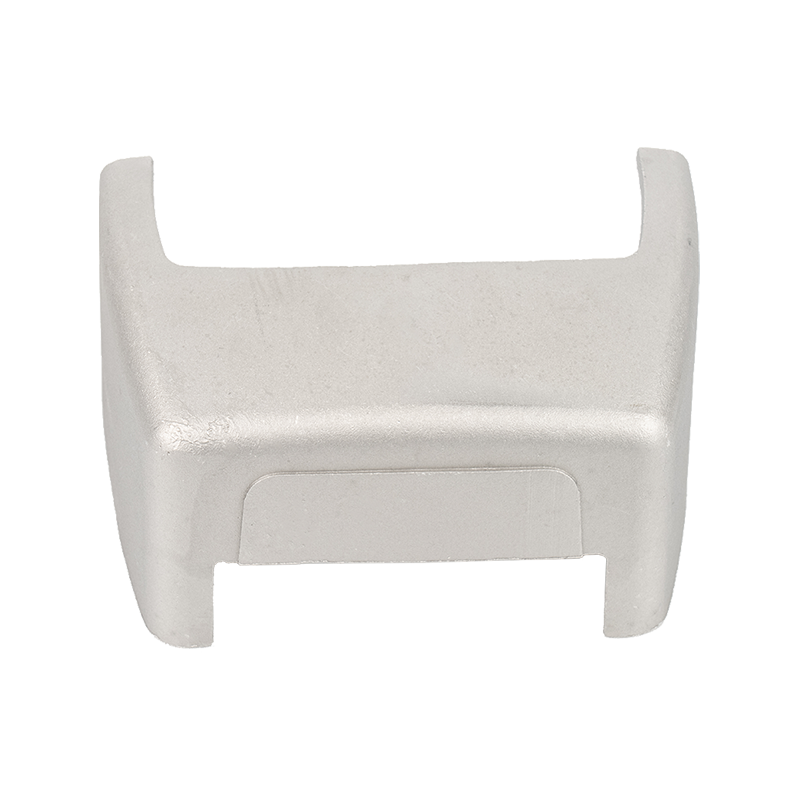
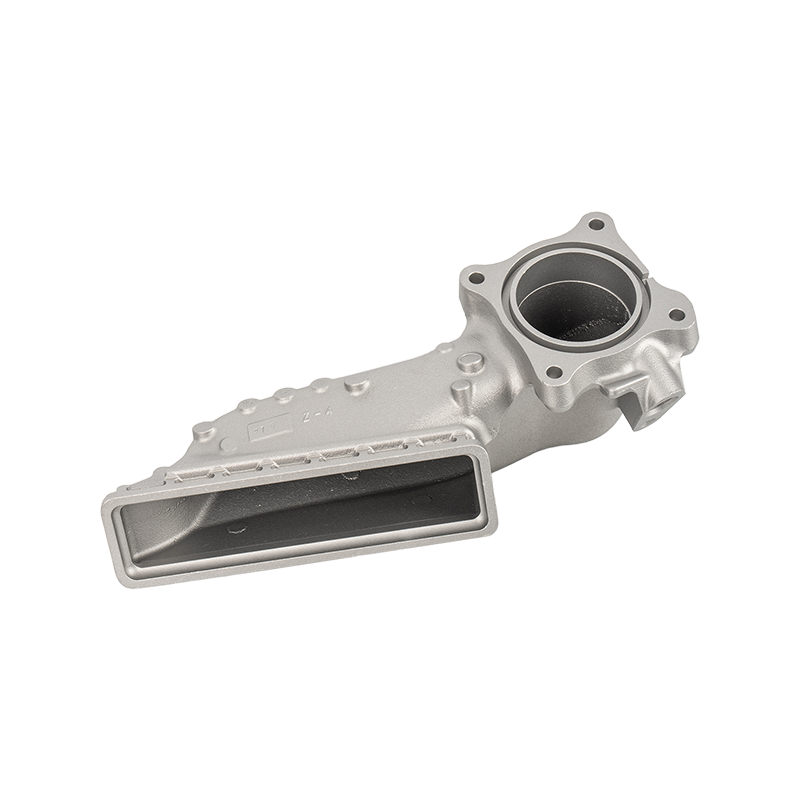 Industrial Machined Aluminum Alloy Castings for Custom EquipmentThese custom aluminum castings are machined to precise tolerances for industrial machinery, offering design flexibility and durability. Check them for reliable mechanical support.View Product →
Cost, lead time, and supplier capability factors
Machining is a standard cost for every motor housing. Sealing and leak testing add cost per part, and the per-part cost depends on the test method, the cycle time, the required leak rate, and the reject rate. Understanding these numbers before requesting a quote avoids surprises later.
The following cost factors are important:
- Machining complexity: a housing with multiple bores, threaded holes, and a tight bearing tolerance takes longer than a simple flange and pocket, so machining dominates the cycle time and the cost.
- Leak test volume: 100% leak testing requires a dedicated station, calibrated instruments, and a defined cycle time; an AQL sampling plan is cheaper but leaves the risk of undetected random porosity.
- Impregnation batch cost: vacuum impregnation is normally priced per batch, but the retest after impregnation doubles the leak test cost for rejected parts.
- Reject rate planning: a good foundry runs process control to keep the impregnation reject rate low; a high first-time failure rate indicates poor gating, poor venting, or the wrong alloy.
When you evaluate a supplier for aluminum motor housings, ask the following questions during the RFQ stage:
- Is machining performed in-house or by a subcontracted machine shop? In-house machining shortens logistics and makes responsibility clearer.
- What leak test method is standard for motor housings, and what is the acceptance leak rate?
- Can the supplier provide leak test records from the same production lot as the sample parts?
- Is 100% leak testing included in the quoted unit price, or is it offered as an optional line item?
- Does the supplier impregnate before or after machining? The answer should be after machining for final seal integrity.
- What reject rate does the supplier plan for after impregnation, and how is that risk reflected in the price?
- Which aluminum alloy does the supplier recommend for a pressure-tight motor housing, and what porosity specification is used in the casting drawing?
Frequently asked questions
Can a motor housing pass the leak test before machining and fail after machining?
Yes, and this is one of the most common findings in production. The as-cast surface has a dense skin that blocks many pores. Machining removes that skin and can open a subsurface pore into a leak path. This is why the industry recommendation is to leak-test the finished machined housing, not the raw casting.
Is vacuum impregnation considered a repair?
Technically it is a sealant repair, but it is an accepted process in aluminum die casting standards. Vacuum impregnation is used on thousands of production motor housings every day. The key is to verify by retesting that the impregnated part meets the same leak rate specification as a part that had no porosity. A properly impregnated housing can perform reliably for the life of the motor.
Does anodizing or powder coating make a motor housing leak-tight?
No. Anodizing creates a thin oxide layer, and powder coating creates a surface film. Neither penetrates deep enough to block a continuous pore network in the casting wall. Both finishes improve corrosion resistance and appearance, but neither can replace vacuum impregnation for pressure-tightness.
What is the typical air test pressure for an aluminum motor housing?
For general leak-tightness, 30–100 kPa is common. For liquid-cooled jackets, the test pressure is normally 200–500 kPa, or 1.5 times the maximum working pressure if the customer specifies a safety margin. The acceptance leak rate is usually stated in sccm at a defined pressure and stabilization time.
Can CNC machining remove porosity?
No. Machining removes material and tends to expose porosity that was hidden below the surface. It is possible to machine away a shallow porous layer, but that is not a reliable method for leak-tightness. Large visible defects are sometimes welded, but weld repair on an aluminum die casting is costly and can introduce distortion, so it is rarely used for micro-porosity.
Does every aluminum motor housing need 100% leak testing?
Only if the housing has a sealing requirement. For a motor frame with no internal pressure and a gasketed terminal box, sampling may be enough. For a liquid-cooled housing, a hermetic compressor, or a submersible motor, 100% leak testing after machining is the only way to guarantee that no leaking part leaves the factory.