English
 中文简体

Content
- 1 Where the Two Spellings Come From
- 2 The Real Difference: Alloy Designation Systems
- 3 Designation Equivalents at a Glance
- 4 Die Casting Alloy Families That Cover Most Industrial Parts
- 5 Mechanical Properties: Chart and Table
- 6 Common Naming Mistakes That Cause Real Failures
- 7 What This Means for Procurement and Quality
- 8 How to Specify a Die Casting Alloy Correctly
- 9 Working With a Manufacturer That Handles Both Standards
- 10 Frequently Asked Questions
- 10.1 Are aluminum and aluminium the same metal?
- 10.2 Why does my drawing say "aluminum alloy" but the material certificate says "aluminium alloy"?
- 10.3 Is A380 the same as ADC12?
- 10.4 Which alloy should I choose for high-temperature service?
- 10.5 How do I make sure a manufacturer meets the US or EU standard?
- 10.6 Can you cast a part to both US and European alloy designations?
Aluminum and aluminium are two spellings of the same metal, not two different materials. The element sits once on the periodic table with the symbol Al and atomic number 13. "Aluminum" is the standard spelling in North America. "Aluminium" is the spelling used by IUPAC, ISO, EN, and most engineering documents outside North America. The difference between an "aluminum alloy" and an "aluminium alloy" is therefore spelling, not chemistry. What actually changes from region to region is the designation system used to name alloy grades, and that is where engineers, purchasing teams, and quality departments run into real problems.
- Same element, same density, same corrosion behavior, same mechanical limits.
- "Aluminum" dominates in the United States and Canada; "aluminium" is used in Europe, Asia, Africa, Australia, and most international standards.
- Alloy grade names are not consistent: A380, EN AC-46000, and ADC10 are close alloys, but not identical specifications.
- Certification standards also differ: ASTM B85, EN 1706, JIS H 5302, and GB/T 15115 each define composition, testing, and tolerances differently.
Where the Two Spellings Come From
Both names trace back to the English chemist Humphry Davy. In 1808 he proposed the name "alumium" for the metal he believed was hidden in alum, although he never managed to isolate it. He later changed the name to "aluminum," and a British reviewer then suggested "aluminium" so that it would sound like other classical metal names such as sodium, potassium, and magnesium. The metal itself was first produced in impure form by Hans Christian Ørsted in 1825 and improved by Friedrich Wöhler a few years later. The "aluminium" form was accepted across Europe and later by the International Union of Pure and Applied Chemistry (IUPAC), which is why ISO standards, EN standards, and most scientific literature outside North America use "aluminium."
The United States, however, kept the shorter "aluminum" spelling. The American Chemical Society formally adopted it in 1925, and it became the standard for ASTM documents, American engineering prints, and the North American supply chain. Both spellings are correct in English today. They describe the same element, with the same atomic number, the same density, the same electrical and thermal conductivity, and the same corrosion mechanisms. Changing the spelling does not change the metallurgy by a single percent.
For an international manufacturer, this means the same die casting machine can be producing a housing for a Michigan customer marked "ALUMINUM ALLOY A380" in the morning and a housing for a German customer marked "ALUMINIUM ALLOY EN AC-46000" in the afternoon. The material flowing through the furnace is the same family of metal; the documentation simply follows a different convention.
The Real Difference: Alloy Designation Systems
Once the spelling question is settled, the practical difference moves to how alloys are named and certified. A buyer who orders "aluminum" from an American foundry and "aluminium" from a European or Chinese foundry may receive nominally similar material with different specified chemistry limits. Understanding the designation systems prevents costly mismatches.
United States: Aluminum Association (AA) Codes
The Aluminum Association system uses four-digit codes for wrought alloys such as 6061 and 7075, and three-digit codes with a decimal for casting alloys such as 356.0 and 380.0. The first digit of a casting alloy identifies the principal alloying element: 1xx.x is pure aluminum, 2xx.x is aluminum-copper, 3xx.x is silicon plus copper and/or magnesium, 4xx.x is silicon as the main addition, 5xx.x is magnesium, and so on. The digit after the decimal point indicates the product form (.0 for castings, .1 and .2 for ingot). The letter preceding the number, such as the "A" in A356.0, is a modification marker that signals a defined change in impurity limits or composition ranges compared with the original alloy. In shop drawings the decimal is usually dropped, so A380.0 is simply written A380.
Europe: EN 1706 and EN AW Designations
The European system follows EN 1706 for castings and EN 573 for wrought products. Wrought alloys use the prefix EN AW- followed by a number that mirrors the Aluminum Association code, so EN AW-6061 is the same composition family as AA 6061. Cast alloys use EN AC- followed by a five-digit number, and the same alloy can also be written with a chemical-symbol designation. EN AC-46000, for example, is also written EN AC-AlSi9Cu3(Fe), meaning approximately 9% silicon and 3% copper. EN AC-42100 is EN AC-AlSi7Mg0.3, close to A356. The five-digit number itself is only a code; it is the chemical-symbol form that lets European engineers read the main alloying elements directly, while American engineers usually need a data sheet.
Japan (JIS) and China (GB/T)
Japan uses the ADC series for aluminum die casting: ADC12, ADC10, and ADC1. The "ADC" prefix stands for aluminum die casting, and the number is simply an index into the composition table in JIS H 5302. It does not tell you the silicon percentage, so ADC12 should not be read as "12% silicon." China's GB/T 15115 uses designations such as YL112 and YL113, where "YL" is short for 压铸铝 (yazhu lü), meaning die casting aluminum. Each also has a chemical-symbol name, for example YL113 is YZAlSi11Cu3. These mapping systems matter when a manufacturer in Ningbo or Guangzhou tells you they can run "ADC12" from your Japanese print, "YL113" from a Chinese drawing, or "A380" from an American one.
Designation Equivalents at a Glance
To make the regional differences concrete, the table below lists the designations most commonly seen on casting drawings for similar alloys. Treat the equivalents as approximate; the final decision should always be based on the exact composition limits and the standard that governs the contract.
| Alloy family | United States (AA) | Europe (EN 1706) | Japan (JIS) | China (GB/T) |
|---|---|---|---|---|
| Al-Si-Cu (about 8-10% Si) | A380 | EN AC-46000 | ADC10 | YL112 |
| Al-Si-Cu (about 10-12% Si) | A383 | EN AC-46100 | ADC12 | YL113 |
| Al-Si-Mg | A356 | EN AC-42100 | AC4CH | ZL101A |
| Al-Si (eutectic) | A413 | EN AC-44100 | ADC1 | YL102 |
Note that ADC12 is the most frequently named Japanese alloy, and it is closest to A383 rather than A380. The nearer Japanese match for A380 is ADC10. Many factories treat ADC12 as a universal answer to any Al-Si-Cu inquiry. That is acceptable for simple parts but risky for components with tight fatigue or thermal requirements. Confirm the exact silicon and copper limits before approving a substitute.
Die Casting Alloy Families That Cover Most Industrial Parts
Once the naming systems are understood, material selection depends on the alloy family. For aluminum die casting, three families cover the majority of housings, brackets, valve bodies, and structural components.
Al-Si-Cu: A380 / A383 / EN AC-46000 / ADC12
The Al-Si-Cu alloys dominate high-volume die casting. They fill thin wall sections well, resist hot cracking, and stay pressure tight in valve bodies, motor housings, and transmission components. The copper addition improves strength and machinability but slightly reduces corrosion resistance. For most internal and under-hood applications this is a non-issue; for marine or chemical exposure, ask for a corrosion-resistant grade instead.
Al-Si-Mg: A356 / EN AC-42100
The Al-Si-Mg family offers better ductility and is heat treatable. After a T6 treatment, tensile strength and elongation improve significantly, which is why A356-T6 appears frequently in structural castings and automotive safety parts. These parts are usually made by low-pressure, gravity, or permanent-mold casting, because conventional high-pressure die castings tend to blister during solution heat treatment. Structural high-pressure die casting normally uses vacuum-assisted processes and dedicated alloys such as AlSi10MnMg (EN AC-43500). In every case these alloys demand a clean melt and stricter process discipline than A380.
Al-Si: A413 / EN AC-44100
A413 and related high-silicon alloys deliver very good fluidity and pressure tightness along with good corrosion resistance. The elevated silicon content reduces shrinkage porosity, so these alloys show up in pneumatic valve bodies, meter housings, and thin-wall pressure parts. They machine slightly less easily than A380, and the high silicon gives a gray, dull anodized film, so they are not the first choice when a decorative anodized finish is required.
Mechanical Properties: Chart and Table
Mechanical properties matter only when measured against the right standard. The chart below compares typical tensile strength for the alloys named in this article. The values are typical published figures, not guaranteed minima, and the A356-T6 figure applies to permanent-mold castings rather than high-pressure die castings. The guaranteed numbers live in the governing material standard and should match your specification exactly.
Typical tensile strength of common aluminum casting alloys (as-cast unless noted)
Elongation is where the differences become visible. A380 typically shows about 3.5% elongation in the as-cast condition, while A356 in the T6 condition can reach roughly 5 to 10% depending on casting quality and section thickness. If your part is designed to bend rather than break in a crash scenario, a heat-treated low-iron alloy like A356-T6 is a different class of material than an as-cast Al-Si-Cu alloy. That single property drives many structural casting decisions.
| Alloy | Tensile strength (MPa) | Yield strength (MPa) | Elongation (%) | Typical applications |
|---|---|---|---|---|
| A380 | 324 | 160 | 3.5 | Motor housings, valve bodies, brackets |
| ADC12 | 310 | 152 | 3.5 | Automotive housings, charger cases |
| A413 | 296 | 131 | 2.5 | Pressure-tight pneumatics, instrumentation |
| A356-T6 (permanent mold) | 276 | 186 | 6.0 | Structural parts, suspension components |
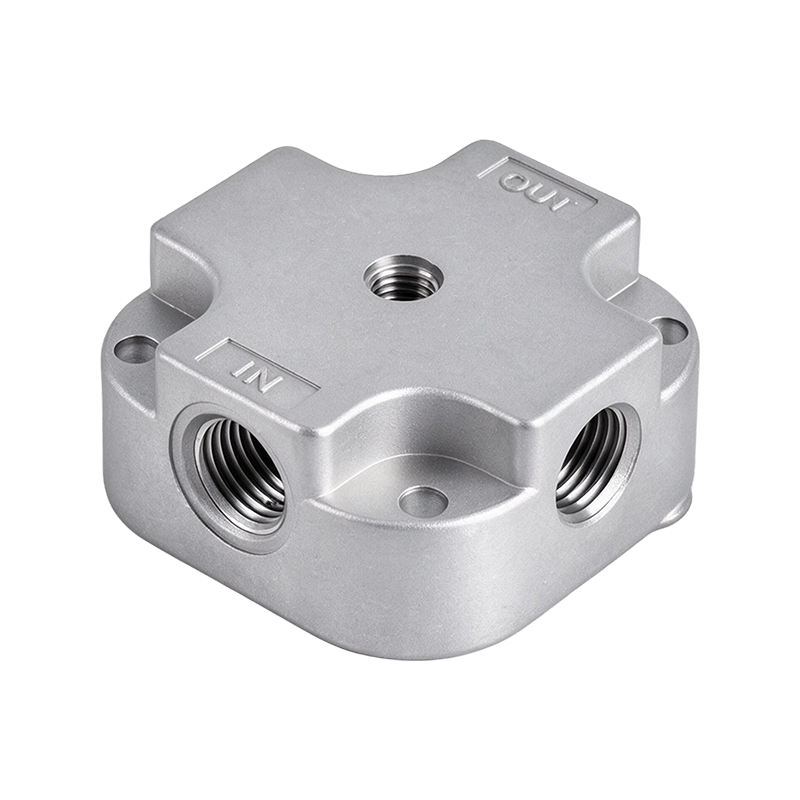
For parts that will work close to the stress limit, grade selection alone is not enough; the casting process must also be consistent. High-strength results depend on controlled melt treatment, low gas content, and proper feeding during solidification. If your component needs this level of assurance, discuss the process plan with the manufacturer before tooling begins.
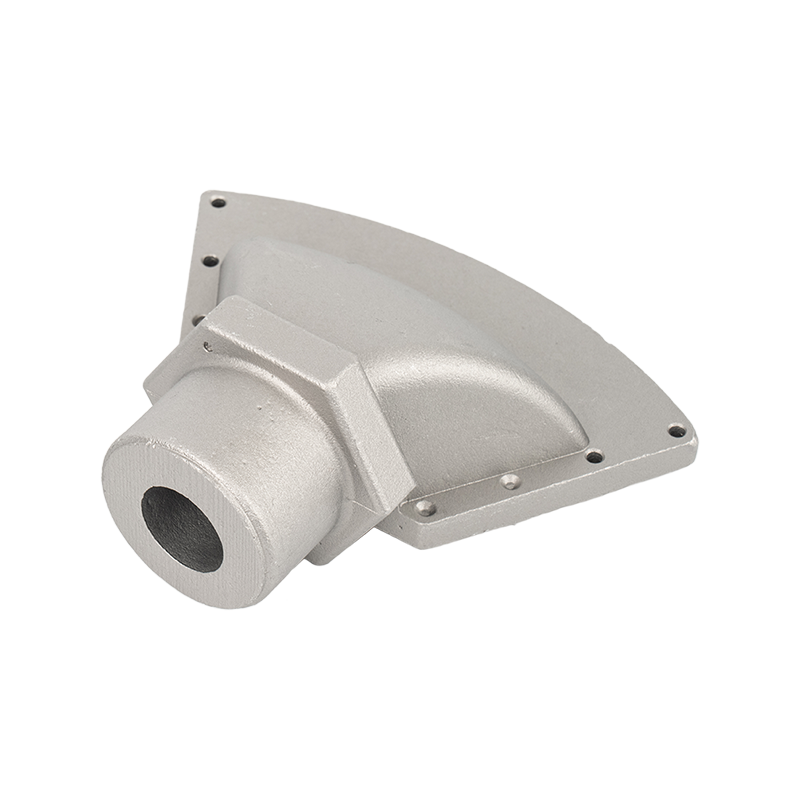 High-Strength Aluminum Alloy Castings for Demanding Structural ApplicationsWhen stress limits drive alloy selection, process consistency matters as much as the material itself. These custom castings combine high-strength alloys with controlled melt and solidification for reliable load-bearing performance.View Product →
Common Naming Mistakes That Cause Real Failures
After years of reviewing casting drawings and material certificates, the same mistakes appear over and over. Each one is traceable to the aluminum versus aluminium naming confusion in one form or another.
- Treating 6061 as a die casting alloy. 6061 is a wrought alloy developed for extrusion, forging, and rolling. It can be cast, but it does not behave like a proper casting alloy, and you will likely see hot tearing and disappointing mechanical results. If a drawing says 6061 and a supplier suggests A380 or A356, review the actual service requirements before accepting the substitution.
- Assuming A380 and ADC12 are identical. A380 specifies silicon between 7.5 and 9.5% and copper between 3.0 and 4.0%. ADC12 allows silicon of 9.6 to 12.0% and copper of 1.5 to 3.5%. The silicon ranges do not overlap at all, and the copper ranges overlap only between 3.0 and 3.5%. Microstructure shifts, secondary phases change, and high-temperature performance moves even though the part looks identical on the bench. The closer equivalents are A383 for ADC12 and ADC10 for A380.
- Mixing the spelling with the specification. Writing "aluminium" on the drawing does not make the project European, and writing "aluminum" does not make it American. The spelling has zero effect on metallurgy. What matters is which standard name and which chemistry envelope are written into the contract.
- Ignoring the temper. The temper designation matters as much as the base grade. An as-cast A356 part has substantially lower strength and ductility than an A356-T6 part. A drawing that says "A356" without a temper leaves the supplier free to ship a weaker version.
- Trusting a name instead of a standard. A manufacturer may say "we make A380 every day" without specifying whether they control the melt to ASTM B85, EN 1706, or an internal recipe. The name alone is not a specification.
These naming issues do not change the casting process itself. Die casting of A380 in the United States and die casting of EN AC-46000 in Germany follow the same physical principles of melt injection, solidification under pressure, and ejection. For a full explanation of why the process produces precise, repeatable parts, read our practical walkthrough of how aluminum die casting works.
What This Means for Procurement and Quality
Consider a concrete situation from a real supply chain. A buyer in Michigan sends a print that says "CAST ALUMINUM A380," and the factory confirms production to "ADC12." The parts pass dimensional inspection but fail a thermal-cycling test after three months in service. The chemistry ranges help explain why. A380 calls for 7.5 to 9.5% silicon and 3.0 to 4.0% copper, while ADC12 permits 9.6 to 12.0% silicon and 1.5 to 3.5% copper. Higher silicon and lower copper change the phase distribution in the casting, including the CuAl2 phase, and with it the strength, hardness, and thermal behavior of the part.
The fix is never to argue about which name is right. It is to put a single standard into the contract and the control plan. Name the alloy, name the standard, and name the property targets. A material certificate should state the governing standard, the exact heat number, and the actual chemistry results, not just a trade name.
A second scenario: a German customer sends a drawing that says "EN AC-46000" and adds tighter limits on iron and zinc than the factory's standard grade. The factory in Asia proposes an equivalent from its catalog, and on paper the alloy looks the same. Without checking the impurity limits, the difference is invisible until parts start cracking during assembly. Higher iron promotes brittle needle-shaped iron-rich phases that reduce ductility and fatigue life. The difference between "aluminum" and "aluminium" in this case is a single letter, but the difference between compliance and rejection can be a few tenths of a percent of iron.
For high-temperature service, valve housings and motor housings near heat sources need alloys and process conditions that resist creep and thermal fatigue. The casting structure must be dense, the melt degassed, and the alloy chosen with the operating temperature in mind. High-temperature-resistant aluminum alloy castings are designed around exactly these service conditions, and the specification should make the temperature range explicit rather than leaving it to the supplier's guess.
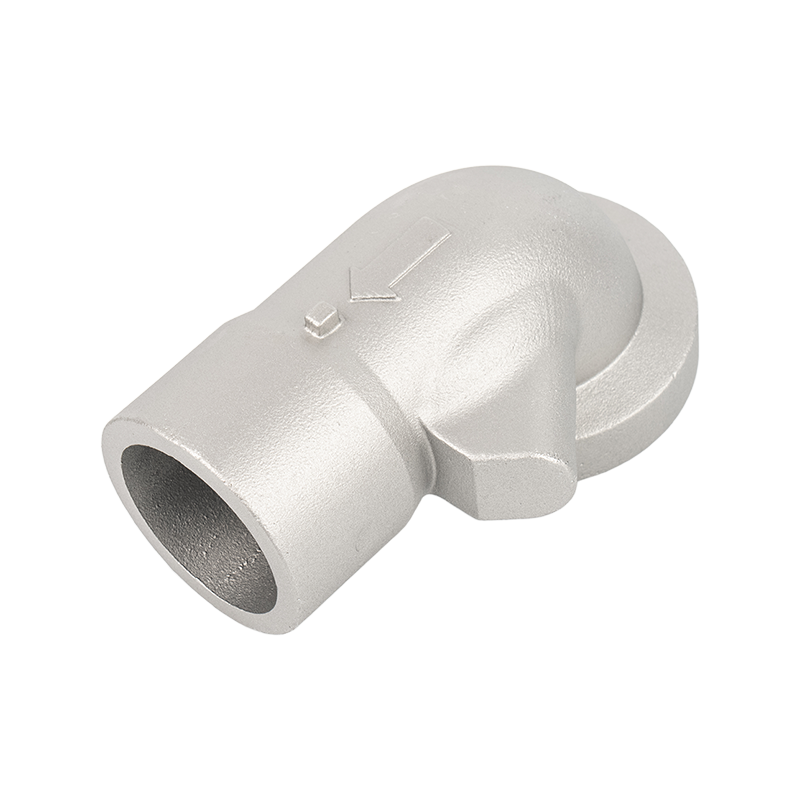 High-Temperature Resistant Aluminum Alloy Castings for Thermal ServiceFor valve and motor housings near heat sources, this casting line addresses creep and thermal fatigue through alloy choice and degassing, making the operating temperature range explicit for the manufacturer.View Product →
How to Specify a Die Casting Alloy Correctly
The step-by-step path below is what we recommend when sending a casting inquiry, regardless of which spelling you use on the drawing.
- Define the service environment first. Operating temperature, pressure, exposure to moisture, chemicals, or road salt, and the expected fatigue life all come before alloy selection. Write them down even if the drawing does not require it.
- Pick the alloy family. Use the Al-Si-Cu family for general housings and brackets, the Al-Si-Mg family for structural or heat-treated parts (usually made by low-pressure or permanent-mold casting), and the Al-Si family for thin-wall pressure-tight components. Mention any anodizing or coating requirement at this stage, because silicon and copper content affect the finish.
- Select the casting process. Aluminum die casting works well for high volumes and tight tolerances. For very large parts, small quantities, or complex internal cores, consider other processes and compare accordingly.
- Write the standard into the drawing. Name the alloy, the temper or condition, and the governing standard, for example "A380 (as-cast) to ASTM B85" or "EN AC-46000 to EN 1706." Avoid only writing "aluminum" or "aluminium" alone.
- Define sampling and test methods. Specify whether tensile test bars are cast separately or machined from the part, how many samples are tested per lot, and what acceptable limits are.
- Confirm equivalents in writing. If the manufacturer proposes a different designation, require a chemistry comparison table and written confirmation that the proposed alloy meets your property targets.
If you are still at the stage of choosing the alloy rather than matching an existing drawing, our practical guide to the best aluminum alloy for die casting walks through the trade-offs between castability, strength, ductility, thermal performance, and cost in more detail.
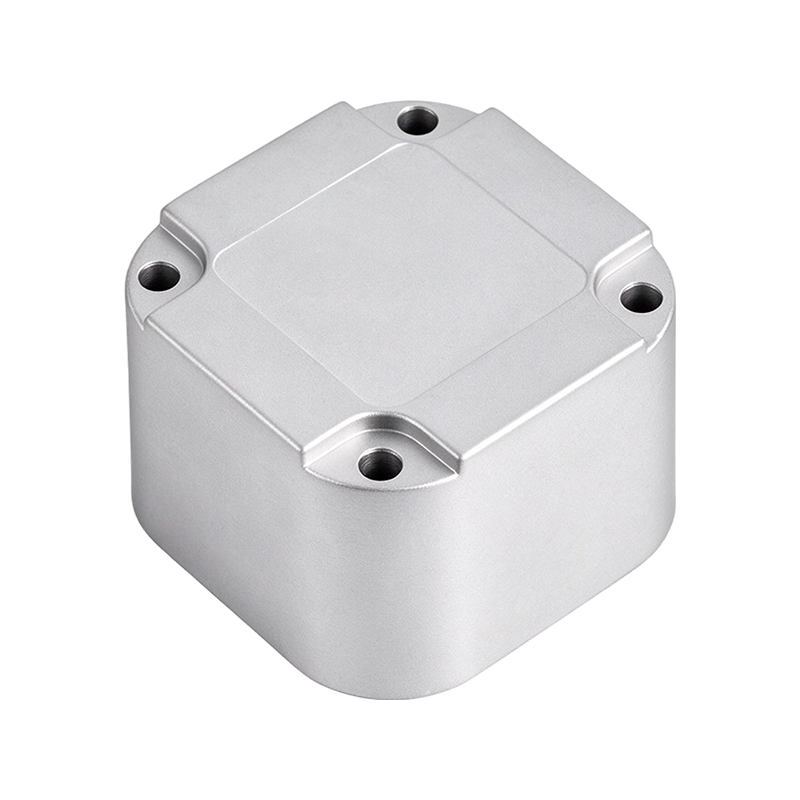
Tolerance management is equally important. Different casting alloys shrink at slightly different rates, so a drawing made for one alloy may produce dimensionally different parts when cast in another. Precision machining after casting can correct most positional tolerances, but wall thickness, flatness, and datum features must be designed with the chosen material in mind. Precision aluminum alloy cast parts depend on this interaction between alloy selection, tooling design, and post-casting machining.
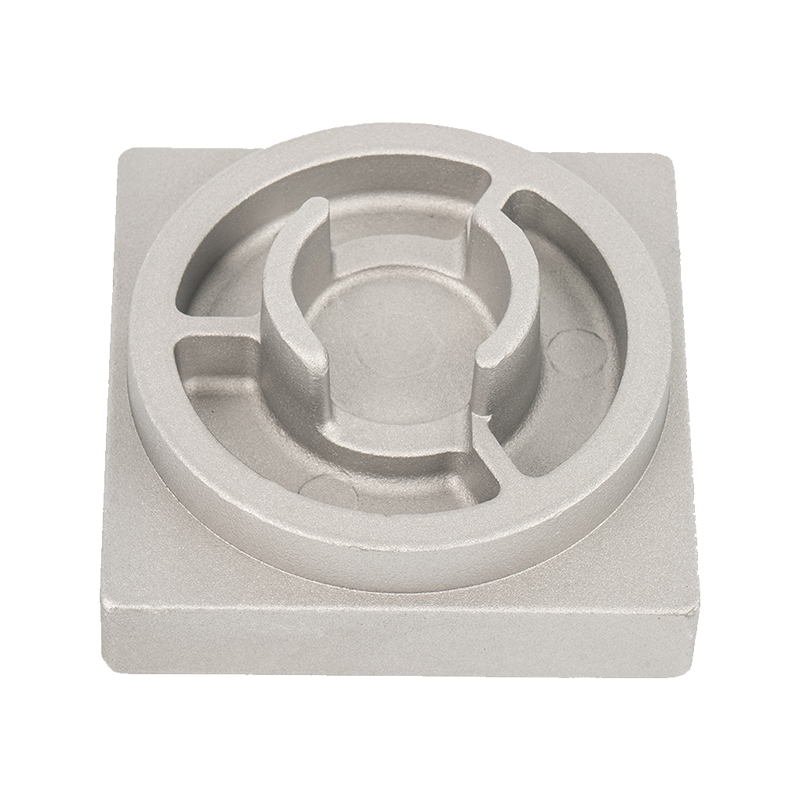 Precision Aluminum Alloy Cast Parts with Integrated CNC MachiningDifferent alloys shrink differently, so dimensional accuracy depends on the drawing-material pairing. These precision castings use CNC post-machining to correct tolerances while keeping wall thickness and datum features sound.View Product →
Working With a Manufacturer That Handles Both Standards
Our factory in Ningbo, China, produces custom aluminum alloy die castings for customers in the United States, the United Kingdom, Germany, Japan, South Korea, and other international markets. We see both spellings on the same production line: one customer sends a print marked "ALUMINUM ALLOY A380," the next sends "ALUMINIUM ALLOY EN AC-46000." Both are manufactured in the same die casting cells, with the same melt control, the same leak testing, and the same dimensional reporting. What matters to us is not the spelling, but the standard you define.
Our capability covers mold making, die casting, CNC machining, and surface treatment under one roof. The mold shop designs, builds, and repairs tooling in-house. The die casting workshop runs zinc and aluminum alloys with process parameters recorded per batch. The machining center takes castings to final tolerances. The finishing lines handle polishing, shot blasting, anodizing, and coating. These functions sit in the same factory, so alloy change requests, tolerance questions, and first-article reports come from one team rather than a chain of sub-suppliers.
The factory is certified to ISO 9001:2015 and IATF 16949:2016. If your product is a motor housing for an electric drive, a pressure-reducing valve body for gas regulation, an instrument enclosure for outdoor monitoring, or a wireless charger casing for a vehicle interior, the quality system that manages your project is the same one that automotive customers audit. Because we are a custom manufacturer, these product categories are examples of parts we have produced rather than a closed catalog. Send your drawing, and we will recommend the alloy, the casting process, and the secondary operations that make sense for your application.
Frequently Asked Questions
Are aluminum and aluminium the same metal?
Yes. They are two spellings of the exact same element, with the same atomic number, density, conductivity, and mechanical behavior. "Aluminum" is the American spelling; "aluminium" is the international spelling used by IUPAC, ISO, and EN standards. Choosing one over the other does not change the material.
Why does my drawing say "aluminum alloy" but the material certificate says "aluminium alloy"?
Because the factory exports internationally and follows ISO or EN naming conventions on official documents. Many certificates list both spellings to avoid customs and documentation delays. The underlying material is identical. What you should verify on the certificate is not the spelling but the alloy designation, heat number, and actual chemistry results.
Is A380 the same as ADC12?
No. A380 specifies silicon at 7.5 to 9.5% and copper at 3.0 to 4.0%, while ADC12 allows silicon of 9.6 to 12.0% and copper of 1.5 to 3.5%. ADC12 is closer to A383, and the nearer Japanese match for A380 is ADC10. Many factories treat these Al-Si-Cu grades as interchangeable for simple parts. For components with fatigue, pressure-tightness, or thermal requirements, specify one standard and verify the melt chemistry against it.
Which alloy should I choose for high-temperature service?
For sustained service above roughly 150°C, the base alloy and the microstructure both matter. Al-Si-Mg alloys in the T6 condition lose much of their heat-treatment strength above about 150°C because the strengthening precipitates overage, while copper-bearing alloys such as A380 generally hold their strength better at moderately elevated temperatures. In either case, a well-degassed, dense casting with controlled iron content performs better than a standard melt with excessive porosity. Discuss the actual temperature range and expected service life with the manufacturer before finalizing the specification.
How do I make sure a manufacturer meets the US or EU standard?
Put the standard into the purchase contract, require a first-article inspection, request a material certificate with actual chemistry results, and audit the production process. A quality system certified to IATF 16949 or ISO 9001 is a strong indicator but does not replace a contract that names the exact alloy and testing method.
Can you cast a part to both US and European alloy designations?
Yes. Since the base metal is the same family and the composition ranges are close for most common grades, our melt control team can adjust chemistry to meet either the American or the European designation. The printed alloy name on the drawing does not matter to us; the standard you specify is what we control against.