English
 中文简体

Content
- 1 The Short Answer: No, and the Difference Shows Up in Your Part Price
- 2 Aluminum Alloy Is a Material Family, Cast Aluminum Is a Forming Route
- 3 Two Numbering Systems, One Common Mix-Up
- 4 Not Every Cast Aluminum Part Comes Out of a Die Casting Machine
- 5 The Alloys That Actually Appear on a Die Casting Quote
- 6 Mechanical Properties: Where Cast Aluminum Wins and Where It Loses
- 7 Porosity, Heat Treatment, and Why Most Die Cast Parts Cannot Be T6
- 8 Corrosion, Anodizing, and the Finishing Traps in Cast Aluminum
- 9 Wall Thickness, Tolerances, and Draft: The Three Numbers Behind Your Quote
- 10 Zinc or Aluminum: A Decision Table for Small Precision Parts
- 11 Where Cast Aluminum Parts Earn Their Place
- 12 How to Write an RFQ That Gets You the Right Part the First Time
- 13 Quality Documentation and Certifications Worth Asking For
- 14 Frequently Asked Questions About Aluminum Alloy and Cast Aluminum
- 14.1 Is aluminum alloy the same as cast aluminum?
- 14.2 Is cast aluminum pure aluminum?
- 14.3 Is cast aluminum stronger than wrought aluminum?
- 14.4 Can cast aluminum be machined and tapped?
- 14.5 Does cast aluminum rust or corrode?
- 14.6 Can die cast aluminum be heat treated or welded?
- 14.7 Which is cheaper, casting or machining from solid aluminum?
- 14.8 How long does a first casting order take?
- 14.9 Does the choice of alloy affect the tooling cost?
The Short Answer: No, and the Difference Shows Up in Your Part Price
Aluminum alloy and cast aluminum are not two names for one material. Aluminum alloy describes chemistry: aluminum plus deliberate additions of silicon, magnesium, copper, zinc, manganese or iron. Cast aluminum describes a forming route: that alloy was melted, injected or poured into a mold, and solidified into shape. Every cast aluminum part is an aluminum alloy, but a large share of aluminum alloys are never cast at all. Extruded profiles, rolled sheet, forgings and parts machined from billet are aluminum alloys too, and they behave differently in ways your drawing should already anticipate.
Here is where the confusion gets expensive. A buyer writes 6061-T6 in the material box of an RFQ for a housing with cooling fins and a 1.2 mm wall. A die caster reads a wrought designation, quotes anyway, and the conversation about porosity, elongation and heat treatment starts three weeks later. Or the reverse happens: an engineer hears that cast aluminum is weaker and specifies a forged bracket for a part that a well-designed die casting would have delivered at roughly half the cost, with far more freedom on geometry.
The practical rule is simple. Choose the alloy because of the environment and the loads the part will see. Choose the casting process because of geometry, wall thickness and annual volume. The rest of this article works through both halves of that decision with the numbers that actually appear on drawings and quotes.
| Term | What it describes | Typical designations | Where the decision is made |
|---|---|---|---|
| Aluminum alloy | Material chemistry: aluminum plus silicon, magnesium, copper or zinc | 6061-T6, 5052-H32, A380.0, ADC12 | Material specification on the drawing |
| Cast aluminum | A forming route: melt solidified inside a mold | Sand cast A356-T6, die cast A380 housing | Process selection and tooling |
| Wrought aluminum | A forming route: rolled, extruded or forged | 6061 extrusion, 7075 plate, 5052 sheet | Process selection and mill order |
| Commercially pure aluminum | Base metal with no deliberate alloying additions | 1050, 1100 | Rarely specified for structural parts |
Aluminum Alloy Is a Material Family, Cast Aluminum Is a Forming Route
Commercially pure aluminum is soft, roughly 90 MPa in tensile strength, and it is almost never the right answer for a structural casting. Alloying changes that. Silicon added at 7 to 12 percent gives a melt the fluidity to fill thin cavities and the resistance to hot tearing that lets a part cool without cracking. Copper and magnesium raise strength and hardness. Iron, normally treated as an impurity, is deliberately tolerated in die casting alloys because it reduces die soldering and sticking.
A380 shows how a casting alloy does several jobs at once. It carries around 8.5 percent silicon, 3.5 percent copper and about 1 percent iron. The silicon provides fluidity, the copper provides hardness and machinability, and the iron keeps the melt from welding itself to the die surface. A wrought alloy such as 6061 goes the other direction: roughly 0.6 percent silicon, 1.0 percent magnesium and 0.28 percent copper, because wrought alloys have to survive rolling and extrusion without cracking, and because high silicon makes machining slow and abrasive.
The manufacturing consequence is this. If a part is designed with the wall thickness, radii and draft that suit die casting, a casting alloy can match a wrought alloy in tensile strength on paper. What differs is how the part fails. A die cast A380 housing typically elongates 3 to 4 percent before breaking, while a 6061-T6 part elongates 8 to 12 percent. If your design relies on the part bending and absorbing energy rather than cracking, that gap matters far more than the headline tensile number on a datasheet.
Two Numbering Systems, One Common Mix-Up
Aluminum designations come from two branches of the same standard, and the branches are not interchangeable. Wrought alloys use four digits, 1xxx through 8xxx, where the first digit identifies the main alloying element and a hyphenated temper follows: 6061-T6, 5052-H32, 7075-T651. Cast alloys use three digits plus a decimal, and the Aluminum Association prefixes a letter when the chemistry has been modified: A380.0, A360.0, A356.0, A413.0. The first digit still signals the alloy family, but the last two digits are registration numbers rather than compositions you can look up in a wrought table.
International systems map only approximately. ADC12 is a Japanese die casting grade close to A383. EN AC-46000, written as AlSi9Cu3(Fe), is the European cousin of A380. When a drawing carries one designation and a quote comes back with another, ask for the chemical composition range rather than the name. Two alloys sharing a family name can differ by two percentage points of copper, and that single element is the difference between a housing that anodizes to a consistent grey and one that comes out blotchy and patchy.
The tell-tale sign of a mixed-up enquiry is a wrought designation sitting in a die casting RFQ. It usually means the material was copied from an existing machined part without anyone asking whether the part will be cast, forged or cut from plate. If you are not sure which casting grade fits an application, this guide on how to choose the best aluminum alloy for die casting walks through the selection logic step by step.
Not Every Cast Aluminum Part Comes Out of a Die Casting Machine
Cast aluminum covers at least six commercial processes, and their tolerance capability and tooling economics differ by an order of magnitude. An A356 part gravity cast into a permanent mold is cast aluminum. So is an A380 housing shot into a hardened steel die in a fraction of a second. Choosing between them is a geometry and volume question, not a quality hierarchy.
| Process | Typical alloys | Minimum wall | Achievable tolerance | Tooling investment | Best fit |
|---|---|---|---|---|---|
| Sand casting | A356, A319, A360 | 3.0 - 4.0 mm | about +/-0.8 mm | Low, pattern only | Large parts, low volume, prototypes |
| Gravity / permanent mold | A356, A360, A413 | 3.0 mm | about +/-0.4 mm | Medium | Heat-treated structural parts, 1,000 to 50,000 per year |
| Low pressure | A356, A357 | 3.0 - 4.0 mm | about +/-0.4 mm | Medium to high | Pressure-tight structural parts |
| High pressure die casting | A380, A383, ADC12, A360 | 1.0 - 1.5 mm | about +/-0.10 mm, down to +/-0.05 mm on selected dimensions | High | 10,000 to over 1,000,000 parts, thin walls, fine detail |
| Vacuum-assisted die casting | A380, low-iron specialty alloys | 1.2 - 1.5 mm | about +/-0.10 mm | High | Leak-tight, weldable and heat-treatable castings |
| Investment casting | A356, 356 | 1.5 - 2.5 mm | about +/-0.10 mm | High | Fine detail, small to medium size, low to mid volume |
| Zinc die casting | ZAMAK 3, ZAMAK 5, ZA-8 | 0.5 - 0.75 mm | about +/-0.05 mm | High, very long life | Small precise parts, plated decorative finishes |
Two numbers in that table decide most projects. The first is minimum wall thickness: high pressure die casting holds thin walls because metal is injected under pressure, but below roughly 1.0 mm the flow front solidifies before the cavity fills and you get cold shuts. The second is tool life. Zinc runs at a 380 to 430 degrees Celsius melt temperature against aluminum's 580 to 650 degrees Celsius, which is why a zinc die can survive a million shots while an aluminum die is usually planned around 100,000 to 150,000.
The Alloys That Actually Appear on a Die Casting Quote
Four families cover the majority of custom aluminum castings produced for industrial and automotive use. Knowing what each one is good at prevents the most common mistake in the category: over-specifying a heat-treatable alloy for a part that will never be heat treated.
A380 and ADC12: the workhorse
Roughly 8.5 percent silicon and 3.5 percent copper. Excellent fluidity and machinability, approximately 324 MPa tensile strength and about 80 HB hardness, with 3 to 4 percent elongation. Used for housings, brackets, valve bodies and equipment parts. Not heat treatable, and anodizing produces a dark functional finish rather than a bright decorative one.
A360: corrosion resistance and ductility
Copper is held at or below 0.6 percent, with about 9.5 percent silicon and 0.5 percent magnesium. The lower copper content improves corrosion behavior considerably, which makes A360 the sensible choice for outdoor enclosures, washdown equipment and parts exposed to condensation. The casting window is slightly narrower than A380.
A356 and A357: heat treatable
About 7 percent silicon and 0.3 to 0.6 percent magnesium, cast by permanent mold, low pressure or investment. Solution treatment near 540 degrees Celsius followed by artificial aging produces T6 properties of roughly 283 to 310 MPa with 5 to 7 percent elongation. Conventional high pressure die casting traps gas that blisters during solution treatment, so these grades rarely appear in that process.
ZAMAK 3, ZAMAK 5 and ZA-8: the zinc option
Zinc base with about 4 percent aluminum and 1 percent copper. It delivers the finest as-cast detail, the thinnest walls and the best plating response of any die casting material. Density is about 6.6 g/cm3 against 2.7 g/cm3 for aluminum, so a zinc part is roughly 2.4 times heavier for the same volume. That is why zinc parts are usually small.
Mechanical Properties: Where Cast Aluminum Wins and Where It Loses
Property tables get misread more often than any other document in a casting project. The values below are typical handbook figures for separately cast test bars, not measurements taken from a production part that has a gate mark, an ejector boss and a 1.2 mm wall. Production parts normally sit below these figures, and the difference is what quality planning is for.
| Alloy and condition | Tensile strength | Yield strength, 0.2 percent | Elongation | Hardness | Heat treatable |
|---|---|---|---|---|---|
| A380.0, die cast | about 324 MPa | about 160 MPa | 3.5 percent | about 80 HB | No |
| A360.0, die cast | about 317 MPa | about 165 MPa | 3.0 to 5.0 percent | about 75 HB | No |
| A413.0, die cast | about 296 MPa | about 145 MPa | 2.5 percent | about 90 HB | No |
| A356.0-T6, permanent mold | about 283 MPa | about 207 MPa | 6.0 percent | about 85 HB | Yes |
| 6061-T6, wrought reference | about 310 MPa | about 276 MPa | 8 to 12 percent | about 95 HB | Yes |
| ZAMAK 3, zinc die cast | about 268 MPa | about 208 MPa | 6 to 10 percent | about 82 HB | No |
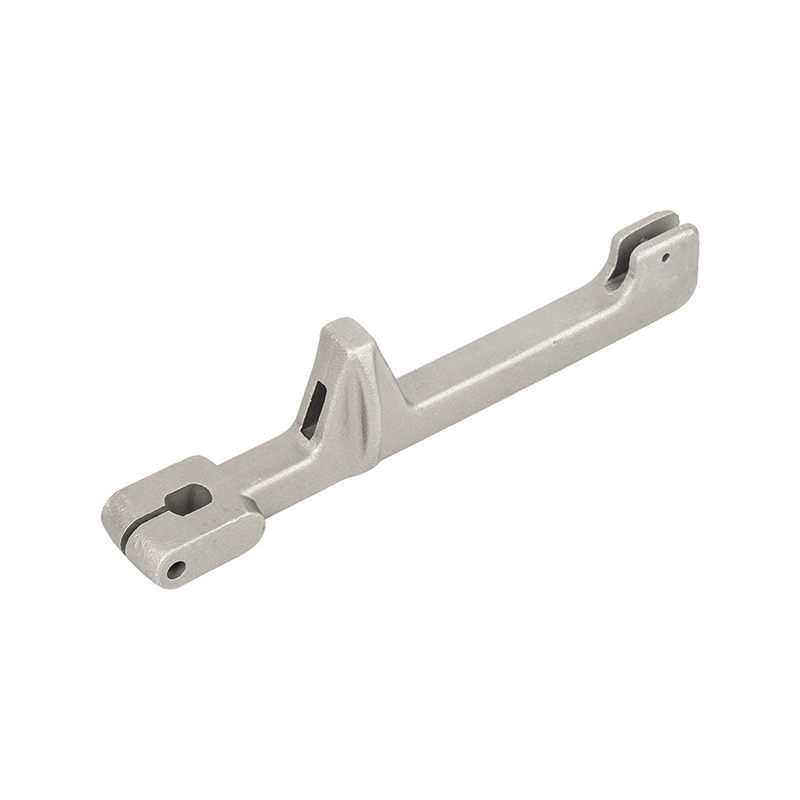
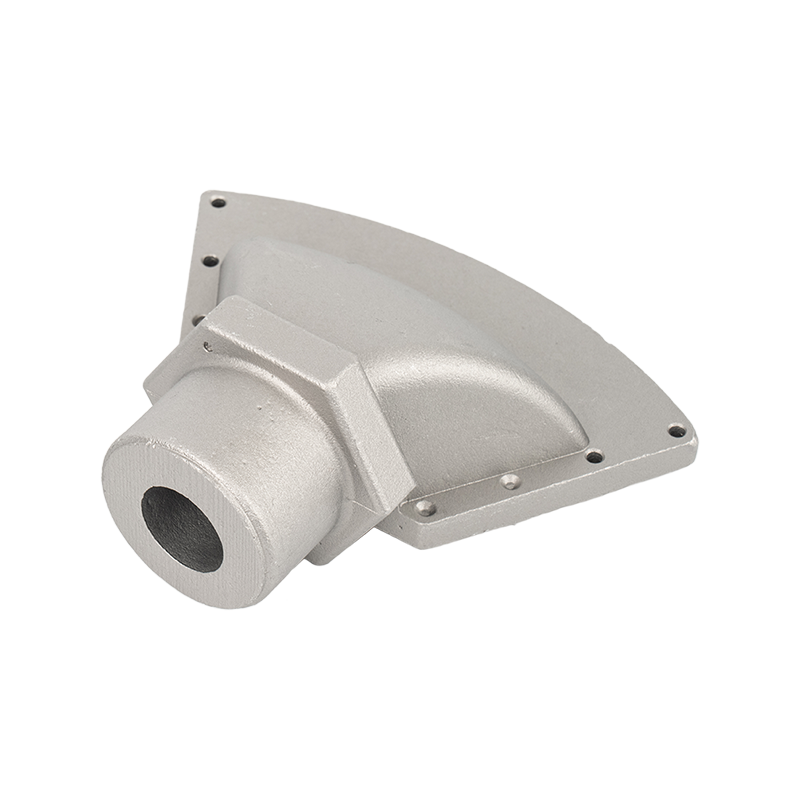 High-Strength Aluminum Alloy Castings for Load-Bearing Industrial ComponentsCustom high-strength aluminum castings combine die casting, CNC machining and finishing for load-bearing parts where strength, thin walls and tight geometry must be balanced.View Product →
Related capability: high-strength aluminum alloy castings
When an application needs strength and hardness at the same time as thin walls and tight geometry, the alloy and the process have to be chosen together rather than one after the other. High-strength aluminum alloy castings are produced in-house from tooling design through die casting, machining and finishing, which keeps the property trade-offs in one place instead of split across three suppliers.
Typical elongation at break, cast versus wrought
The chart is the reason a property table alone is misleading. Tensile strength barely separates these materials, but elongation separates them by a factor of four. A bracket that flexes under load, a housing that must survive a drop test, or a component fastened with a torque that deforms the boss will all fail on ductility long before they fail on ultimate strength.
Porosity, Heat Treatment, and Why Most Die Cast Parts Cannot Be T6
High pressure die casting fills a cavity in milliseconds. The turbulence that makes that speed possible also traps air and vaporized lubricant inside the metal, producing gas porosity. Those pores are usually invisible from the outside and often harmless in a simple bracket. They become a genuine problem in three situations: a pressure-tight requirement, a fatigue-loaded part, and any part that will be heat treated.
Solution treatment for T6 holds the part near 540 degrees Celsius. Entrapped gas expands at that temperature and the surface of a die cast part blisters, much like paint over a damp wall. That is why A380 and ADC12 are supplied as-cast or at most stress relieved, and why the phrase A380-T6 on a drawing signals that the process choice has not been thought through. It is not a matter of a supplier trying harder.
Three ways to get a heat-treatable or weldable casting
- Use a process that fills quietly. Gravity, low pressure or investment casting with A356 or A357 gives a dense structure that accepts solution treatment and welding.
- Use vacuum-assisted high pressure die casting with a low-iron alloy. Evacuating the cavity before the shot lowers gas content enough for T6 properties and limited welding.
- Change the requirement. If T6 was specified for surface hardness rather than strength, a higher-silicon alloy such as A413 at about 90 HB as-cast may remove the heat treatment from the process entirely.
Porosity is also not a pass or fail property by itself. It is a level. X-ray inspection to ASTM E505 grades porosity from 1 to 8, and a well-written drawing states the acceptable level for a defined zone rather than for the whole part. A valve body might accept grade 2 near a sealing face and grade 5 on a non-critical mounting flange. Writing no porosity anywhere on the drawing gets you either an unrealistic quote or a supplier who will not discuss the topic.
Corrosion, Anodizing, and the Finishing Traps in Cast Aluminum
Cast aluminum does not rust, because there is no iron in it to form iron oxide. It does oxidize, and the oxide layer that forms on a high-silicon, high-copper casting is thinner, patchier and darker than the one on a wrought extrusion. Two alloy choices drive most outdoor performance: keep copper low, and keep silicon moderate.
A380 contains roughly 3.5 percent copper, the element that most reduces corrosion resistance. A360 keeps copper at or below 0.6 percent and is the better starting point for outdoor instrument housings, marine-adjacent equipment and any part that will sit in condensation for years. The trade-off is a slightly narrower casting window, which is a conversation to have with the tool designer rather than a reason to accept pitting after three winters.
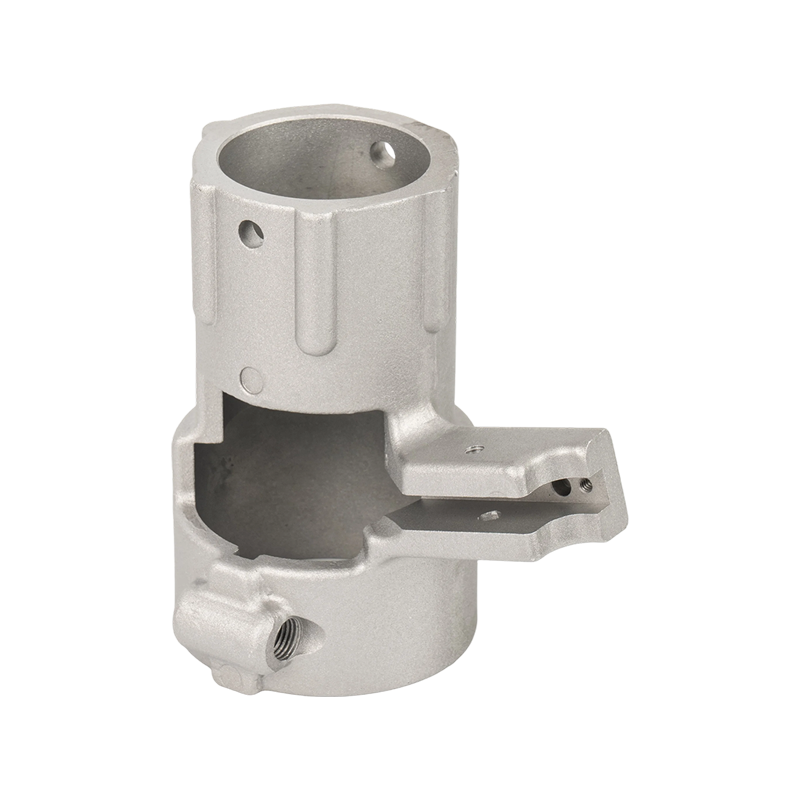
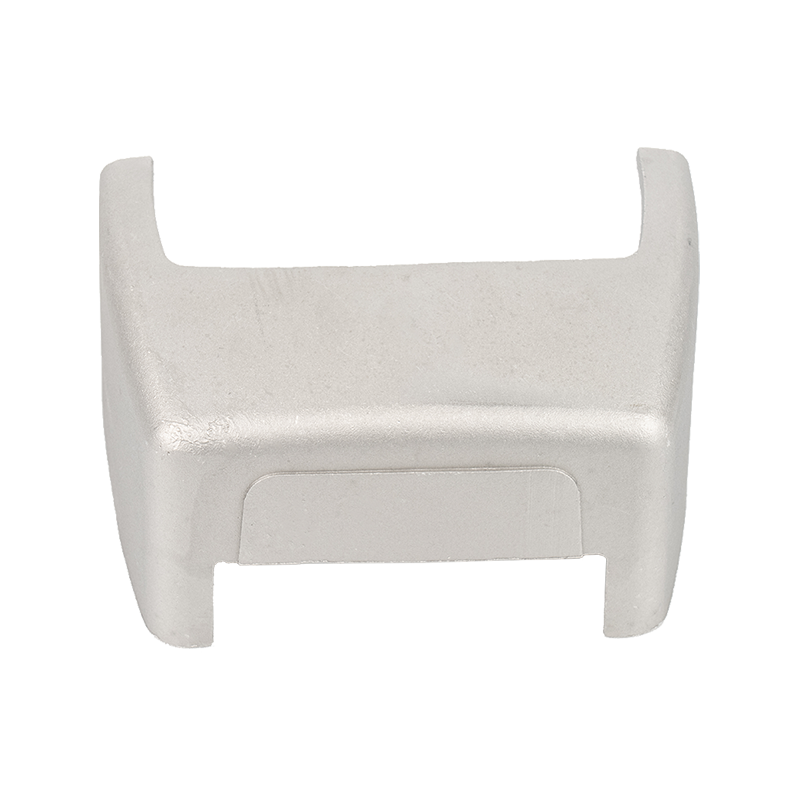 Aluminum-Zinc Alloy Corrosion-Resistant Castings for Outdoor EquipmentCustom aluminum-zinc castings use alloy selection, precision die casting, CNC machining and coatings to support outdoor, humid or mildly corrosive industrial applications.View Product →
Related capability: aluminum-zinc alloy corrosion-resistant castings
Corrosion-resistant castings for outdoor and wet environments are produced with controlled copper and iron levels and a finish sequence matched to the exposure. The point of specifying this as a category rather than a single grade is that the alloy, the coating and the sealing design all contribute, and they are cheaper to align at the design stage than after a field failure.
Finishing options and what each one can and cannot do
- Shot blasting and vibratory finishing remove flash and parting lines and give a uniform matte surface. They add no corrosion protection.
- Chromate conversion coating is low cost and preserves electrical conductivity, which matters for shielding applications. Specify trivalent chrome where hexavalent chrome is restricted.
- Powder coating at 60 to 120 microns gives good ultraviolet and abrasion resistance and hides minor surface variation. It needs sound pretreatment or it will lift along sharp edges.
- Anodizing on die cast aluminum is functional rather than decorative. High silicon and copper produce a dark grey to charcoal finish with uneven color, so decorative color matching on a die casting is a fight nobody wins.
- Zinc plating, nickel and chrome belong to zinc die castings. ZAMAK parts plate cleanly and hold a mirror finish that no anodized aluminum can match.
For a part that must be both light and weather resistant, the sequence that works is a low-copper alloy, a sealed conversion coat and a powder topcoat. For decorative, tight-tolerance, plated parts under roughly 300 grams, zinc die casting is usually the cheaper answer even after the higher metal cost is counted.
Wall Thickness, Tolerances, and Draft: The Three Numbers Behind Your Quote
Most casting quotes that come back higher than expected trace to one of three drawing habits: walls thinner than the process can fill, tolerances copied from a machined part, or features that require a slide. Each one is worth checking before the die is designed.
Wall thickness
- Aluminum high pressure die casting: 1.0 to 1.5 mm minimum over small areas, 2.0 to 3.5 mm for structural walls. Below 1.0 mm the flow front solidifies before the cavity fills.
- Wall transitions: keep the ratio between adjacent walls within roughly 3 to 1. A thick-to-thin step creates a hot spot, and a hot spot becomes shrinkage porosity.
- Ribs and bosses: rib thickness at 60 to 80 percent of the adjoining wall. A boss thicker than the wall it sits on will pull a sink mark on the opposite face.
- Zinc: 0.5 to 0.75 mm is routine, which is why zinc dominates small connector shells and thin decorative hardware.
Tolerances
Standard die casting tolerance for aluminum is about plus or minus 0.10 mm on the first 25 mm of any dimension, with an additional plus or minus 0.02 to 0.03 mm for every further 25 mm. Selected dimensions can be held to plus or minus 0.05 mm, but each one added increases inspection time and piece cost. Casting tolerance applies to cast surfaces only. Where a surface is machined, the cast tolerance and the machining allowance stack, and the allowance is typically 0.3 to 0.5 mm per surface for a stable part and up to 0.8 mm on large surfaces that may warp.
State tolerances against datums A, B and C and use geometric dimensioning rather than a long chain of dimensions. A chain of plus or minus 0.1 mm dimensions across a 200 mm housing can accumulate into a 0.4 mm error at the last feature, which is a stack-up problem rather than a casting problem.
Draft, slides and parting line position
Allow one to two degrees of draft on as-cast walls, about 0.5 degrees for zinc, and 0.5 to 1 degree per side on cast text. Every slide, lifter or unscrewing mechanism adds tooling cost, adds maintenance and leaves a witness line on the part. A small design change, such as moving a hole, converting an undercut into a machined feature or accepting a slightly different mounting orientation, often removes a slide and takes meaningful cost out of the piece price. Decide early where the parting line and ejector pins are allowed to land.
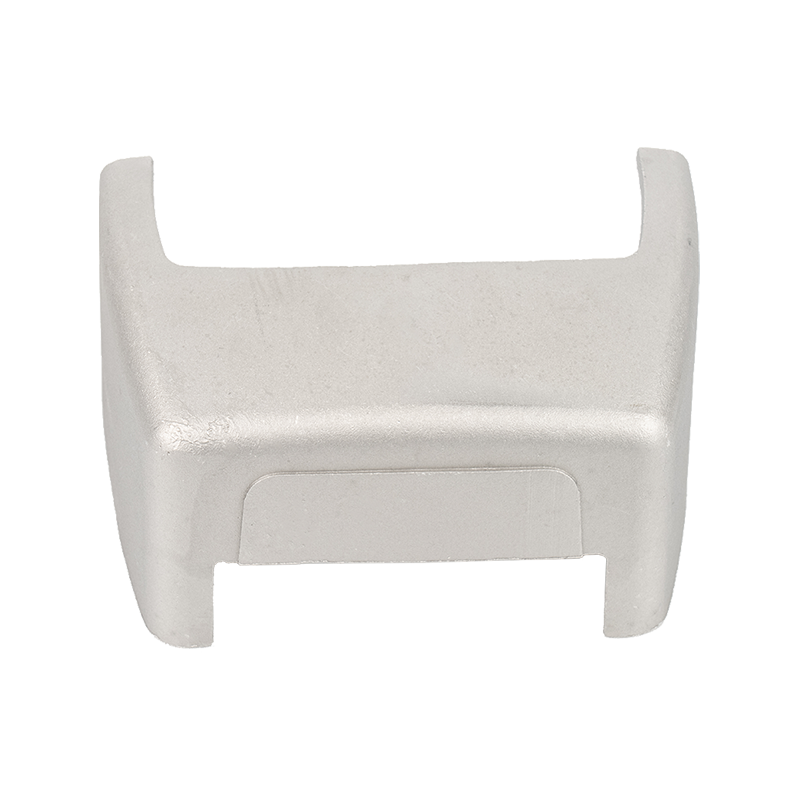
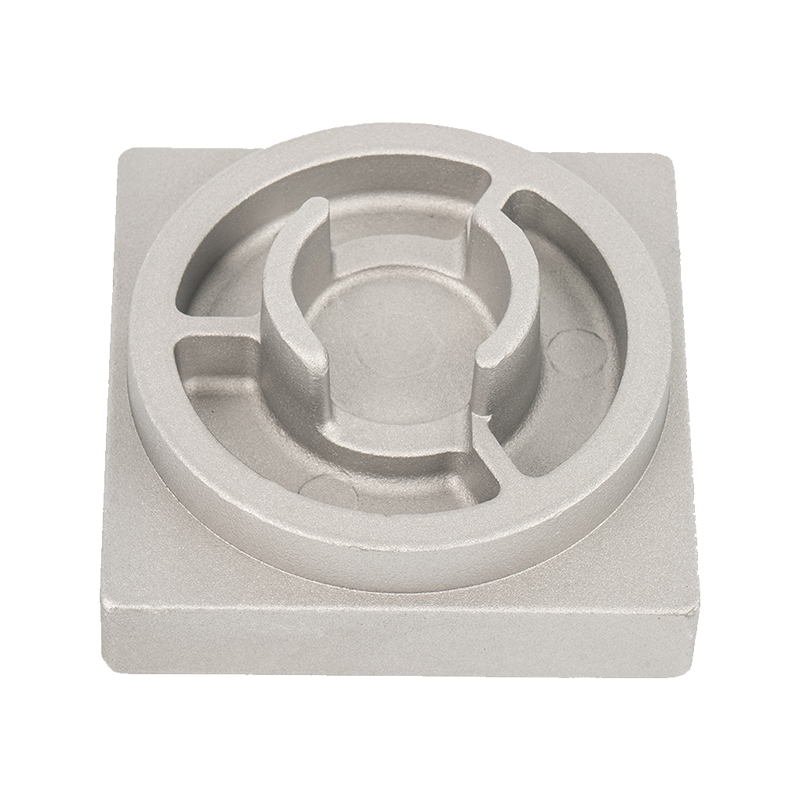 Precision Aluminum Alloy Cast Parts for Complex Industrial AssembliesCustom precision aluminum castings combine die casting with CNC machining of mounting surfaces, holes and interfaces for stable assembly in mechanical, electronic and automation systems.View Product →
Related capability: precision aluminum alloy cast parts
Precision cast parts combine the as-cast geometry with machined interfaces, so the tolerance chain is controlled from a single datum scheme rather than negotiated between a caster and a machine shop. Bearing bores, sealing faces, threads and connector interfaces are the features that most often decide whether a casting project succeeds on the first sample.
Zinc or Aluminum: A Decision Table for Small Precision Parts
The question behind is cast aluminum the same as aluminum alloy often turns out to be a material selection question between aluminum and zinc. Both are die cast, and both are aluminum-free or aluminum-based in different ways. The factors that separate them are density, minimum wall, tolerance and finishing.
| Factor | Zinc, ZAMAK 3 | Aluminum, A380 or ADC12 |
|---|---|---|
| Density | about 6.6 g/cm3 | about 2.70 g/cm3 |
| Weight for the same volume | about 2.4 times heavier | baseline |
| Minimum wall | 0.5 to 0.75 mm | 1.0 to 1.5 mm |
| Typical tolerance | about +/-0.05 mm | about +/-0.10 mm |
| Melt temperature | 380 to 430 degrees Celsius | 580 to 650 degrees Celsius |
| Planned die life | up to 1,000,000 shots or more | 100,000 to 150,000 shots |
| Corrosion behavior | requires plating or coating | forms its own protective oxide |
| Plating and anodizing | excellent chrome, nickel and brass plating | functional anodizing only, uneven color |
| Thermal conductivity | about 113 W/mK | about 96 W/mK |
| Best fit | small, thin, plated, dimensionally tight parts | lightweight housings, heat sinks, structural parts |
A practical example makes the trade-off concrete. A 40 mm connector shell with a 0.6 mm wall and a chrome finish belongs to zinc, because aluminum cannot hold that wall reliably and cannot take decorative plating. The same customer's 200 mm motor housing with cooling fins belongs to aluminum, because a 2.4 times weight penalty turns a 300 gram part into a 720 gram part, which is rarely acceptable on a vehicle or a handheld instrument. Choose zinc for detail and finishing, aluminum for weight and heat.
Where Cast Aluminum Parts Earn Their Place
Six application families account for most custom aluminum castings ordered from a die casting shop. Each one stresses a different property, and knowing which property matters keeps the alloy and finish choice honest instead of habitual.
Automotive electronics enclosures
Wireless charging housings and integrated charging components need thin walls for coil alignment, tight tolerances for mating surfaces and enough thermal mass to carry heat away from the module. Under-dashboard placement adds a high-temperature requirement that the alloy and finish both have to survive.
Instrument and outdoor enclosures
Sealing grooves, gasket channels, mounting bosses and removable covers. Outdoor versions add a corrosion requirement, which pushes the alloy toward lower copper and the finish toward a sealed conversion coat plus powder topcoat.
Pressure-reducing valve bodies and housings
Pressure tightness is the governing requirement. These parts carry machined threads, sealing faces and internal passages, so through-wall porosity is a functional defect rather than a cosmetic one, and burst or leak testing is specified on the drawing.
Motor housings
Bearing bore alignment, wall rigidity and heat dissipation in one part. Waterproof versions add sealing surfaces and finish requirements for washdown environments, and the bore tolerance is usually the tightest feature on the drawing.
Equipment parts and mounting hardware
Brackets, mounting covers, fixing plates, connectors, disc components and nonstandard structural connectors. These parts rarely need exotic alloys. They need repeatable dimensions, sensible wall thickness and a supplier who can machine the interfaces after casting.
Industrial protective and wear parts
Guards, covers and contact surfaces where hardness and wear resistance matter more than tensile strength. Higher-silicon alloys often serve better here than a general-purpose alloy, and surface treatment can extend life further.
The common thread across all six is that casting buys geometry. A single die casting can combine a ribbed mounting face, a curved sealing flange, a boss for a threaded insert and an integrated heat sink, with no assembly and no welding. That is the design freedom a machined-from-billet part cannot match at volume, and it is usually the strongest argument for casting in the first place.
How to Write an RFQ That Gets You the Right Part the First Time
The gap between a good casting quote and a bad one is usually information rather than price. A supplier who has to guess the alloy, the finish and the critical dimensions will either pad the quote or price the easy features and miss the hard ones, and both outcomes cost time.
- A 3D model in STEP or IGES plus a 2D drawing. The model defines geometry, the drawing defines tolerance, finish and datums.
- The alloy by designation and composition range. Write A380.0 to ASTM B85 or ADC12 to JIS H5302 rather than aluminum alloy.
- The process expectation, if you have one. State whether a gravity casting is acceptable or whether thin walls require high pressure die casting.
- Wall thickness limits and the smallest feature on the part, including the smallest hole and the minimum cast thread.
- Critical dimensions with geometric tolerances and datums, marked on the drawing rather than left to be inferred from the model.
- Machined features, thread class and inserts, including whether inserts are installed by the caster or supplied separately.
- Surface finish and coating specification, with a color reference and a salt spray requirement stated in hours and standard where relevant.
- Pressure or leak test requirements with test pressure, media and acceptance criteria.
- Annual volume, expected batch sizes and launch quantity. Tooling amortization and process choice both depend on this number.
- Marking, packaging and documentation, including traceability lot numbers and the PPAP level if the part is automotive.
Two further items save a round of questions. One is a target part weight, which tells the supplier how much material saving is worth pursuing. The other is a note about existing tooling, because a part transferring from another supplier raises the question of tool condition and whether the die is even transferable. Both details change the cost picture far more than a request for a discount.
Quality Documentation and Certifications Worth Asking For
For a supplier of cast and machined parts, the paperwork you receive should match the process. In a plant holding ISO 9001:2015 and IATF 16949:2016 registration, a customer in the automotive or instrument sector should expect a defined document package rather than a certificate on the wall.
- Material certification with spectrometer chemical composition and, where specified, mechanical test results from the same heat.
- A first article inspection report with a ballooned drawing and coordinate measuring machine data for every characteristic.
- Process control plan, process failure mode analysis and capability studies, with an index of 1.33 or higher on critical dimensions.
- X-ray or computed tomography results for porosity-sensitive parts, reported against an agreed grade rather than a pass or fail statement.
- Leak or pressure test records with the actual test parameters used.
- Coating thickness and adhesion test reports, plus salt spray results where the finish is specified to a standard.
- Production part approval documentation at the level your program requires.
- RoHS and REACH declarations covering both the alloy and the finish.
Certification is a floor, not a ceiling. Two plants can both be registered to the same standard and hold very different capability on a 1.2 mm wall with a 0.05 mm bore. Ask for the last three months of dimensional data on a comparable part, and ask to see the process rather than the certificate. Walking the shop floor virtually before placing a first order costs nothing and tells you more than a brochure: how the casting cells are laid out, whether machining and finishing happen in-house, and how finished parts are packed and stored.
Frequently Asked Questions About Aluminum Alloy and Cast Aluminum
Is aluminum alloy the same as cast aluminum?
No. Aluminum alloy is a material family defined by chemistry, while cast aluminum is an aluminum alloy that has been shaped by pouring or injecting molten metal into a mold. Every cast aluminum part is an aluminum alloy, but extruded, rolled and forged aluminum parts are alloys that were never cast.
Is cast aluminum pure aluminum?
Practically never. Casting alloys are formulated with 7 to 12 percent silicon and additions of copper, magnesium or zinc, because pure aluminum is too soft and fills thin cavities poorly. Those alloying elements are what give a casting its strength, fluidity and machinability.
Is cast aluminum stronger than wrought aluminum?
On tensile strength the two are close. A die cast A380 test bar reaches about 324 MPa and 6061-T6 about 310 MPa. The real difference is ductility. A356-T6 elongates 6 percent and wrought 6061-T6 up to 12 percent, while conventional die castings elongate 3 to 4 percent. For impact or fatigue loading, ductility decides.
Can cast aluminum be machined and tapped?
Yes, and most castings are machined after casting. A380 and ADC12 machine freely and produce short chips. A machining allowance of 0.3 to 0.5 mm per surface is typical. Holes below about 3 mm diameter and threads smaller than M3 are usually better produced by machining than cast directly.
Does cast aluminum rust or corrode?
It cannot rust, because rust is iron oxide and there is no meaningful iron in the alloy. It does form a surface oxide, and pitting can occur in chloride environments. Low-copper alloys such as A360 handle outdoor and marine-adjacent duty better than A380, and a conversion coat or powder coat extends service life further.
Can die cast aluminum be heat treated or welded?
Conventional high pressure die castings cannot be T6 heat treated, because entrapped gas blisters the surface at solution treatment temperatures near 540 degrees Celsius, and they are difficult to weld for the same reason. Vacuum-assisted die casting with low-iron alloys changes that, and A356 cast by gravity or low pressure is routinely T6 treated and welded.
Which is cheaper, casting or machining from solid aluminum?
It depends on volume and geometry. Below roughly 500 to 1,000 pieces a year, machining from plate or extrusion usually wins because there is no tooling to amortize. Above that, die casting spreads tooling across enough parts to win, and the gap widens quickly for complex geometry with ribs, bosses and thin walls. A complicated shape can cross over at 300 to 500 pieces.
How long does a first casting order take?
For a die cast part with new tooling, a realistic schedule is four to eight weeks for tool design, manufacture and sampling, plus one to three weeks for first article approval before production begins. Sand and gravity castings with simple patterns can sample in two to three weeks. Machining, coatings and inspection add time on top of the casting cycle.
Does the choice of alloy affect the tooling cost?
It does, although less than most buyers expect. The bigger tooling drivers are part size, number of slides and required surface finish. What alloy choice changes most is tool life and cycle time: zinc runs at a far lower melt temperature and can survive several times the number of shots of an aluminum die, while aluminum needs higher injection pressure and better thermal management in the die.