English
  中文简体
中文简体 
Content
- 1 The Role of the Die in the Aluminum Die Casting Process
- 2 Anatomy of an Aluminum Die Casting Die
- 3 What Makes a Die Casting Die Different from Other Molds
- 4 Die Materials Used for Aluminum Die Casting
- 5 How an Aluminum Die Casting Die Is Designed
- 6 How an Aluminum Die Casting Die Is Manufactured
- 7 Die Life, Wear, and Maintenance
- 8 Die-Related Defects in Aluminum Castings
- 9 Die Cost vs. Total Cost of an Aluminum Die Casting Part
- 10 How to Qualify a Custom Aluminum Die Casting Manufacturer
- 11 How to Use This Knowledge in Your Next RFQ
- 12 Frequently Asked Questions
- 12.1 How long does an aluminum die casting die last?
- 12.2 What steel is used for aluminum die casting dies?
- 12.3 Why is the die casting die cost so high?
- 12.4 Can a cracked aluminum die casting die be repaired?
- 12.5 Does the die need a separate cooling system for each part?
- 12.6 How does die design affect aluminum casting quality?
You receive an RFQ for an aluminum housing. The first cost that usually stands out is not the part itself but the die. A die casting die can cost several thousand to hundreds of thousands of dollars, yet many buyers treat it as a black box. In fact, an aluminum die casting die is the precision steel tool that defines the shape, tolerance, surface finish, cycle time, and long-term consistency of every casting that comes out of the machine. Understanding what it is, how it is built, and why it fails is the fastest way to avoid expensive surprises in production.
This guide focuses specifically on the die—not the casting machine, not the alloy, and not the secondary machining. You will learn what a die is made of, how it is designed, what shortens or extends its life, and what to ask a custom aluminum die casting manufacturer before you approve a tooling budget.
The Role of the Die in the Aluminum Die Casting Process
Aluminum die casting works by injecting molten aluminum alloy into a cavity under high pressure. The die provides that cavity and also controls the critical cooling phase after the metal is injected. It is alternately subjected to high-velocity metal erosion, extreme heat, rapid quenching, and clamping forces, sometimes tens of thousands of times in a single year.
A well-made die does three distinct jobs:
- Forms the external and internal geometry of the part, including fine details, ribs, bosses, inserts, and undercuts where required.
- Removes heat from the solidifying aluminum at a controlled rate to avoid porosity, hot spots, and distortion.
- Ejects the finished casting cleanly cycle after cycle, without damaging thin walls or fragile features.
Because the die is the highest-value consumable in a die casting project, its quality directly determines the cost per part. Even a large, expensive casting can be economical if the die has been designed for high production efficiency. The reverse is also true: a low-cost die can make a simple part unprofitable because of downtime, dimensional inconsistency, and rework.
Another way to understand the die is as a thermal exchange device. Molten aluminum enters the cavity at roughly 650–700°C and must be cooled to a solid, stable part before ejection. The die’s cooling lines remove heat at a rate that determines both cycle time and microstructure. If the cooling is uneven, the part may warp or develop internal shrinkage. If the die runs too hot, soldering and die cracking appear. This is why die design is a thermal engineering task, not just a machining task.
Anatomy of an Aluminum Die Casting Die
An aluminum die casting die is not just a block with a pocket. It is an assembly of steel components, cooling lines, and moving elements. Each component has a specific function that affects the casting quality and tool life.
| Component | Function | Effect on the casting |
|---|---|---|
| Cavity insert | Shapes the outer surface of the part | Determines surface finish, dimensions, and texturing |
| Core insert | Shapes internal features, holes, and undercuts | Needs careful cooling to avoid shrinkage and hot spots |
| Runner | Delivers molten aluminum from the shot sleeve to the gate | Controls filling pattern and pressure loss |
| Gate | Accelerates molten metal into the cavity | Defines flow velocity and affects porosity and weld lines |
| Overflow and vents | Traps cold metal and lets air escape | Reduces cold laps and gas porosity |
| Ejector pins | Push the casting out of the cavity | Pin marks may be visible; pin layout affects deformation |
| Cooling channels | Carry water or oil near the cavity surface | Speeds up cycle time and controls solidification order |
All of these components must work together. A gate placed at the wrong point can create turbulence and gas entrapment. A cooling channel that is too close to the surface can cause hard spots. An ejector pin that is too small can dent the casting. When evaluating a custom die casting partner, make sure they review the die design on the basis of the casting geometry, not just the part price.
Good dies are also modular. In production, the most stressed inserts can be replaced without building an entirely new die. A replaceable core may be hardened differently from the main die body, so a sudden crack in one area does not send the whole tool to the scrap yard. This modularity is particularly valuable for complex parts like valve bodies, motor housings, and instrument enclosures.
What Makes a Die Casting Die Different from Other Molds
A die casting die is often confused with injection molds used for plastic or with permanent molds used for gravity casting. The difference is not visual; it is operational.
| Parameter | Aluminum die casting die | Permanent mold | Sand mold |
|---|---|---|---|
| Injection pressure | High; typically 10–175 MPa | Low; gravity or low pressure | None; gravity filling |
| Tool material | Hardened hot-work steel | Cast iron or steel | Sand with resin and binder |
| Cavity life | Tens of thousands to hundreds of thousands of shots | Tens of thousands of cycles | One-time use |
| Surface finish | Smooth, repeatable, class-A possible | Moderate | Rough |
| Dimensional tolerance | ±0.05 mm or tighter possible | ±0.25 mm typical | ±0.5 mm or looser |
| Production speed | Fast cycles, highly automated | Medium | Slow |
For a deeper explanation of how aluminum casting processes compare, see the complete guide to aluminum casting.
The high pressure used in die casting is what separates a die from other tooling. It forces aluminum into thin sections as narrow as 0.5 mm, reproduces fine text, and shortens cooling time. But high pressure also places enormous stress on the die, which is why material selection and maintenance become central topics. A sand mold is disposable because it cannot survive the thermal shock. A permanent mold can be reused but at lower pressure, so it cannot produce the same level of detail or mechanical properties. The die casting die occupies a unique space: it is the only tool that combines high-pressure filling, high productivity, and long tool life.
Die Materials Used for Aluminum Die Casting
The die must withstand repeated contact with aluminum melt at temperatures around 650°C, while the die surface itself may be held at 150–300°C. Hot-work tool steels are the standard choice because they keep their hardness at elevated temperature and resist heat checking.
Common materials in a production die shop include:
| Grade | Common name | Hardness after heat treatment | Typical die life (shots) | Best suited for |
|---|---|---|---|---|
| H13 | AISI H13 | 44–48 HRC | 80,000–150,000 | General-purpose dies with balanced toughness and erosion resistance |
| SKD61 | JIS SKD61 | 44–48 HRC | 80,000–130,000 | Similar to H13; common in Asia |
| DAC55 | Hitachi DAC55 | 45–49 HRC | 100,000–180,000 | Improved toughness for complex cores and sharp corners |
| DIEVAR | Uddeholm DIEVAR | 45–52 HRC | 120,000–250,000+ | Long-life dies exposed to severe thermal cycling |
Steel is only half of the story. Surface treatment also matters. Nitriding adds a hard, thin case that resists soldering and wear but must be stripped and reapplied after a certain number of shots. PVD coatings such as AlCrN reduce friction and protect the die against washout. A good die shop makes these decisions based on the part shape, the aluminum alloy being cast, and the expected production volume.
The heat treatment process is as important as the steel grade. A die that is hardened too much can crack under thermal stress; a die that is too soft erodes quickly. The hardness range for aluminum die casting dies usually falls between 44 and 52 HRC. Premium dies may go through multiple tempering cycles to stabilize the microstructure and relieve residual stress from machining. If the cavity is polished in the wrong direction, the surface texture will trap aluminum and reduce release performance. Experienced die makers pay close attention to the grinding, EDM, and polishing sequence because the surface condition is directly connected to soldering and heat check initiation.
How an Aluminum Die Casting Die Is Designed
Die design is where most of the casting cost is locked in. The designer starts with the finished machining drawing of the aluminum part, then works backwards through the machining allowance, shrinkage, and ejection direction.
The critical design steps are:
- Part analysis: identify undercuts, cores, thin walls, deep ribs, and areas that require a high surface finish.
- Shrinkage allowance: aluminum alloys shrink roughly 0.5–0.7% as they cool. The die cavity is cut larger than the final part by this amount.
- Draft angle: vertical surfaces need a taper, usually 1–3 degrees on outside walls and 2–5 degrees on internal cores, depending on depth.
- Gate planning: gates are located to avoid direct impingement on cores and to promote laminar filling.
- Cooling layout: water lines are placed to cool thick sections in the right order, preventing porosity and distortion.
- Thermal and filling simulation: modern die design uses software to predict air entrapment, cold shut, shrinkage, and die temperature before steel is cut.
A robust design also includes tolerances for machining the steel. If the die maker does not know the casting tolerance and the secondary machining datum, they cannot accurately design the core inserts. This is why your supplier should ask for the full component drawing, not just a 3D model.
Flow control
The gate must be positioned so that molten metal fills the cavity in a single, predictable wave. Impinging on a core creates turbulence and entrains oxide films.
Thermal control
Cooling lines must balance the heat input from the metal. Adding local water cooling near thick bosses prevents shrinkage cavities.
Mechanical strength
Thin steel sections between cavities can crack under pressure. A design check must verify that the steel thickness can support the projected area of the casting.
Design Rules That Protect Die Life
- Avoid sharp internal corners. A small radius at the base of a rib reduces stress concentration and prevents heat cracks.
- Maintain uniform wall thickness. Thick sections create hot spots and shrinkage problems.
- Place ejection points on flat surfaces. Small ejector pins on thin walls can pierce the casting.
- Add venting paths. Without vents, trapped air causes porosity and incomplete filling.
- Consider the gate removal method. The gate should separate cleanly to minimize secondary trimming cost.
Design reviews should always include a manufacturability analysis. In a DFM report, a good supplier will highlight areas where a small change to the part, such as adding 0.5 mm to a wall or opening an internal draft angle, could make the die more reliable and reduce cost. Ignoring those suggestions often means moving the problem downstream into machining and assembly.
How an Aluminum Die Casting Die Is Manufactured
The manufacturing of a die is a project in itself. A typical production die takes 4 to 10 weeks to build, depending on complexity. The usual sequence is:
- Design review and DFM report
- Material purchase and incoming inspection of the steel
- Rough milling of the die blocks
- Heat treatment and hardness verification
- CNC precision machining of cavities and cores
- EDM for fine detail and difficult-to-machine textures
- Polishing and surface finishing of the cavity
- Fitting of inserts, ejectors, cooling plugs, and guides
- Trial shots and sample inspection
- Delivery with approved samples and dimensional report
The most important stage is the trial shot. During the trial, the die is run on a production machine with the actual alloy and cycle parameters. The first samples are measured for wall thickness, flatness, and critical dimensions. Adjustments to the gate, overflow, cooling flow, or spray time are made until the samples meet the drawing. A custom aluminum die casting manufacturer that owns its toolroom can make these changes faster and more accurately than a supplier who outsources tooling.
This is why an in-house die shop is not just a convenience. It is the control loop that keeps die quality aligned with part requirements. When the die maker is in the same building as the casting machine, the operator can walk a cracked insert into the toolroom, review the cooling marks, and correct the problem before hundreds of defective parts are produced.
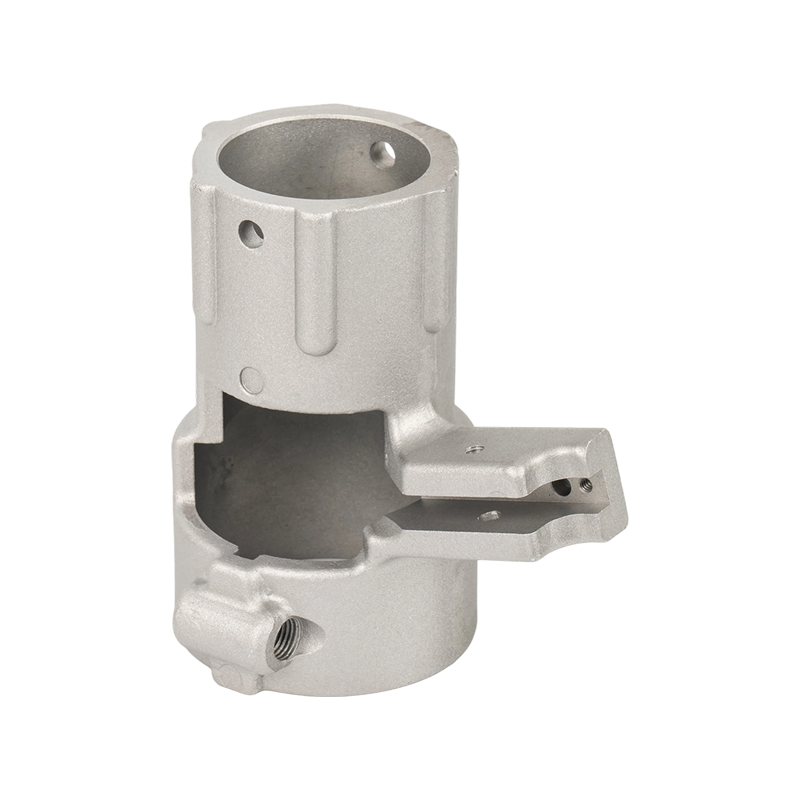
At this point, it is useful to see what a high-quality aluminum cast part looks like after the die and the process have been validated.
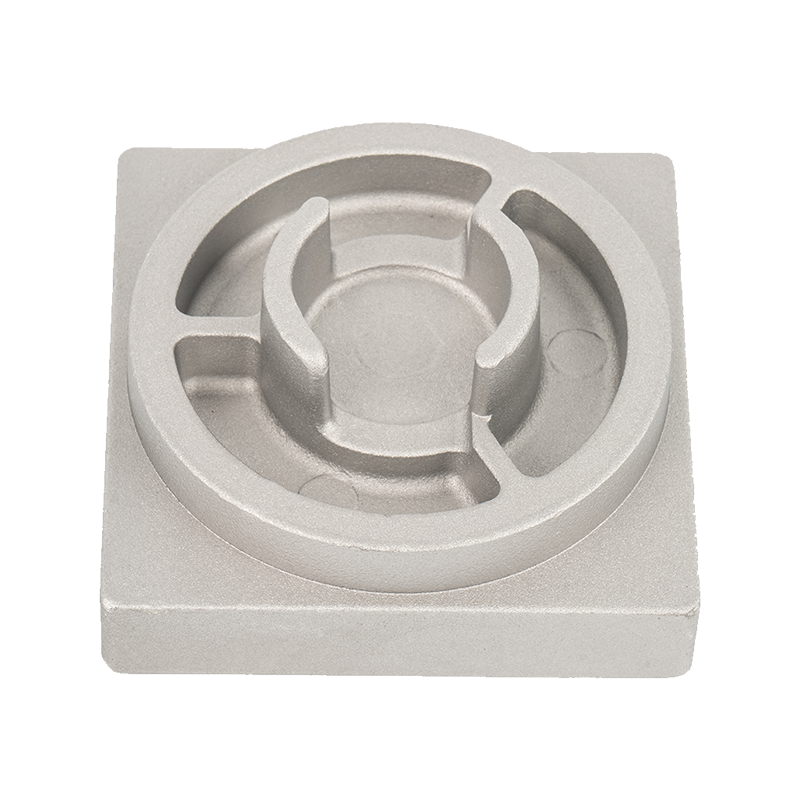 Precision Aluminum Alloy Cast Parts for Industrial ApplicationsThis product showcases custom die-cast aluminum components with CNC-machined critical surfaces and optional surface treatments. It fits the discussion of validated die processes producing high-quality cast parts.View Product →
Inspection of the finished die is equally important. A coordinate measuring machine is used to check the cavity shape after polishing, because a die that is geometrically accurate cannot produce a part that is not. The trial report should include gate and runner dimensions, cooling flow rates, spray time, and all actual machine parameters used to qualify the die. This report becomes the baseline for troubleshooting in later production.
Die Life, Wear, and Maintenance
An aluminum die casting die does not die suddenly in normal use. It wears gradually. The two most common life-limiting mechanisms are heat checking and washing out. Heat checking is the formation of fine cracks on the cavity surface because of repeated heating and cooling. Washing out is local erosion caused by high-velocity aluminum impingement. Soldering—the gradual buildup of aluminum on the steel—is another frequent problem because it changes part dimensions and ejection forces.
Expected die life depends on the steel, geometry, process parameters, and cooling system. For a simple, well-designed housing, a die made of H13 may produce more than 150,000 shots. A complex valve body with deep cores and tight dimensions may need a premium steel and regular maintenance to reach the same number. The values in the table below are typical ranges used when quoting die life.
| Failure mode | Visible symptom | Main cause | Preventive action |
|---|---|---|---|
| Heat checking | Crack network on cavity surface | Thermal fatigue from hot aluminum and rapid cooling | Use tougher steel, control die temperature, perform periodic stress relieving |
| Erosion / washout | Grooves near gate | High metal velocity and particle impact | Redesign gate, apply erosion-resistant coating, reduce flow speed |
| Soldering | Aluminum sticks to die surface | Metal-to-metal reaction at high temperature | Improve lubrication, apply release agent, use surface nitriding |
| Cracked core | Broken or bent core pin | Excessive clamping force, sharp corner, weak steel | Add radius, use tougher steel, optimize cooling |
| Misalignment | Flash or part shift | Worn guides, excessive flash pressure | Inspect guides, replace wear plates, check clamping force |
Routine maintenance should not be limited to greasing and cleaning. A serious die maintenance plan includes:
- Daily visual inspection of surfaces and ejector pins.
- Cleaning of cooling channels with scale remover at fixed intervals.
- Stress relief annealing after every 10,000–15,000 shots for H13 dies, depending on the application.
- Polish-out of heat checks before they grow into deep cracks.
- Tracking of die life, downtime, and repair costs on a job card.
For motor and instrument housings, the die must maintain flatness over long production runs. A stable die produces consistent wall thickness and protects the owner from expensive sorting operations.
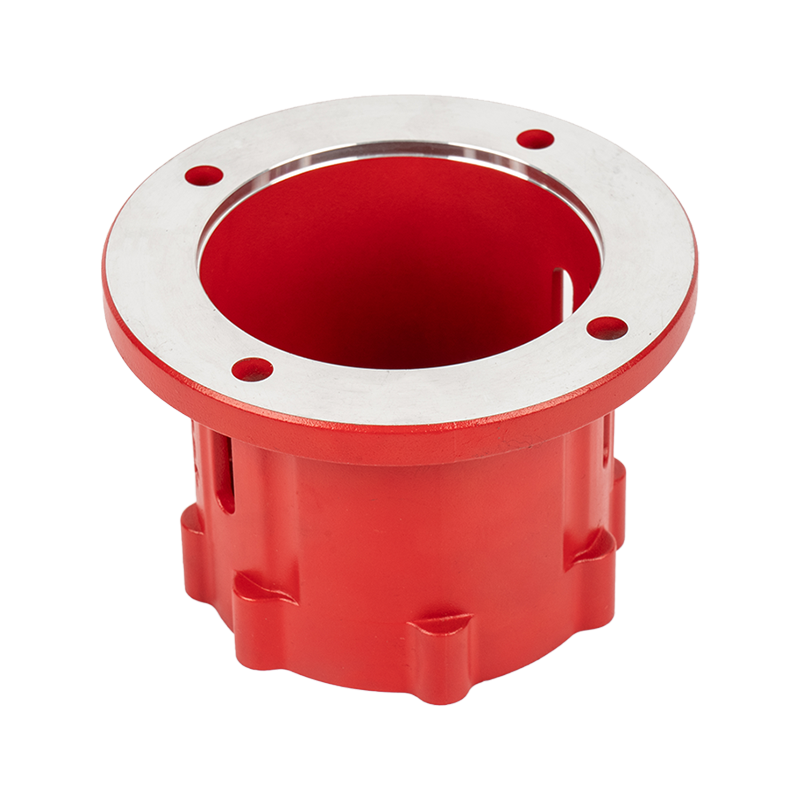 Aluminum Alloy Protective Motor HousingA custom-machined motor housing designed for structural support, heat dissipation, and corrosion resistance. Its relevance here lies in the need for a stable die to maintain flatness and consistent wall thickness in long production runs.View Product →
Some buyers ask whether they should plan for spare die inserts. In high-volume production, common replacements are cores that form deep holes and gate inserts that suffer the most erosion. Having spare inserts ready can reduce downtime from days to hours. The die maintenance plan should identify the components that are likely to wear first and list their expected repair interval.
Die-Related Defects in Aluminum Castings
Many casting defects are mistakenly blamed on the melt or the machine, but the die is often the source. The following table is a practical checklist for buyers and process engineers.
| Defect | Die-related cause | Solution |
|---|---|---|
| Gas porosity | Poor venting or turbulent gate design | Add vents or overflows, relocate gate, use vacuum die casting |
| Shrinkage porosity | Hot spots caused by unbalanced cooling | Add cooling lines near thick sections, adjust steel thickness |
| Cold lap / cold shut | Die temperature too low at the start of injection | Increase die preheating, change gate position, speed up filling |
| Flash | Die parting line not contacting uniformly | Check clamping force, re-seat the die, repair damaged seals |
| Soldering marks | Aluminum adhering to a rough or hot surface | Polish the cavity, apply coating, adjust release agent |
| Ejection marks | Insufficient ejector area or wrong pin position | Use more or larger ejector pins, change ejection angle |
When a supplier shows you a quotation for a die, ask what they plan to do about these risks. If they do not mention venting, cooling, or gate placement in their DFM, the quote is incomplete. A bad die may still produce a good-looking first sample, but it will not produce good parts day after day.
It is also worth remembering that the same defect can have several causes. For example, shrinkage porosity may be caused by an oversized sprue as well as by insufficient cooling. A supplier who can show real data from flow simulation or previous similar parts is more likely to solve the problem before the tool is built.
Die Cost vs. Total Cost of an Aluminum Die Casting Part
A die is a one-time cost, but its quality controls every repeating cost. A die with poor cooling will slow the cycle time, increasing the price of each part. A die with poor venting will create scrap, which must be absorbed by the yield. A die with cracks will cause unplanned downtime.
The line chart below shows how the cost per part decreases as production volume increases. At low volume, the die cost dominates. At high volume, part cost is driven by cycle time and yield, which are both determined during die design.
As production volume rises, the fixed cost of the die is spread across more parts, but the long-term slope of the curve depends on how well the die was designed and maintained.
When comparing quotes, look past the die price. A slightly more expensive die with additional cooling lines, better steel, and a proven trial report can reduce the per-part price and protect the delivery schedule. The total cost of ownership includes the die cost, plus tooling repair, scrap loss, machine downtime, and the risk of missing a customer deadline.
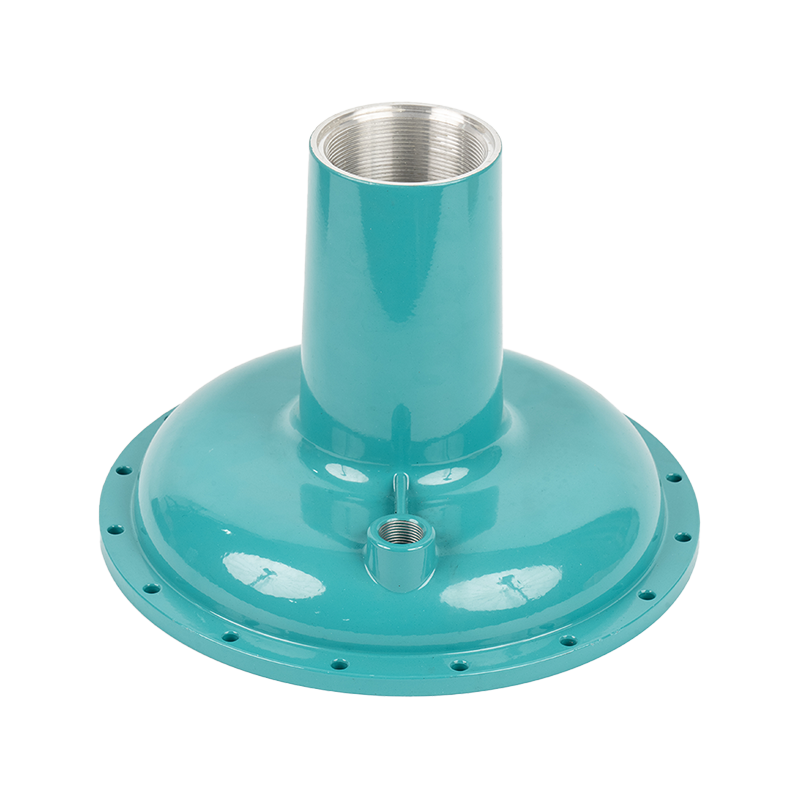
Complex castings such as valve bodies need a die with predictable filling and pressure tightness. A die built for a pressure-reducing valve housing must produce dense walls and stable internal passages that can withstand fluid pressure and sealing tests.
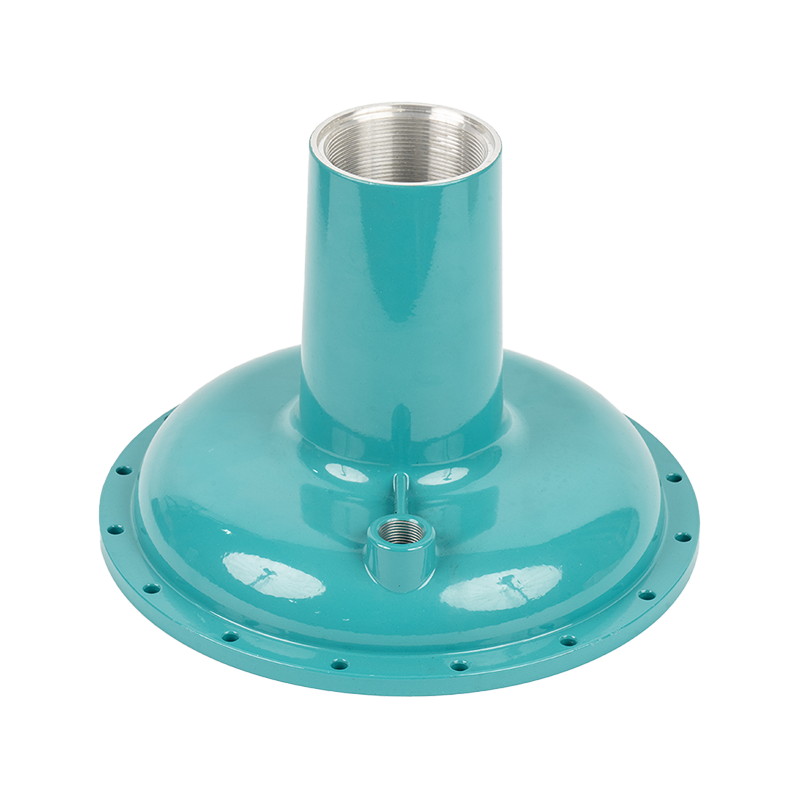 Die-Cast Aluminum Pressure Reducing Valve HousingsThis die-cast housing is made for stable pressure control and sealing performance. It directly addresses the paragraph's concern about predictable filling and pressure tightness in complex valve body castings.View Product →
The cost breakdown above is a simplified model of a typical die project. Design and engineering may be the smallest line item, but a wrong decision at that stage can lead to machine modifications, re-cut cavities, and weeks of schedule delay. The material and machining costs are easier to quantify; the engineering skill is not.
How to Qualify a Custom Aluminum Die Casting Manufacturer
You now know what an aluminum die casting die is and why it matters. The last step is turning that knowledge into a purchasing decision. A good supplier should be able to answer six specific questions:
- Do you have an in-house die shop? If the die is outsourced, the feedback loops become slower and less controlled.
- Can you show the die design analysis before cutting steel? A DFM report demonstrates that the supplier has thought about gate, cooling, ejection, and tolerance.
- What die maintenance system do you use? Ask for records of die maintenance, stress-relief intervals, and repair history.
- What quality standards are in place? ISO 9001 is common; IATF 16949 is important for automotive applications.
- What machines will run the die? The die must match the shot capacity, clamping tonnage, and platen configuration of the planned machine.
- Do you supply samples with full dimensional reports? The first article report is the contract between the tool and production.
An in-house toolroom is especially valuable when a die needs an engineering change. Instead of waiting days for an external tool shop to modify the insert, a vertically integrated manufacturer can stop production, revise the insert, and resume sampling quickly. This is one of the most important operational advantages in custom metal part manufacturing.
One way to assess a manufacturer is to see the shop environment before you commit. Many suppliers now offer a virtual factory tour that shows whether the die shop is separated from the casting area, how molds are stored, and whether the equipment is maintained.
Certifications such as ISO 9001 and IATF 16949 provide a baseline, but they do not replace a technical review of the die plan. Ask for pictures of a similar die that the supplier has built, including its cooling lines and wear condition after production. A mature manufacturer will be happy to show you not only their successes but also the lessons they have learned from past tooling challenges.
How to Use This Knowledge in Your Next RFQ
The tooling portion of an aluminum die casting project can feel intimidating because a die quotation is often accompanied by separate costs for samples, dimensional reports, steel certificates, and repair allowances. The best way to use the knowledge from this article is to create a short checklist before you send the RFQ.
Define the life target
Tell the supplier the expected annual quantity and the total program quantity. This allows them to select a steel grade and surface treatment that will not fail prematurely.
Include the machining allowance and the inspection method. A die designed without knowing the finished datum may require expensive rework later.
Ask for a DFM report
Request a written document that covers gate position, cooling lines, draft angles, vents, and expected shrinkage. This is the clearest sign of a competent die engineer.
Plan for maintenance
Add a line item in the project budget for spare inserts, stress-relief heat treatment, and cooling channel cleaning. Dies that are properly maintained produce lower scrap rates and fewer production interruptions.
No die is perfect forever. The goal is to understand the trade-offs between die life, cycle time, part quality, and maintenance cost. When you evaluate an aluminum die casting die from that perspective, you will make better purchasing decisions and build a more reliable production supply chain.
Frequently Asked Questions
How long does an aluminum die casting die last?
A typical die life ranges from 80,000 to 250,000 shots. The actual number depends on the steel grade, part geometry, die temperature control, and maintenance program. Simple parts made from a well-designed H13 die may exceed the high end, while complex thin-walled parts may require more frequent repair.
What steel is used for aluminum die casting dies?
Hot-work tool steels are the standard. Common choices are H13, SKD61, DAC55, and DIEVAR. They are usually hardened to 44–52 HRC and are chosen for their resistance to heat checking, erosion, and soldering.
Why is the die casting die cost so high?
The cost reflects steel, heat treatment, CNC machining, EDM, polishing, fitting, and trial shots. A complex die can require hundreds of hours of skilled labor. More importantly, the die determines the quality and consistency of every production part, so the investment must be judged over the total production quantity.
Can a cracked aluminum die casting die be repaired?
Small surface cracks and wear can often be repaired by welding, stress-relieving, re-polishing, and re-coating. Repeated repairs are possible, but they reduce the die life. If the cracks are deep or located near a critical core, the insert should be replaced instead of repaired.
Does the die need a separate cooling system for each part?
Not necessarily. Cooling lines are placed according to the heat distribution of the casting. Thick sections need more cooling, thin sections need less. A simple housing may use a single cooling circuit; a complex valve body may require several independently controlled circuits.
How does die design affect aluminum casting quality?
Gate location, venting, cooling, and draft all directly affect filling and solidification. A poor die design can cause gas porosity, shrinkage cavities, cold laps, soldering, flash, and dimensional drift. A well-designed die makes quality easier to control because it creates stable, repeatable thermal and flow conditions.
Understanding die casting dies does not make you a toolmaker, but it makes you a better buyer. When you evaluate a custom aluminum die casting manufacturer, the condition and management of the die is the difference between stable production and a series of costly surprises. Use the questions and tables in this article as a reference during your next tooling quotation, and you will be able to see where the real risk and the real value sit.