English
  中文简体
中文简体 
Content
- 1 What Is a Pressure Reducing Valve?
- 2 The Core Components of a Pressure Reducing Valve
- 3 How Does a Pressure Reducing Valve Work? The Step-by-Step Mechanics
- 4 The Common Confusion: Why Does Pressure Drop Even When Water Flows?
- 5 Direct-Operated vs. Pilot-Operated Pressure Reducing Valves
- 6 Pressure Reducing Valve vs. Pressure Relief Valve: What's the Difference?
- 7 Common Applications of Pressure Reducing Valves
- 8 How Valve Body Material and Manufacturing Quality Affect PRV Performance
- 9 Conclusion: Turning Understanding into the Right Choice
What Is a Pressure Reducing Valve?
Municipal water lines often deliver water at 80 psi or more, while washing machines, dishwashers, and water heaters are designed for roughly 50 psi. Without something between the street and your appliances, that excess pressure would strain valves, stress seals, and shorten the life of everything downstream. That something is the pressure reducing valve (PRV).
Also called a pressure regulator, a PRV is a self-acting control valve that maintains a constant downstream pressure no matter how the inlet pressure or the flow demand varies. It is best described as a self-adjusting restriction that balances spring force against downstream pressure. Unlike a fixed orifice, which lets the outlet pressure drift as conditions change, the PRV senses its own outlet pressure and moves its internal parts to keep it exactly at the setpoint.
The practical payoff is simple: stable pressure means protected equipment, more consistent process performance, and fewer surprises.
The Core Components of a Pressure Reducing Valve
A typical pressure reducing valve contains six functional parts: a valve body, an adjustable spring, a diaphragm, a poppet (also called a pintle), a seat, and inlet and outlet ports. These parts interact in a specific sequence:
- The adjusting screw compresses or relaxes the spring, setting the desired downstream pressure.
- The spring pushes downward against the diaphragm.
- The diaphragm connects to the poppet, so any movement of the diaphragm moves the poppet.
- The poppet works against the fixed seat to vary the flow opening.
- Downstream pressure acts on the underside of the diaphragm, opposing the spring.
Two of these components matter most for understanding the working principle. The spring stores the setpoint energy, and the diaphragm converts downstream pressure into a mechanical force. Everything else in the valve exists to translate the balance between these two forces into a precise opening.
How Does a Pressure Reducing Valve Work? The Step-by-Step Mechanics
The Spring–Diaphragm Force Balance
The operating principle is a force balance. The spring pushes the diaphragm downward, which tends to push the poppet away from the seat and open the valve. Downstream pressure pushes upward against the diaphragm, tending to close the valve. When the two forces are equal, the poppet holds a stable position. In that equilibrium, the flow area through the valve is exactly what is needed to maintain the set downstream pressure at the current flow rate.
What Happens When Downstream Pressure Rises
If a downstream fixture closes and pressure begins to climb, the upward force on the diaphragm exceeds the spring force. The diaphragm rises, the poppet moves toward the seat, and the flow area shrinks. Less flow passes through, and the downstream pressure falls back to the setpoint. This correction happens in a fraction of a second, with no external controller.
What Happens When Demand Draws Flow
When a tap opens, downstream pressure drops slightly because flow leaves faster than the valve supplies it. The spring force now wins, so the diaphragm moves down, the poppet opens wider, and more flow enters. As pressure recovers, the valve settles at a new equilibrium with a larger opening. The valve repeats these adjustments continuously, which is why it is called self-operating.
The Common Confusion: Why Does Pressure Drop Even When Water Flows?
This is the question people ask most often: if the valve is open and water is flowing through it, why is the downstream pressure still lower than the upstream pressure? The answer lies in how pressure behaves at a restriction.
The valve never opens fully in normal operation. The poppet and seat form a deliberate bottleneck. When a fluid passes through a restriction, it speeds up, and that acceleration converts static pressure into velocity. The result is a permanent pressure drop across the valve. The downstream side is always lower because the valve continuously creates a controlled loss of pressure through a variable flow area.
If demand increases, the opening grows; if demand decreases, it shrinks. In every case, the spring-diaphragm system holds the outlet pressure at the setpoint while the flow adjusts to match the downstream load. The pressure reduction is not a one-time event; it is a continuous process that exists as long as fluid is flowing.
Direct-Operated vs. Pilot-Operated Pressure Reducing Valves
Direct-Operated PRVs
The direct-operated valve is the simplest design and the one described in the step-by-step mechanics above. The spring and diaphragm act directly on the poppet. These valves are compact, inexpensive, and responsive, which makes them a good fit for residential water, small boilers, and pneumatic systems. Their accuracy is moderate, and their flow capacity is limited by the size of the spring and diaphragm.
Pilot-Operated PRVs
A pilot-operated valve adds a small pilot valve that senses downstream pressure and controls the pressure in a chamber above the main diaphragm. The pilot amplifies the pressure signal, allowing a larger main valve to handle high flow rates with very tight pressure control. These valves are the standard choice for industrial steam systems and large water networks. The trade-off is higher cost, more complex maintenance, and a sensing line that must be kept clean and functional.
| Characteristic | Direct-Operated PRV | Pilot-Operated PRV |
|---|---|---|
| Control accuracy | Moderate | High |
| Flow capacity | Small to medium | Large |
| Response to load changes | Fast | Fast, with tighter regulation |
| Complexity and cost | Low | Higher; includes sensing line |
| Typical applications | Residential water, small pneumatic systems | Industrial steam, large water networks |
Pressure Reducing Valve vs. Pressure Relief Valve: What's the Difference?
Because the names are similar, many people assume a pressure reducing valve and a pressure relief valve do the same job. They do not. A PRV continuously regulates downstream pressure during normal operation. A pressure relief valve is a safety device that stays closed until the system pressure exceeds a maximum allowable value, then opens to discharge fluid and protect the system.
| Aspect | Pressure Reducing Valve (PRV) | Pressure Relief Valve |
|---|---|---|
| Primary function | Maintain constant downstream pressure | Prevent overpressure in a system |
| Normal state | Continuously modulating, partially open | Closed; opens only when setpoint is exceeded |
| Action when pressure changes | Adjusts opening to hold the outlet setpoint | Opens to discharge fluid and lower pressure |
| Typical setting | Set to the working pressure of downstream equipment | Set to the maximum allowable pressure of the system |
Neither valve can replace the other. A reducing valve cannot protect a system from overpressure, and a relief valve cannot regulate pressure in normal operation. Most well-designed fluid systems contain both.
Common Applications of Pressure Reducing Valves
Pressure reducing valves are used wherever a supply pressure exceeds what downstream equipment can tolerate, or where a stable pressure is needed for consistent performance.
- Residential water supply. Municipal mains can deliver water at 80 psi or higher, while many household fixtures and water heaters are designed for around 50 psi. A PRV installed at the point of entry protects appliances, reduces pipe noise, and cuts water waste.
- Industrial steam systems. Boilers often generate steam at high pressure, but many processes need lower, stable steam pressure. Reducing the pressure before the process improves heat exchanger performance and reduces the risk of equipment damage.
- HVAC and hydronic systems. Chilled water and hot water loops need stable pressure to avoid unbalanced flow, cavitation, and noisy operation. PRVs keep the system pressure steady regardless of how many zones are calling for heating or cooling.
- Pneumatic controls. Compressed air is generated at high pressure and stored in receivers; a PRV at each machine or tool station delivers the pressure the equipment was designed for.
How Valve Body Material and Manufacturing Quality Affect PRV Performance
The working principle explains what a pressure reducing valve does, but the valve body determines how reliably it does it over time. The body is a pressure vessel. It must contain the inlet pressure, resist corrosion from the fluid, and provide stable mounting surfaces for the diaphragm and seat. A body that distorts, corrodes internally, or develops micro-porosity will eventually cause unstable regulation, leakage, or premature failure.
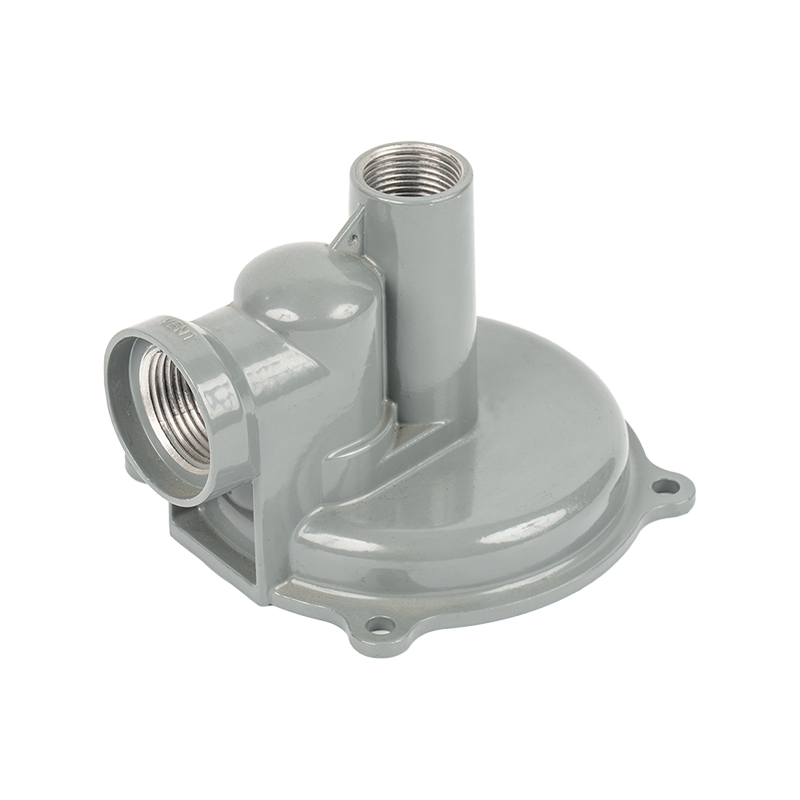
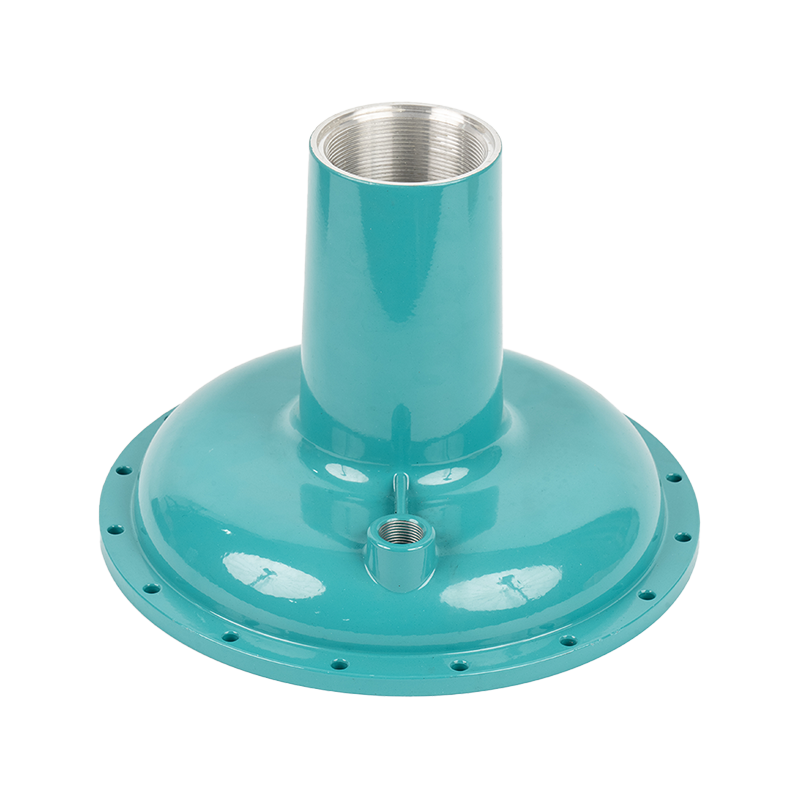
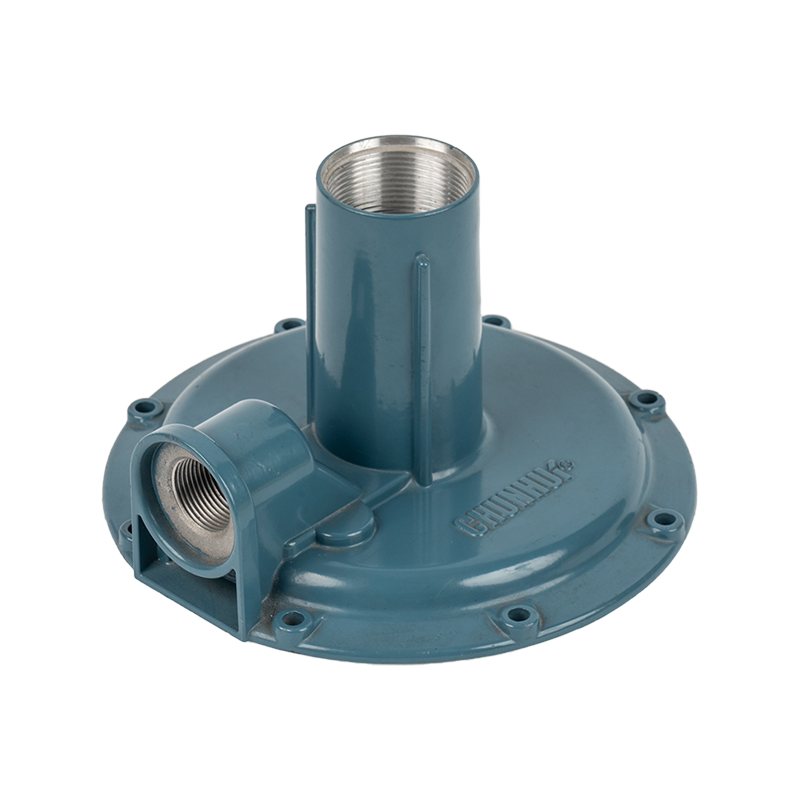
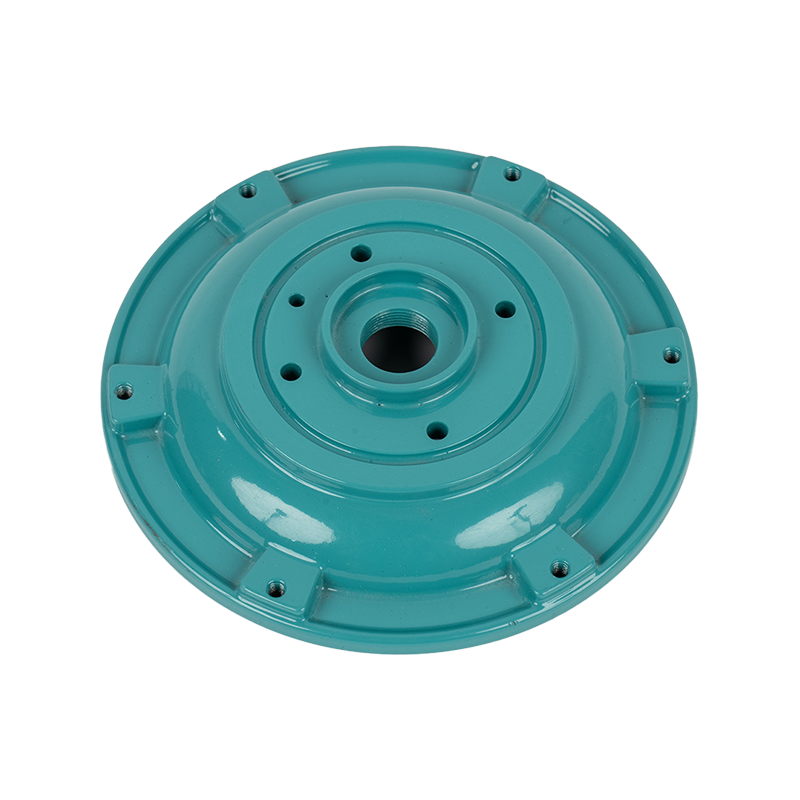
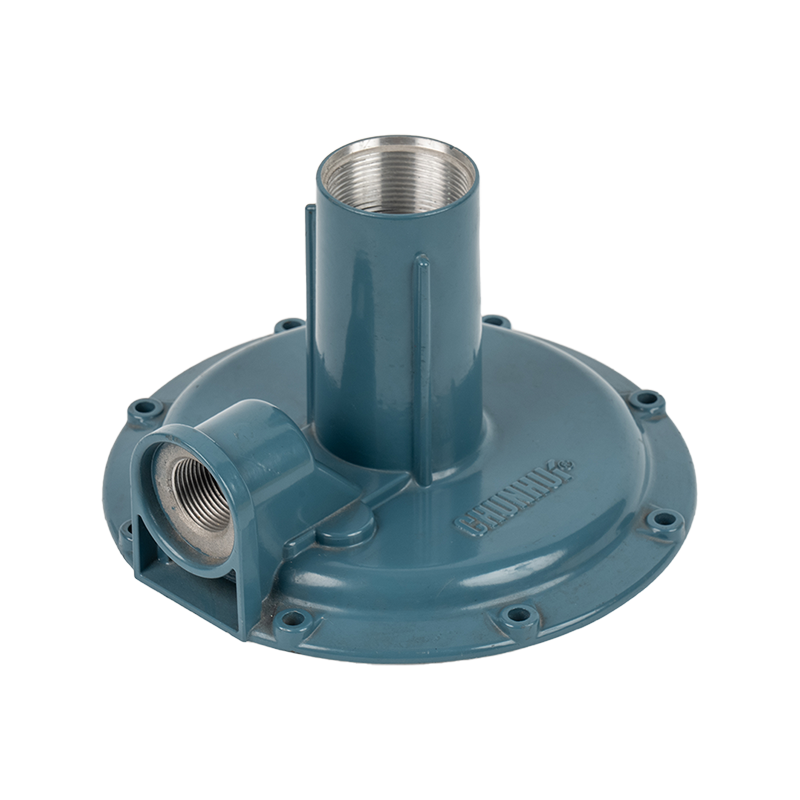
Material choice is the first consideration. Brass and bronze are common general-purpose choices. Stainless steel suits high-temperature steam and aggressive chemical media. Corrosion-resistant pressure reducing valve housings made from aluminum alloys add another option: they are light, dissipate heat well, and can be cast as complex one-piece bodies with integrated ports.
 Custom Corrosion-Resistant Pressure Reducing Valve Housings Manufacturers, OEM/ONINGBO CHIP MACHINERY CO., LTD. is China Corrosion-Resistant Pressure Reducing Valve Housings Manufacturers and OEM Factory, details:Corr...View Product →
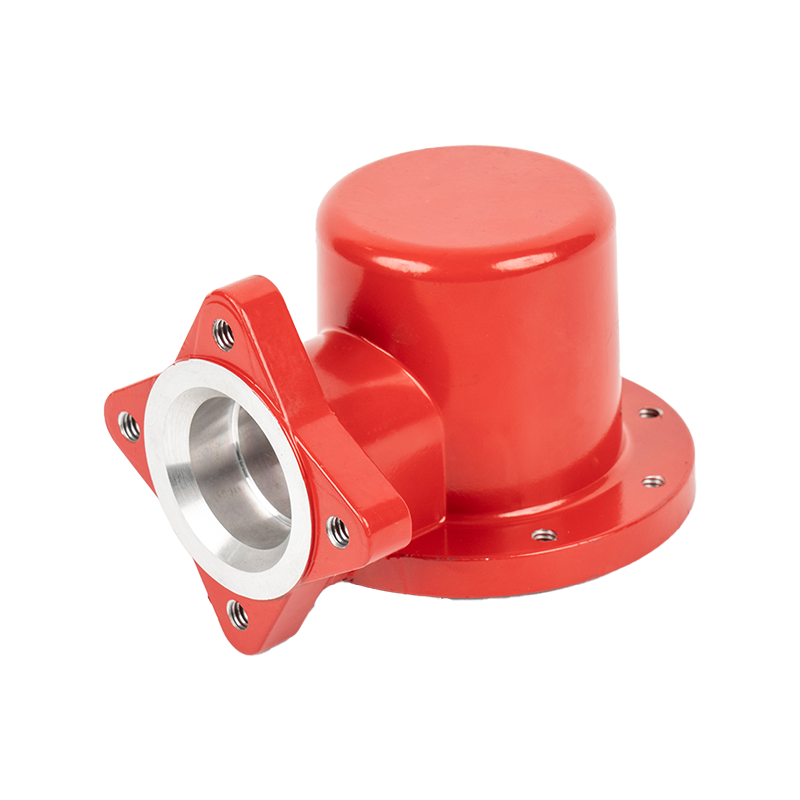
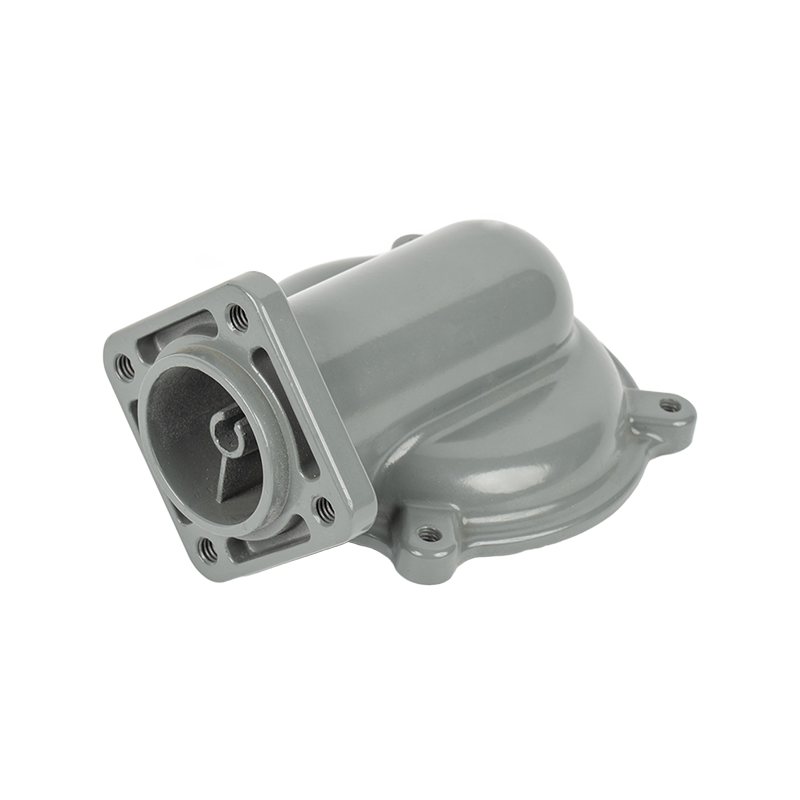
Manufacturing quality matters just as much as material. Die casting must produce a dense, pore-free structure, because microscopic porosity can create leak paths that show up only after pressure cycles. Machining accuracy controls the flatness of the diaphragm seat and the concentricity of the sealing surfaces. A precision-machined pressure reducing valve body gives the diaphragm a stable reference surface, which translates into consistent setpoint behavior and long service life.
 Custom Precision-Machined Pressure-Reducing Valve Body Manufacturers, OEM/ODM FaNINGBO CHIP MACHINERY CO., LTD. is China Precision-Machined Pressure-Reducing Valve Body Manufacturers and OEM Factory, details:Precision...View Product →
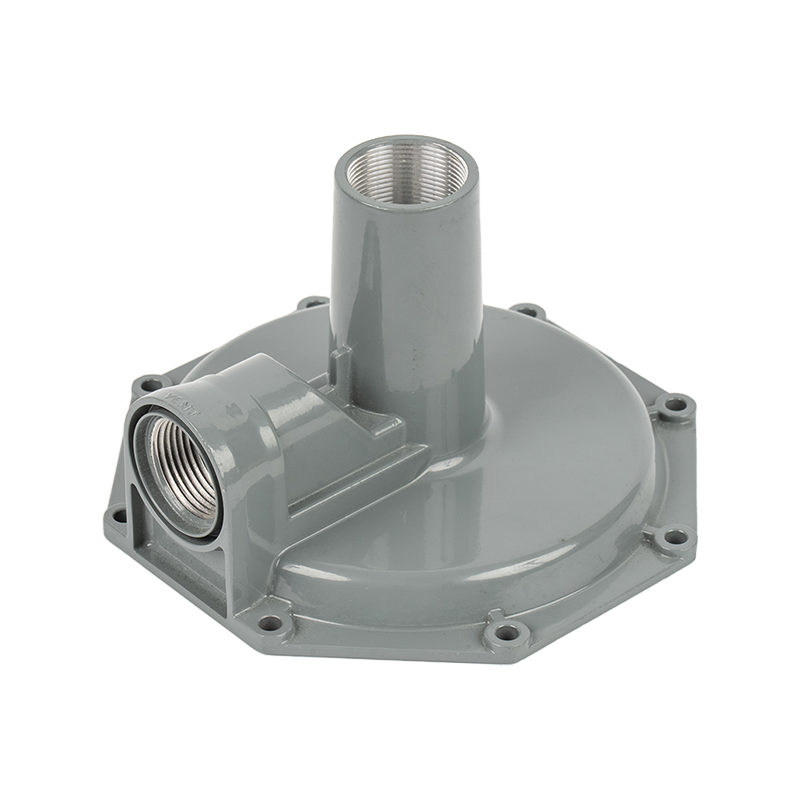
For engineers and procurement teams, the practical question is whether the supplier controls the whole chain from casting to finished part. A manufacturer with in-house die casting and precision machining, such as chipmachinery.com, can hold tighter tolerances and catch defects before they reach the field. Comparing the full range of die-cast aluminum pressure reducing valve housings is a practical way to evaluate how body design and manufacturing approach differ between suppliers.
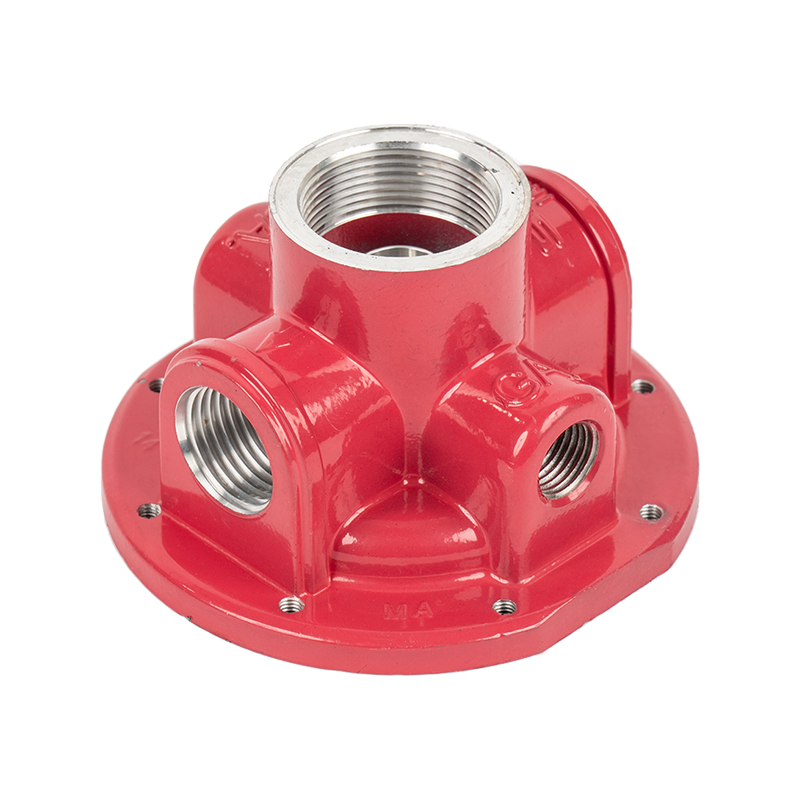 Pressure Reducing Valve Housing Manufacturers, SuppliersCHIP MACHINERY CO., LTD. is China Pressure-Reducing Valve Casting Manufacturers and Aluminum Alloy Pressure Reducing Valve Housing Suppli...View Product →
Conclusion: Turning Understanding into the Right Choice
A pressure reducing valve works by balancing the force of an adjustable spring against the downstream pressure acting on a diaphragm. The spring pushes the valve open; downstream pressure pushes it closed. The poppet settles at the position that delivers exactly the flow area needed to hold the set downstream pressure. When demand rises, the valve opens wider. When pressure climbs, it closes down. This continuous self-correction is the entire working principle.
The next step is selection. Consider the flow range, the accuracy your process needs, and whether the valve body is built to stay stable through thousands of pressure cycles. A regulator that works on paper still depends on a valve body that is cast, machined, and sealed properly. Get that right, and the PRV becomes one of the most reliable components in your system.