English
  中文简体
中文简体 
Content
- 1 Aluminum Die Casting Parts and Aluminum Sand Casting: Processes, Applications and Maintenance
- 1.1 Advantages of Sand Casting for Aluminum Parts
- 1.2 Comparing Casting Parameters Side by Side
- 1.3 Aluminum Sand Casting Common Parts Applications
- 1.4 How to Cast Aluminum Parts
- 1.5 How to Cast Aluminum Parts at Home
- 1.6 What Can I Use to Cast Aluminum?
- 1.7 What Is the Parting Line of Aluminum Casting?
- 1.8 How Difficult Is It to Cast Aluminum?
- 1.9 Surface Finishing and Tolerance Options for Cast Aluminum Components
- 1.10 How to Clean Cast Aluminum Parts
- 1.11 Selecting the Right Process for a New Part
Aluminum Die Casting Parts and Aluminum Sand Casting: Processes, Applications and Maintenance
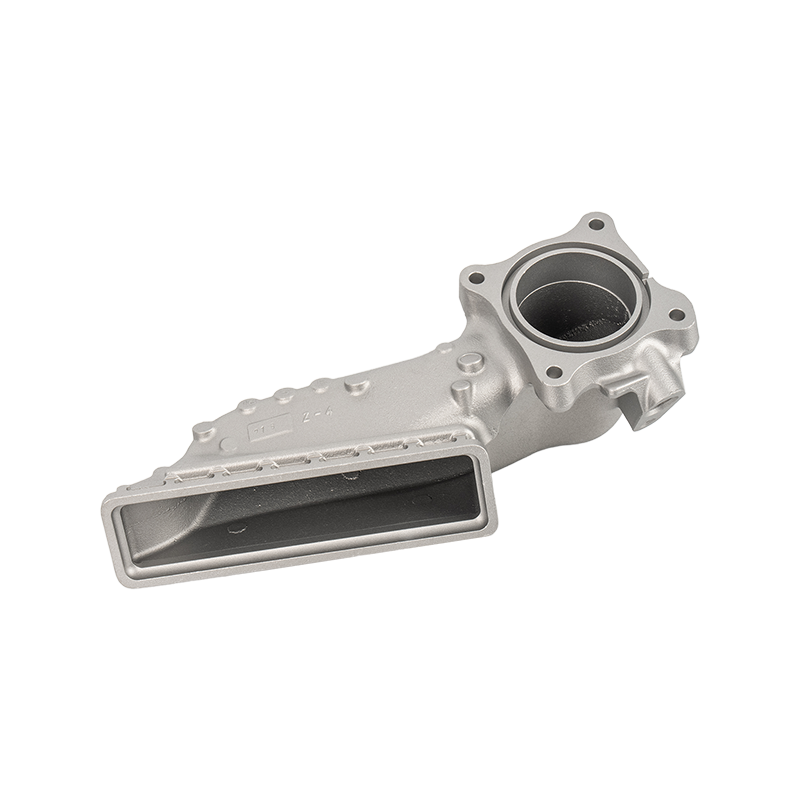
Aluminum components leave the factory floor through more than one route. Some are formed under high pressure inside a hardened steel die, others take shape slowly inside a bed of bonded sand. Choosing between aluminum die casting parts and sand-cast aluminum components depends on wall thickness, order volume, tooling budget and the finished surface a project actually needs. The sections below walk through how each method works, where each one is used, what can go wrong during forming, and how finished aluminum hardware should be cleaned once it is in service.
Tight Repeatable Tolerances
High-pressure injection fills the die cavity in a fraction of a second, so wall thickness and hole positions repeat closely from the first shot to the ten-thousandth. This consistency is why aluminum die casting parts are chosen for housings and brackets that must bolt to mating components without hand-fitting.
Thin Wall Capability
Because molten aluminum is forced into the cavity under pressure rather than poured by gravity, walls as thin as one millimeter can still fill completely before the metal freezes, which keeps finished parts light without sacrificing rigidity.
Smooth As-Cast Surface
Steel dies impart a fine surface texture directly onto the casting, reducing or removing the need for secondary machining on cosmetic faces and lowering the amount of post-processing a housing or cover plate requires before it ships.
Efficient at Volume
Cycle times measured in seconds rather than minutes make the process suited to running the same geometry thousands of times, which is why engine brackets, transmission housings and electronic enclosures rely on this method once a design is finalized.
Advantages of Sand Casting for Aluminum Parts
Sand casting takes a different approach and earns its place for a different set of reasons. Rather than pressing metal into a hardened die, the process packs sand mixed with a binder around a pattern, then removes the pattern to leave a cavity that molten aluminum fills by gravity. This changes the economics and the geometry that can practically be produced.
Low Tooling Investment
Patterns can be built from wood, foam or 3D-printed plastic instead of hardened steel, which lowers the upfront cost of starting a new part number and shortens the time between a finished drawing and a first sample.
Large Section Capability
Gravity pouring does not impose the same pressure limits found in die casting, so pump housings, gearbox cases and machine bases with section thickness well beyond what a die can safely handle come out of the mold without difficulty.
Design Flexibility Between Runs
A pattern can be reworked or a new one cut quickly when a design changes, avoiding the lead time and expense of modifying or replacing a steel die every time a dimension needs adjusting during development.
Suited to Low Volume Runs
Where only a handful of units or a short production run is needed, spreading the cost of a steel die across so few parts rarely makes sense, so sand molds remain the more practical route for prototypes and limited series work.
Comparing Casting Parameters Side by Side
The table below lines up the three most common aluminum forming routes against the variables that most often decide which one a drawing should be routed to.
| Parameter | Die Casting | Sand Casting | Permanent Mold Casting |
|---|---|---|---|
| Tooling Cost | High | Low | Medium |
| Dimensional Accuracy | ±0.05 to 0.1 mm typical | ±0.5 to 1.5 mm typical | ±0.2 to 0.5 mm typical |
| Recommended Batch Size | Thousands and above | Single units to a few hundred | Hundreds to a few thousand |
| Achievable Wall Thickness | 1 mm to 4 mm | 5 mm to 50 mm | 3 mm to 20 mm |
| As-Cast Surface Roughness | Ra 1.5 to 3.0 micrometers | Ra 6.0 to 12.5 micrometers | Ra 3.0 to 6.0 micrometers |
| Typical Cycle Time | Seconds to a few minutes | Hours including mold preparation | Minutes per casting |
Aluminum Sand Casting Common Parts Applications
Because sand molds tolerate large, heavy sections and irregular shapes without the pressure constraints of a die, certain categories of hardware are built almost exclusively through this route.
Pump Housings
Internal water passages and mounting flanges cast in one piece, avoiding the seams that would otherwise need sealing.
Valve Bodies
Thick walls around threaded ports hold pressure while internal flow channels form cleanly during pouring.
Flanges and Fittings
Bolt circles and sealing faces cast close to finished size, leaving only the mating surface to be machined.
Machine Tool Bases
Heavy, rigid sections that damp vibration during operation, sized well beyond die casting limits.
Agricultural Equipment Parts
Gearbox housings and brackets exposed to outdoor loads and repeated impact during field use.
Marine Hardware
Brackets, housings and fittings that pair aluminum's corrosion resistance with sand casting's large-section capability.
How to Cast Aluminum Parts
Regardless of which mold type is used, forming an aluminum part follows the same broad sequence from pattern to finished casting.
Pattern or Die Preparation
A pattern is built for sand molding, or a hardened steel die is machined for pressure casting, matching the final part geometry plus shrinkage allowance.
Melting
Aluminum alloy is heated to roughly 660 to 720 degrees Celsius in a crucible or induction furnace until it reaches a fully liquid, pourable state.
Degassing and Fluxing
A degassing agent removes dissolved hydrogen and a flux pulls oxide inclusions to the surface, reducing porosity in the finished casting.
Pouring or Injection
Molten metal is poured by gravity into a sand cavity, or injected under pressure into a die, filling the mold before the surface begins to solidify.
Cooling and Solidification
Controlled cooling allows the casting to solidify from the thinnest sections toward the thickest, limiting shrinkage cavities and internal stress.
Demolding and Finishing
The casting is separated from the sand or die, gates and risers are trimmed away, and the part moves on to grinding, heat treatment or machining as required.
How to Cast Aluminum Parts at Home
A simplified version of the same process is within reach of a hobbyist workshop. A small propane or charcoal-fired furnace melts scrap aluminum in a steel or graphite crucible, while a wooden or 3D-printed pattern pressed into damp foundry sand forms the cavity. Once the pattern is withdrawn, a pouring gate and a vent channel are cut by hand before the mold halves are closed and clamped. Molten metal is poured steadily to avoid trapping air, then left undisturbed until the casting has cooled enough to handle. Safety equipment matters more at this scale rather than less: a face shield, heat-resistant gloves and long sleeves guard against splashes, and pouring should always happen on a dry, non-flammable surface away from any trace of moisture, since water trapped in damp sand or a wet tool can flash to steam on contact with molten aluminum.
What Can I Use to Cast Aluminum?
Material choice runs in two directions: the mold material and the aluminum alloy itself.
Mold Materials
Silica sand bonded with clay or chemical binders for one-off molds, machined steel for repeated die casting cycles, and graphite or cast iron for permanent molds reused across a moderate production run.
Common Alloy Grades
A356 and A357 for parts needing higher strength after heat treatment, ADC12 and A380 for general die castings, and 6061 where a casting will later be machined and requires good machinability.
Furnace Equipment
Crucible furnaces fired by propane, natural gas or electric resistance elements for smaller batches, and induction furnaces for faster melting when throughput matters more than fuel cost.
Auxiliary Materials
Degassing tablets, cover flux, mold release coatings and riser sleeves that each address a specific defect risk during melting and pouring rather than the shape of the part itself.
What Is the Parting Line of Aluminum Casting?
The parting line marks where two halves of a mold or die meet and separate to release the finished casting. Its position is chosen at the widest cross-section of the part so that both halves can draw away cleanly without locking against an undercut. A poorly placed parting line forces extra core work, adds draft angles that were not otherwise needed, or leaves excess flash that must be ground away by hand. On a finished casting, the parting line usually shows up as a faint seam or a slightly raised line running around the part, and it is normal to see light machining or grinding along that seam during final inspection rather than treating it as a defect.
How Difficult Is It to Cast Aluminum?
Aluminum sits in the middle of the difficulty range for metal casting. Its moderate melting point and good fluidity make it more forgiving than iron or steel, but a handful of defect types still require attention at every stage of the pour.
Gas Porosity
Molten aluminum absorbs hydrogen readily at high temperature, and that gas comes out of solution as the metal cools, leaving small voids unless degassing is done properly before pouring.
Shrinkage Cavities
Aluminum contracts noticeably as it solidifies, so thick sections that cool after the surrounding metal has already set can pull inward and leave an internal void.
Cold Shut
Two streams of metal meeting after either has begun to skin over fail to fuse fully, leaving a visible line of weakness on the surface of the casting.
Hot Tearing
Thin sections adjoining a much thicker mass can crack while still partly molten if the mold restrains natural contraction during cooling.
Surface Finishing and Tolerance Options for Cast Aluminum Components
A raw casting rarely leaves the shop floor exactly as it comes out of the mold. Machined mounting faces, anodized coatings for corrosion resistance, powder coating for color-matched housings, and shot peening for a uniform matte texture are all applied depending on where the part will end up in service. Tolerance classes typically range from general as-cast dimensions on non-critical faces to precision-machined bores and bolt patterns held within a few hundredths of a millimeter where mating parts demand it. Wall thickness verification, X-ray inspection for internal porosity, and pressure testing on parts that will hold fluid are common steps built into final inspection before a batch is released.
How to Clean Cast Aluminum Parts
General cleaning of a cast aluminum part starts with warm water and a mild, non-abrasive detergent applied with a soft brush to lift dust and surface grime. Strong acids and alkaline cleaners should be avoided since they attack the natural oxide layer that protects aluminum from corrosion. Stubborn residue can be loosened by soaking briefly in a cleaner formulated for aluminum before a final rinse and a full dry with a lint-free cloth, since trapped moisture left in recesses or threaded holes is what leads to fresh oxidation.
Cleaning Cast Aluminum Car Parts
Wheels, intake manifolds and transmission housings collect road dust and brake residue over time. Rinsing away loose grit first, then applying a wheel-safe aluminum cleaner and a soft brush into recessed spokes, keeps abrasive particles from scratching the surface. A light coat of protective wax afterward slows the return of oxidation between washes.
Cleaning Cast Aluminum Engine Parts
Engine components carry baked-on oil film and carbon deposits that plain water will not shift. Letting the part cool fully, spraying on a degreaser, and working it into ribs and bolt bosses with a nylon brush rather than a metal one avoids scoring the surface. A thorough dry and compressed air blow-out of blind holes prevents leftover cleaner from interfering with a gasket seal on reassembly.
Routine Maintenance Cleaning
For parts in regular outdoor or industrial service, a simple monthly wash with mild soap and a soft cloth, followed by inspection for pitting or white oxide bloom, catches early corrosion before it spreads into pitting that would require mechanical polishing to remove.
Selecting the Right Process for a New Part
A drawing rarely arrives with the casting method already decided. Wall thickness, expected order quantity, tolerance requirements on mating faces, and the size of the part all point toward either a die, a sand mold or a permanent mold before a single gram of aluminum is melted. Reviewing these factors early, alongside the alloy grade best suited to the part's mechanical and corrosion requirements, keeps rework and tooling changes to a minimum once production is underway.