English
  中文简体
中文简体 
Content
- 1 What Is a Pressure Reducing Valve?
- 2 What Is the Main Purpose of a Pressure Reducing Valve?
- 3 How Does a Pressure Reducing Valve Work?
- 4 Common Applications of Pressure Reducing Valves
- 5 Pressure Reducing Valve vs. Pressure Relief Valve
- 6 Why Valve Body Material and Manufacturing Quality Matter
- 7 How to Choose the Right Pressure Reducing Valve
- 8 Conclusion
Imagine a municipal water line delivering pressure above 100 psi into a building whose pipes, fittings, and appliances are rated for 50 to 60 psi. Without intervention, every joint, seal, and solenoid valve becomes a potential failure point. A pressure reducing valve (PRV) is the control valve that solves this problem: it reduces and stabilizes the downstream pressure of a fluid, liquid or gas, to a preset level. It sits between the high-pressure source and the pressure-sensitive equipment downstream, making the system safe, stable, and efficient.
This guide explains what a pressure reducing valve is, what it actually does, how it works, where it is used, and why the material of its valve body matters just as much as the internal mechanism. If you are an engineer, a purchaser, or someone who simply wants to understand fluid systems better, this complete overview covers the essentials.
What Is a Pressure Reducing Valve?
A pressure reducing valve is an automatic control valve installed between a high-pressure source and a lower-pressure demand side. Its job is to reduce the incoming pressure and maintain a consistent, preset outlet pressure regardless of fluctuations in the upstream supply.
The key concept to understand is downstream pressure. A PRV does not control or monitor the inlet pressure. Instead, it continuously adjusts its internal opening so that the pressure on the outlet side stays at the value you set. This is fundamentally different from a manual shut-off valve or a ball valve, which simply opens or closes a passage and requires human intervention to adjust the flow.
Key Components of a Pressure Reducing Valve
A typical direct-acting PRV contains the following components:
- Inlet and outlet ports — the connections that link the valve to the high-pressure supply and the downstream system.
- Adjusting spring — the element that sets the target outlet pressure. Turning the adjustment bolt compresses or releases the spring, changing the force that holds the valve open.
- Diaphragm — a flexible membrane that senses downstream pressure and converts it into mechanical movement.
- Valve stem and seat — the closing and opening mechanism that regulates how much fluid passes through.
- Pilot valve (optional) — in pilot-operated designs, a small auxiliary valve controls a larger main valve, which allows higher flow rates and more precise pressure control in demanding industrial applications.
Every one of these parts has to work within a housing that can withstand the operating pressure, the fluid chemistry, and the surrounding environment. That is where valve body material and manufacturing quality come into play, a topic we will return to later.
What Is the Main Purpose of a Pressure Reducing Valve?
The main purpose of a pressure reducing valve is simple: to lower the incoming fluid pressure and keep the outlet pressure at a stable, preset level. But why does that matter so much in real systems?
Consider what happens without a PRV. A pump may deliver 150 psi to a network designed for 80 psi. A city water main may fluctuate between 40 and 120 psi depending on demand. A steam boiler may generate pressure spikes as loads change. Those variations translate into real physical risks:
- Protection of downstream equipment — excessive pressure damages seals, ruptures hoses, distorts valve seats, and can destroy instruments, actuators, and control components.
- Stable working pressure — production processes, testing equipment, and building systems rely on consistent pressure to deliver repeatable results.
- Energy and fluid savings — running a system at unnecessarily high pressure increases fluid consumption, pump load, and energy use.
- Extended system life — lower, controlled pressure reduces fatigue on pipes, fittings, and components, cutting maintenance frequency and lifecycle costs.
- Safety — uncontrolled pressure is a leading cause of pipe bursts, component blowouts, and equipment failures that can injure personnel.
In short, a PRV is not an accessory. It is a protective and stabilizing component that makes the system controllable, efficient, and safe.
How Does a Pressure Reducing Valve Work?
A direct-acting PRV operates on a balance of two forces: the adjusting spring pushing the valve open, and the downstream pressure pushing against the diaphragm to close it.
When the outlet pressure drops below the set value, the spring force overcomes the diaphragm force and opens the valve wider, allowing more fluid through. When the outlet pressure rises above the set value, the diaphragm compresses the spring and narrows the valve opening, restricting flow. The result is a self-correcting loop that holds the outlet pressure close to the set point.
A practical analogy: think of a spring-loaded door that stays open only as far as the force pushing it allows. The spring represents the set point, and the pushing force represents downstream pressure. If the push weakens, the door opens wider; if the push strengthens, the door moves toward closed. The same logic keeps a PRV in equilibrium.
Pilot-operated PRVs work on the same principle but use a small pilot valve to sense pressure and control a larger main valve. This design provides higher accuracy, larger flow capacity, and better performance under wide flow variations, which is why it is common in industrial steam, gas, and large hydraulic systems.
Setting the outlet pressure is straightforward: turn the adjustment bolt to compress or release the spring. In residential water systems, a typical set point is 50 to 60 psi, but industrial settings may require anything from a few psi to several thousand, depending on the application.
Common Applications of Pressure Reducing Valves
Pressure reducing valves appear wherever a high-pressure source must feed a lower-pressure system. The most common applications include:
- Municipal water supply — reducing street main pressure to safe levels for household plumbing, water heaters, dishwashers, and reverse osmosis systems.
- Industrial steam systems — protecting steam-using equipment and maintaining consistent process pressure in factories and plants.
- HVAC and commercial buildings — stabilizing hot and chilled water loops to improve comfort and energy efficiency.
- Hydraulic systems — protecting sensitive components in hydraulic circuits and keeping actuator output forces steady in machinery.
- Gas regulation — reducing high-pressure gas from supply lines to the levels required by burners, furnaces, and gas-powered equipment.
Each scenario places different demands on the PRV. Water systems favor corrosion-resistant materials. Steam systems require heat tolerance. Hydraulic systems demand high strength and dimensional precision. These are exactly the properties that the valve body material must deliver.
Pressure Reducing Valve vs. Pressure Relief Valve
A common point of confusion is the difference between a pressure reducing valve and a pressure relief valve or safety valve. They are not the same, and they are not interchangeable.
A PRV manages normal operation. It reduces the pressure and keeps it stable at a preset level. A relief valve is a safety device. It releases fluid when pressure exceeds a maximum limit, preventing catastrophic failure.
| Aspect | Pressure Reducing Valve (PRV) | Pressure Relief Valve |
|---|---|---|
| Primary function | Reduce and stabilize downstream pressure | Release fluid to prevent overpressure |
| Position in system | In series, between high-pressure source and equipment | In parallel, as a safety bypass |
| Normal state | Actively throttling to maintain set pressure | Closed under normal conditions |
| Failure consequence | Downstream pressure drifts; equipment may underperform | Pressure builds until a burst or component failure occurs |
The two valves are often complementary. A well-designed system uses a PRV to control operating pressure and a relief valve to cap the maximum pressure, so both have a place in the same installation.
Why Valve Body Material and Manufacturing Quality Matter
Two PRVs with identical internal mechanisms can perform very differently over time if their bodies are made from different materials. The valve body is not just a shell. It defines the pressure rating, corrosion resistance, temperature tolerance, and service life of the entire unit.
For industrial applications, aluminum and zinc alloy die-cast bodies offer a strong combination of properties:
- Light weight — easier to handle, install, and support in compact systems.
- Corrosion resistance — critical for water, chemical, and outdoor environments.
- High strength and hardness — necessary to withstand high working pressures without deformation.
- Dimensional consistency — die casting produces precise, repeatable parts, which is essential for sealing surfaces and threaded connections.
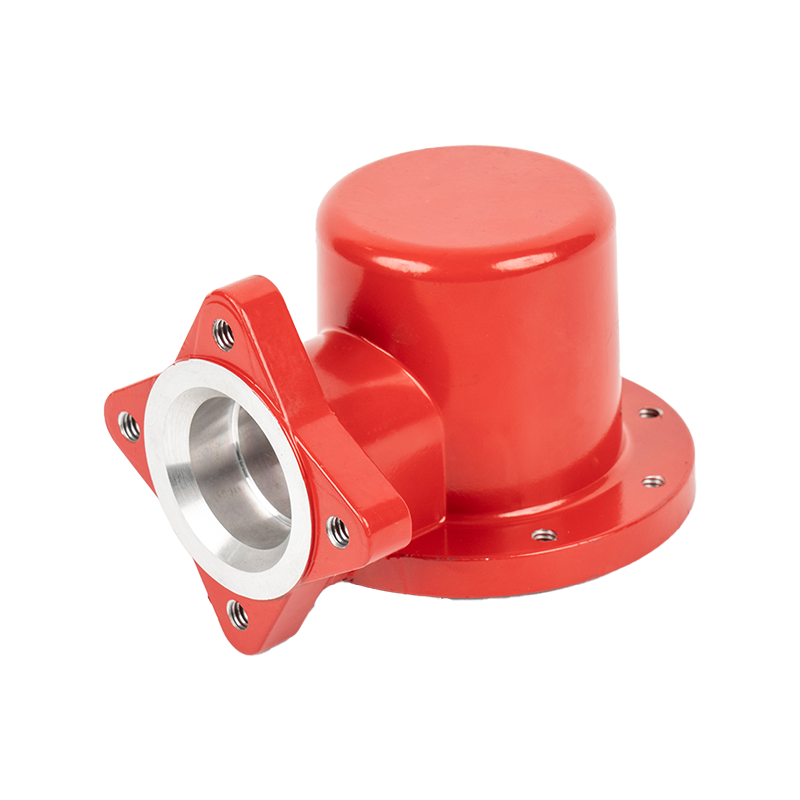
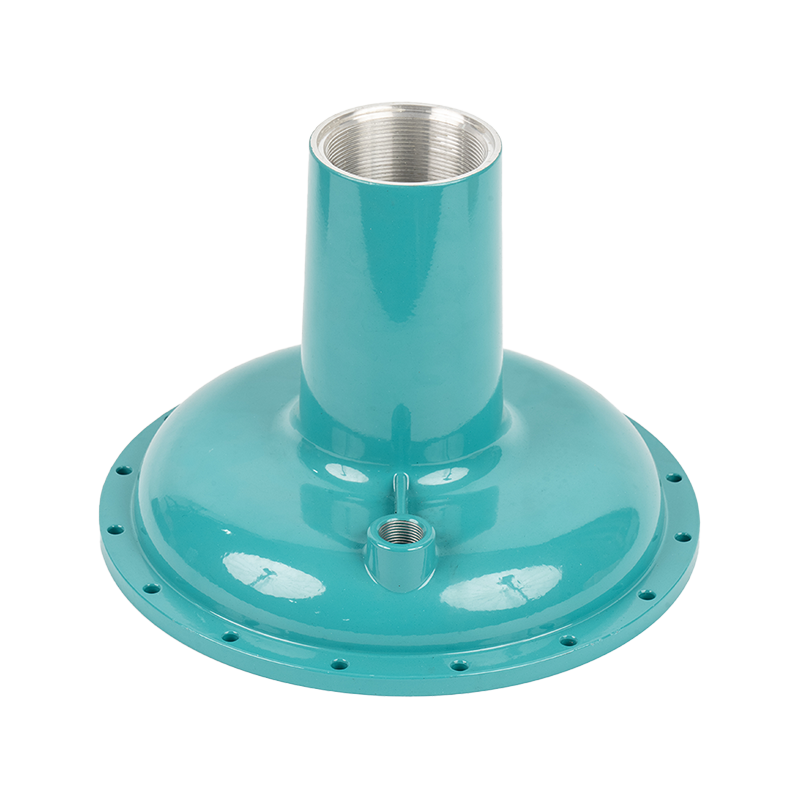
When a system operates at high pressure, the valve body must resist mechanical stress without creeping or cracking. For those conditions, a high-strength aluminum alloy pressure reducing valve body provides the rigidity needed to hold tight tolerances over years of service.
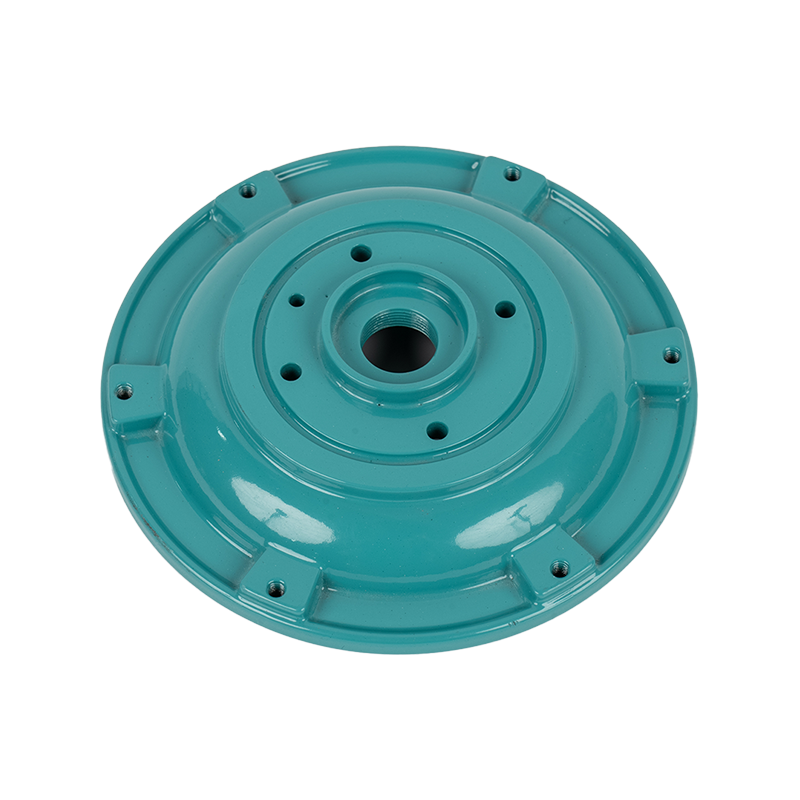 Custom High-Strength Aluminum Alloy Pressure-Reducing Valve Body Manufacturers, NINGBO CHIP MACHINERY CO., LTD. is China High-Strength Aluminum Alloy Pressure-Reducing Valve Body Manufacturers and OEM Factory, details...View Product →
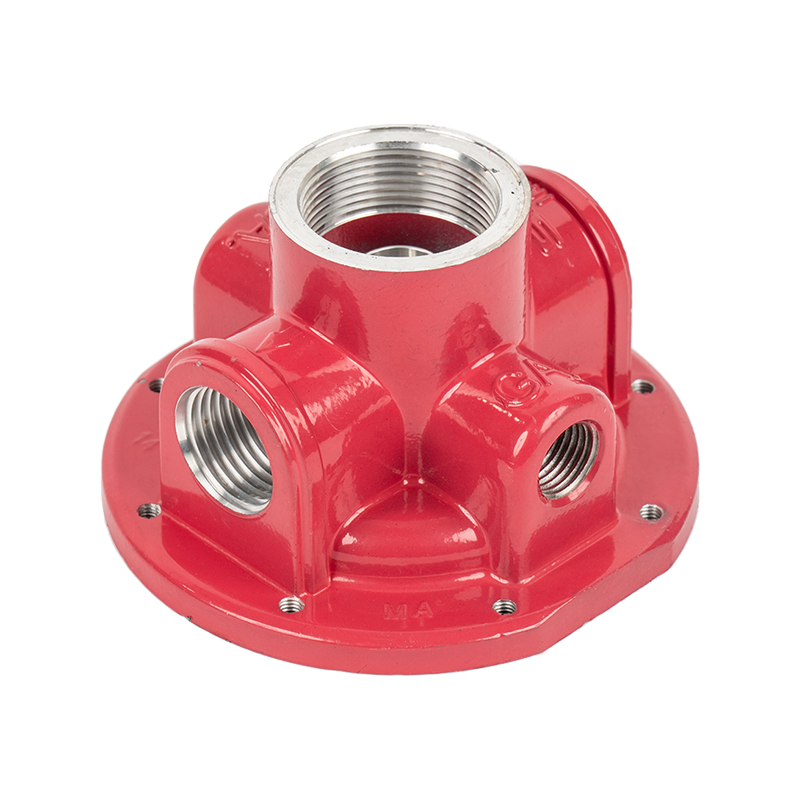
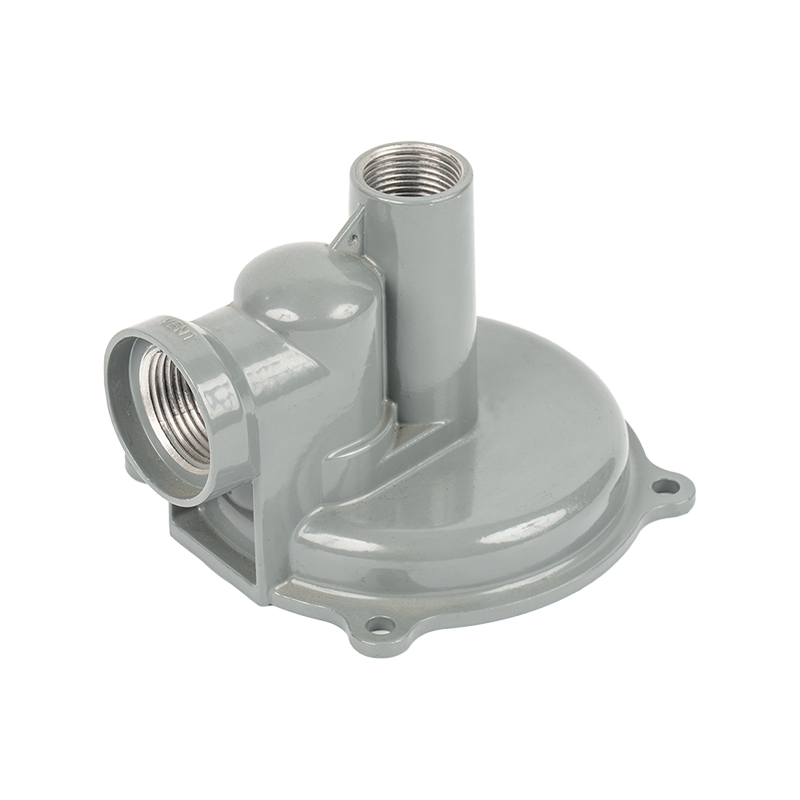
Corrosion is another silent killer of valve performance. A corroded body can contaminate the fluid, weaken the structure, and eventually fail under pressure. This is why specifiers working with water treatment, marine, or chemically aggressive media often choose corrosion-resistant pressure reducing valve housings as their base component.
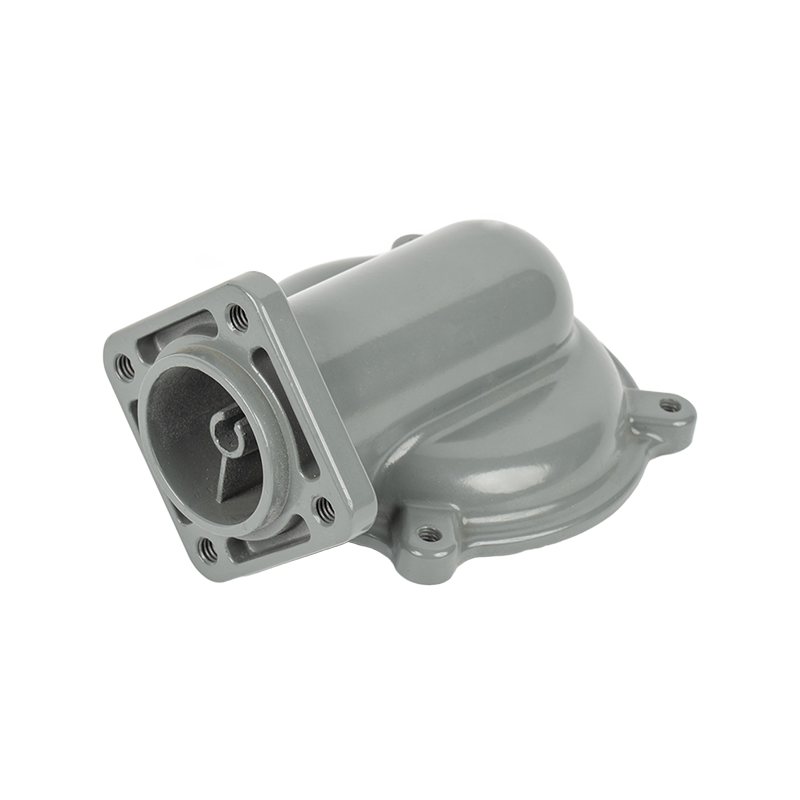 Custom Corrosion-Resistant Pressure Reducing Valve Housings Manufacturers, OEM/ONINGBO CHIP MACHINERY CO., LTD. is China Corrosion-Resistant Pressure Reducing Valve Housings Manufacturers and OEM Factory, details:Corr...View Product →
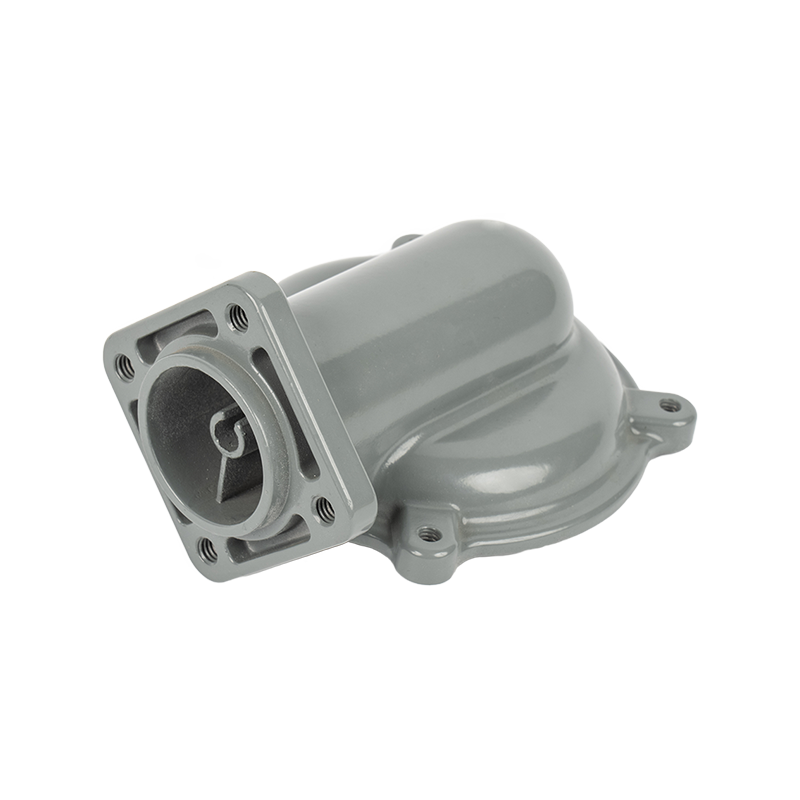
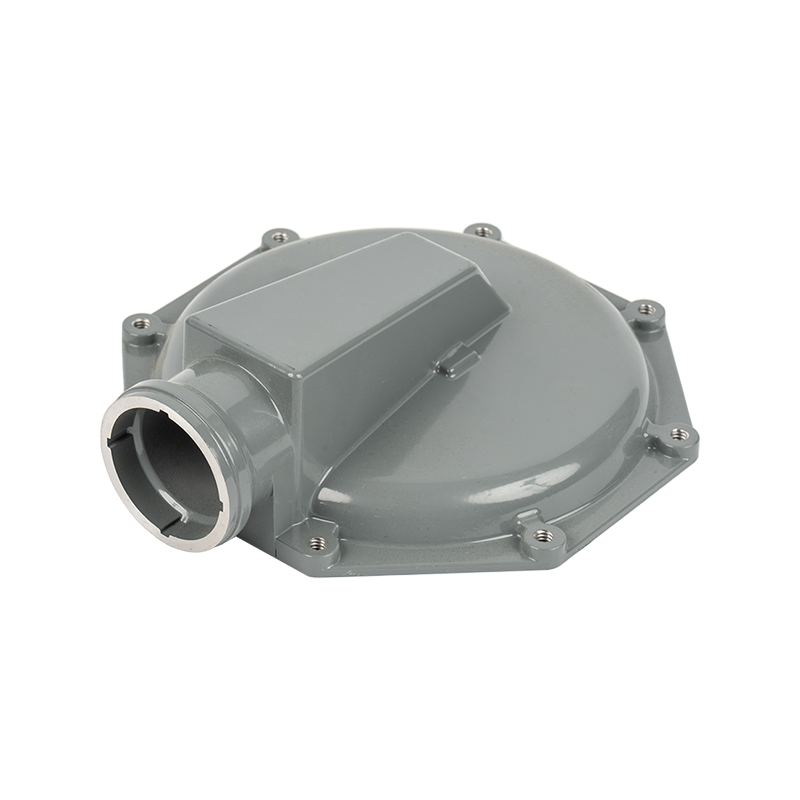
The manufacturing process itself matters just as much as the alloy. Die casting produces complex internal passages, uniform wall thickness, and smooth surfaces in a single high-efficiency operation. This is why die-cast aluminum pressure reducing valve housings are widely used in volume production: they combine structural integrity with repeatable quality at a reasonable cost. After casting, machining of the sealing surfaces and threaded ports determines whether the finished body will hold pressure without leaks.
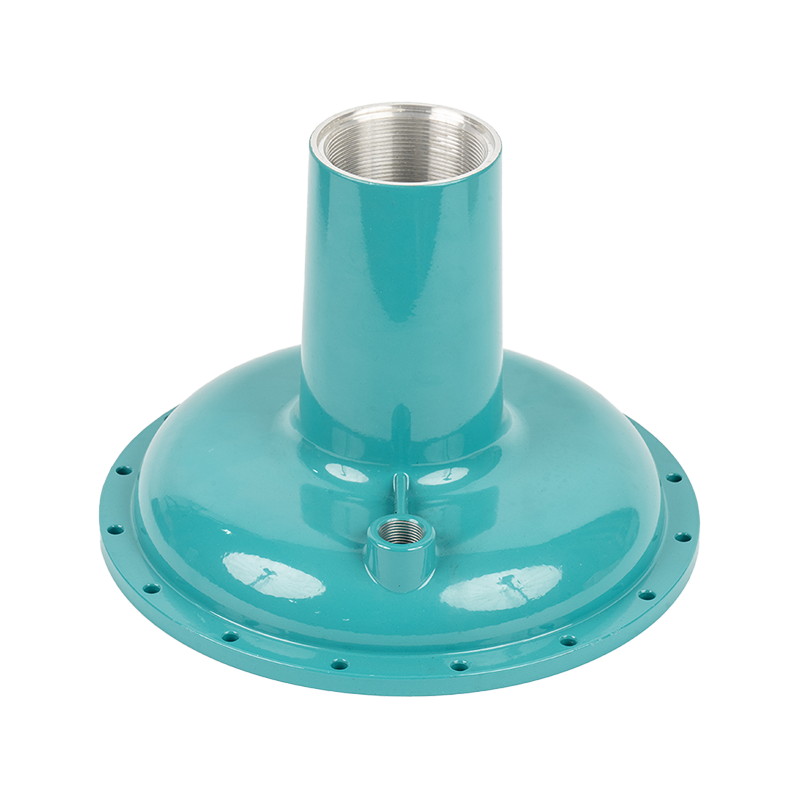 Custom Die-Cast Aluminum Pressure Reducing Valve Housings Manufacturers, OEM/ODMNINGBO CHIP MACHINERY CO., LTD. is China Die-Cast Aluminum Pressure Reducing Valve Housings Manufacturers and OEM Factory, details:Die-ca...View Product →
For a deeper look at how material affects performance in demanding conditions, read our guide on the high-strength aluminum pressure reducing valve.
How to Choose the Right Pressure Reducing Valve
Selecting a PRV is not just about picking a pipe size. The following factors determine whether the valve will perform reliably in your specific installation:
- Pressure range — the maximum inlet pressure and the adjustable outlet pressure range must cover your operating conditions.
- Flow rate — the valve's flow coefficient (Cv) must satisfy the peak flow demand of the system without excessive pressure drop.
- Fluid type and temperature — water, steam, gas, oil, and chemical media all impose different requirements on seals and body materials.
- Connection type — threaded, flanged, or clamp connections must match the existing piping layout.
- Accuracy and response speed — systems with rapid pressure changes need a valve that reacts quickly and holds a tight set point.
- Material compatibility — the body and elastomers must tolerate the fluid and the cleaning or service environment.
- Manufacturing quality — certified processes, such as ISO 9001 or IATF 16949, indicate that casting, machining, and inspection are controlled and traceable.
It is also worth thinking about the valve body as a long-term investment. A well-made aluminum die-cast body with corrosion protection and precision-machined sealing surfaces will outlast a cheaper alternative that fails on material quality, not on the internal mechanism.
Conclusion
The main purpose of a pressure reducing valve is to reduce incoming fluid pressure and maintain a stable, preset outlet pressure. That single function protects downstream equipment, keeps processes consistent, reduces energy and fluid waste, extends system life, and improves overall safety.
When selecting a PRV, do not stop at the pressure setting and connection size. The valve body material and the manufacturing process determine how long the valve will hold performance in your environment. Aluminum and zinc alloy die-cast housings combine light weight, corrosion resistance, strength, and dimensional precision — exactly the qualities industrial systems need.
If you are evaluating valve bodies for a new project, review our pressure reducing valve housing products or contact our team with your operating conditions. The right body, built with the right process, makes the difference between a valve that works and a valve that works for decades.